What Is Long-Distance Moving?
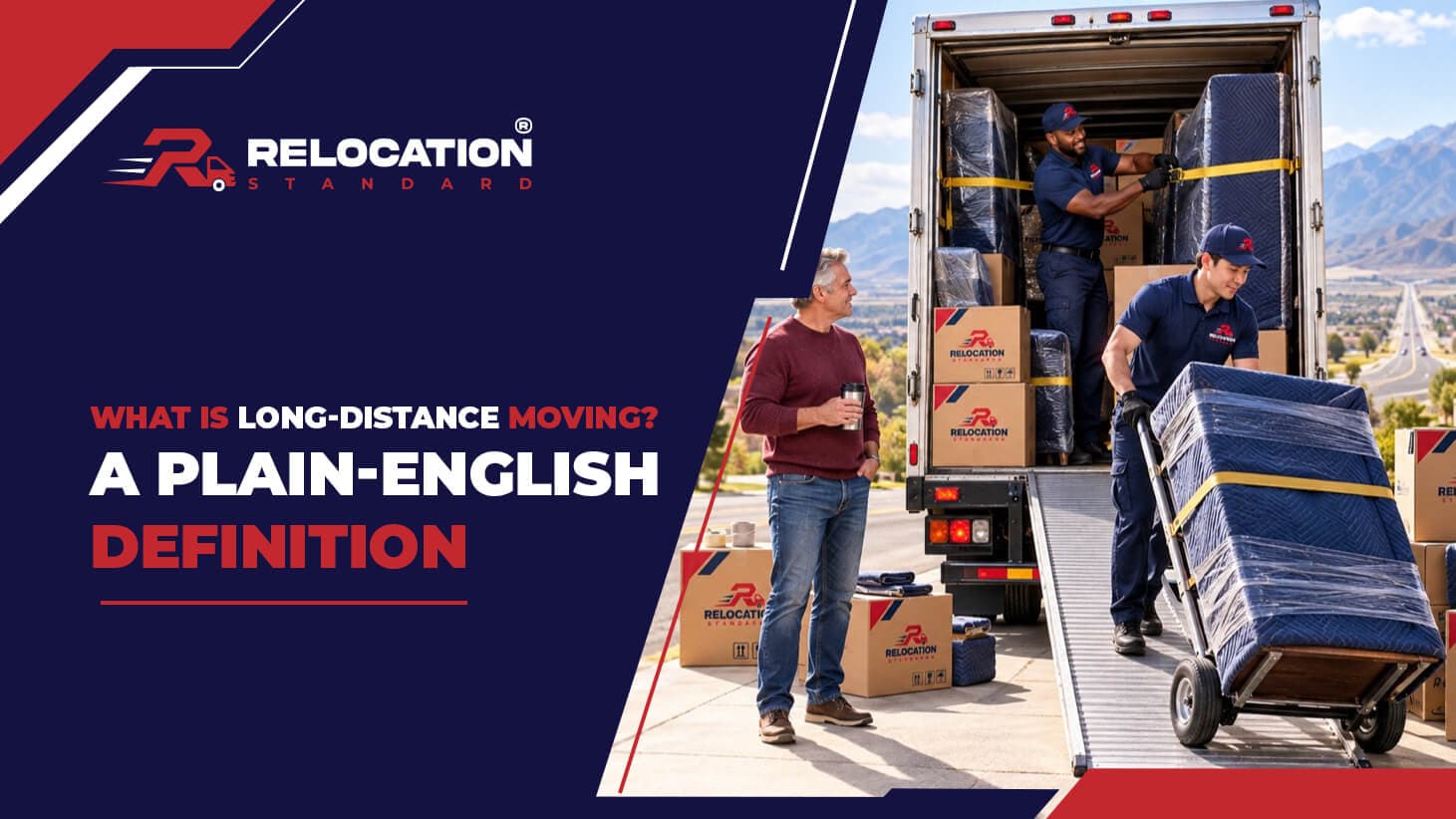
Long-distance moving is the transportation of household or business belongings over a substantial distance, whether the route remains within one state or crosses into other states. Many moving companies describe moves exceeding roughly 100 miles as long distance, while others use thresholds of 400, 450, or 500 miles. There is no single federal mileage threshold that categorizes every household move as long distance.
For example, Dallas to Houston may be treated as a long-distance move entirely within Texas. Chicago to Los Angeles is both a long-distance and an interstate move. The term interstate moving concerns state boundaries, not how many miles the truck travels. A move that stays within one state can be intrastate even when it covers hundreds of miles.
How Does a Long-Distance Move Work?
Survey the shipment and obtain an estimate
Provide both addresses, proposed dates, room-by-room inventory, specialty items, and property access conditions. An in-person or appropriate virtual survey helps determine required truck capacity and services. Review whether you receive a binding estimate or non-binding estimate, since the final bill and payment rules differ.
Choose the service scope
Standard long-distance moving commonly covers loading, transportation, and unloading. Full-service packages may add packing, furniture preparation, unpacking, and temporary storage. Confirm whether your shipment will travel on a dedicated truck or with other customers' goods, and ask about delivery windows and communication.
Pack, load, and document
Belongings should be packed securely for a longer journey. Review the inventory and condition notes; keep valuables, medications, travel documents, and several days of essentials with you. For federally regulated interstate moves, the bill of lading is the key transportation contract and receipt.
Transport, deliver, and inspect
Delivery may follow a range of dates rather than a guaranteed single day. Consolidated shipments, distance, weather, and routing can influence timing. At delivery, compare items with the inventory, note visible damage, and keep signed paperwork.
How Much Does Long-Distance Moving Cost?
Cost usually depends on shipment weight or size, distance, selected services, and the carrier's moving tariff. Factors such as stairs, difficult truck access, packing, and temporary storage can create additional service charges. An estimate should make clear what is included and which fees may apply.
| Hypothetical charge | Amount |
|---|---|
| Transport, loading and unloading | $3,200 |
| Professional packing | $550 |
| Packing materials | $150 |
| Shuttle handling | $300 |
| Illustrative total | $4,200 |
This is a teaching example, not a market average or an actual quote. For a real move, compare estimates based on the same inventory and services. Read about accessorial charges and fuel surcharges for costs that may appear separately.
Long-Distance vs. Interstate: What's the Difference?
| Description | Long-distance | Interstate |
|---|---|---|
| Main definition | Substantial mileage | Crosses state boundaries or certain routes through another state |
| Must cross a state line? | No | Generally yes, subject to route rules |
| Can be within Texas? | Yes | Not ordinarily if the whole route stays in Texas |
| Typical oversight | State or federal depending on route | Federal household-goods requirements generally apply |
Even a short trip from New York to New Jersey can be interstate. A long trip from San Diego to San Francisco is generally intrastate if the shipment remains in California. For a short-distance plan see local moving; for longer moves within one state see intrastate moving.
What Are Delivery Windows and Guaranteed Dates?
A delivery window is a date range during which the mover is expected to deliver your belongings. A guaranteed delivery date is a separate contractual promise with specific terms and possible remedies. Ask the mover which arrangement appears in the agreement and what happens if arrival changes. Do not treat an estimated route time as a promised delivery date.
For interstate transportation, the bill of lading records relevant transportation and delivery terms. If storage is needed because the destination is not ready, confirm authorization and charges in advance. A future glossary guide will explain storage-in-transit in detail.
What Protection Is Available?
For federally regulated interstate household-goods transportation, movers generally must offer Full Value Protection and Released Value Protection. Full Value Protection is the more comprehensive valuation option, subject to its terms; Released Value Protection generally limits liability to 60 cents per pound per article. Valuation is not identical to a separate insurance policy. Review Full Value Protection and Released Value Protection when those detailed guides are available.
How to Choose a Long-Distance Mover
Verify the company performing transport, its operating authority where required, and any broker relationship. Compare written estimates, payment requirements, cancellation terms, valuation, and delivery arrangements. The FMCSA mover lookup helps with interstate carrier checks. Avoid assuming the lowest initial estimate will be the lowest final charge.
Final Thoughts
Long-distance moving describes distance, not federal legal status. Plan for written estimates, shipment records, delivery windows, and valuation decisions. Explore long-distance moving services and interstate moving services to request an estimate tailored to your route and inventory.