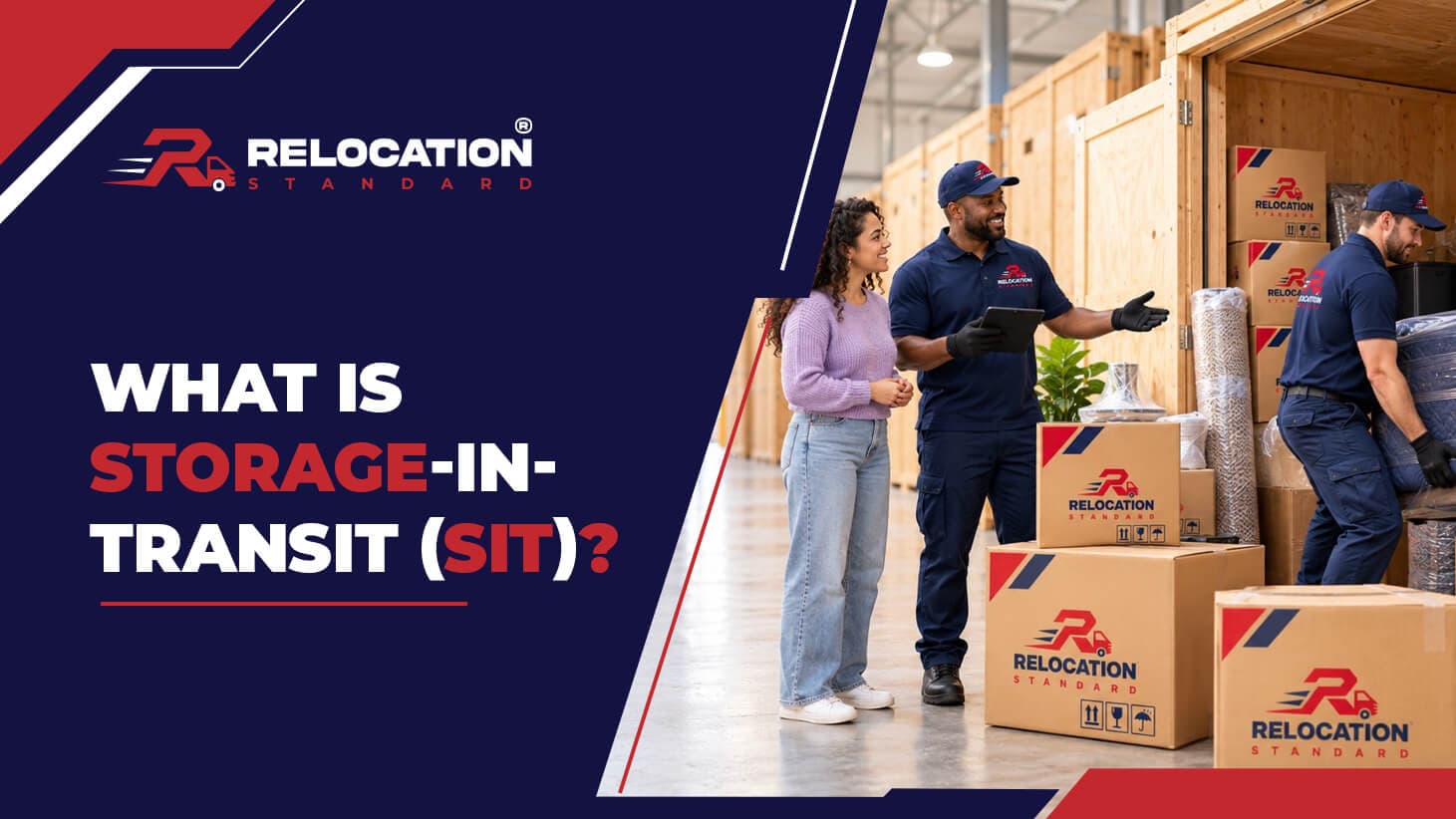
What Is Storage-in-Transit?
Storage-in-transit (SIT) is temporary warehouse storage of a household-goods shipment while it is awaiting further transportation or final delivery. The FMCSA moving glossary describes it as temporary storage pending continued movement. SIT is not automatically the same as renting a self-storage unit or placing goods in permanent warehouse storage under a separate arrangement.
SIT often arises when a customer cannot receive the shipment at the destination, the delivery schedule changes, or the mover and customer agree to hold the goods temporarily. The applicable carrier tariff and written documents govern the storage period and charges. Ask where the goods will be stored, how long SIT is available, and what happens when that period ends.
When Might a Mover Use SIT?
Your new home is not ready
If a closing is delayed or a lease begins after the truck arrives during the agreed delivery period, the mover may need to store the shipment. The customer may be responsible for lawful storage, handling, and later delivery charges when the customer cannot accept delivery as agreed. See FMCSA's transportation guidance.
You request a temporary hold
You may ask the mover to store the shipment while waiting for repairs or access to the new home. Ask for a written quote that covers warehouse handling, storage duration, insurance or valuation implications, and redelivery. The original transportation estimate may not include these services.
The mover arrives too early
An important exception concerns delivery more than 24 hours before the agreed date or first day of the delivery period. If you have not requested or accepted early delivery, FMCSA describes circumstances in which the mover may store the goods near the destination at the mover's own expense, with required notice and responsibility for handling and redelivery. Do not confuse this with customer-requested storage.
Who Pays for Storage-in-Transit?
Payment depends on why storage became necessary and what the tariff and contract provide. If you cannot accept delivery on the agreed dates, you may owe storage and warehouse handling charges. If the mover unilaterally offers delivery too early and uses the specific federal early-delivery storage option, the mover may be responsible for the related costs until the agreed delivery time.
A hypothetical storage invoice might include $180 for warehouse handling, $12 per day for 20 days of storage, and $160 for final delivery: $180 + ($12 × 20) + $160 = $580. These are fictional numbers to demonstrate how separate components add up, not industry averages or required rates. Ask for the carrier's moving tariff and itemized charges.
How Long Can Goods Remain in SIT?
There is no universal duration that applies to every carrier's tariff. The mover's terms establish the storage-in-transit period and the maximum permitted period. When that period expires, the shipment may convert to permanent storage under the applicable rules. The conversion is important because the relationship, charges, and liability rules can change.
Ask for the SIT start date, the scheduled expiration date, the warehouse's location, and the conversion terms. If you expect a delay of several weeks, compare the cost of keeping goods in SIT with arranging permanent storage after final delivery. The cheaper option depends on handling and transportation charges as well as storage rent.
What Happens When SIT Converts to Permanent Storage?
For covered interstate household-goods moves, 49 CFR § 375.609 requires the mover to give written notice of the conversion date, the existence of a nine-month period after conversion for filing certain loss or damage claims against the mover, the end of the mover's liability, and the fact that the property will become subject to the warehouseman's rules and charges.
The mover generally must provide this notice at least 10 days before the applicable SIT period expires. If the SIT period is less than 10 days, the rule requires notice one day before expiration. The regulation also specifies acceptable notice methods and recordkeeping. Missing notice can extend the mover's liability under the tariff provisions until the end of the day after actual notice is given.
Why the nine-month claim period matters
The nine-month period described in the conversion notice concerns claims against the mover for loss or damage occurring during transit or SIT. It does not mean the mover remains liable for every new event occurring indefinitely after the goods become permanent warehouse storage. The timing and cause of loss matter. Keep condition records and ask for the warehouse's separate storage terms.
Storage-in-Transit Versus Permanent Storage
SIT is a temporary stage associated with the moving shipment and continued delivery. Permanent storage is a longer-term warehousing arrangement, typically governed by the warehouse's terms after conversion or a separate agreement. Different charges, access rights, and liability arrangements may apply. Do not assume that the mover's original Full Value Protection continues unchanged after conversion.
If you need to retrieve a single box while goods are in storage, ask whether the facility permits access and what handling fees apply. Some SIT facilities are designed for whole-shipment storage and later redelivery, not routine customer visits.
How Does SIT Affect Delivery Dates?
A storage hold may delay final delivery and require a new delivery appointment. If you requested the hold or were unavailable during the agreed delivery window, the mover may assess additional charges according to the tariff. If the mover was ready to deliver early, different federal rules may apply. Confirm the new delivery date or period in writing.
If the carrier is already late, do not assume it can avoid its reasonable-dispatch obligations simply by placing the shipment in a warehouse. The reasons for storage, notices, and the transportation contract determine what rights and remedies may apply.
How to Prepare for SIT Without Surprises
Before booking, ask the mover whether it offers SIT, the maximum duration, warehouse address, access policy, daily or monthly rates, handling charges, and redelivery cost. Confirm whether the shipment will be inventoried on entry and exit. Keep photographs of valuable items, and make sure the warehouse has current contact information for you.
When your new home becomes available, request a written delivery schedule and a final itemized statement. Compare the inventory at delivery and document missing or damaged goods promptly. If a claim is needed, follow the moving damage claims process.
Final Takeaway
Storage-in-transit is a temporary bridge between pickup and final delivery. Its biggest practical questions are why storage is needed, who pays, when the period ends, and what happens at conversion. Ask for written terms before the shipment enters a warehouse, and keep the notices and inventory. Relocation Standard's long-distance moving services can help you plan for a destination that may not be ready immediately.