What Is an Interline Move in the Moving Industry?
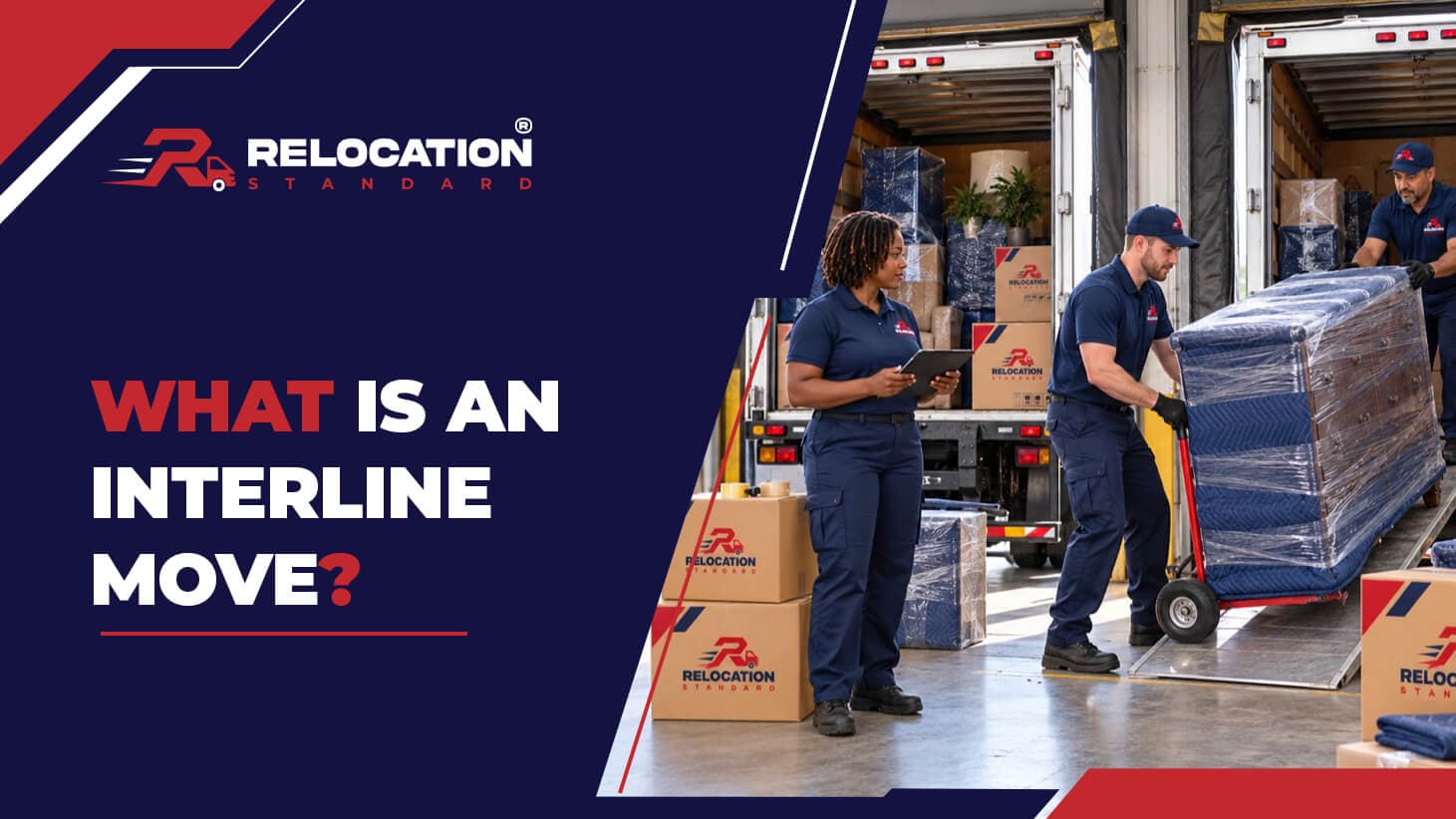
An interline move is a transportation arrangement in which two or more carriers participate in moving a shipment to its final destination. The FMCSA's explanation of freight interlining describes a shipment transferred from one carrier to another for the remaining transportation. The term is used across freight transportation, and the household-goods paperwork requirements make it relevant to interstate moving customers.
For example, Carrier A might transport a shipment from Washington, DC, to a transfer point in Texas, where Carrier B takes responsibility for carrying it to Los Angeles. The shipment's movement is interlined because multiple carriers perform transportation. That is not the same as one carrier changing drivers or assigning a local packing crew.
Why Would Movers Use Interline Transportation?
Interlining can help a transportation network serve destinations outside a carrier's direct routes, coordinate capacity, or connect regional operations. It can be especially relevant when a shipment starts or ends in an area with limited direct service. The operational reasons vary by carrier and should not be presented as automatic savings or a guarantee of faster delivery.
Some long-distance shipments are consolidated with other customers' goods. Consolidation alone does not establish an interline move; it may occur entirely under one carrier's transportation operation. Likewise, a shipment moved through a van line agent network is not necessarily interlined. The decisive distinction is whether more than one carrier actually participates in the transportation.
Interline Move Versus Van Line Agent Network
A van line can use a booking agent, origin agent, hauling agent, and destination agent. These are service roles that can exist under a coordinated carrier network. An interline move involves multiple motor carriers providing transportation. The arrangements may overlap, but the terms are not interchangeable.
Suppose a local agent packs a shipment and a van line driver carries it all the way to the destination. Different companies may be involved in packing and delivery assistance, yet there may be only one carrier transporting the goods. Conversely, if the shipment is handed from one authorized carrier to another for onward movement, interlining is involved even if neither company is a famous national brand.
What Must the Order for Service Say?
For a regulated interstate household-goods shipment, the FMCSA pickup guidance explains that the order for service must list the names and addresses of other motor carriers that will participate in interline transportation when known. This is a specific disclosure requirement, not a guarantee that every future operational detail will be known at booking.
The order for service also identifies the mover, shipment dates or periods, payment terms, and other information. Keep a copy and ask the mover to explain any named participating carriers. The bill of lading is the receipt and transportation contract; review it carefully before the goods are loaded.
Does Interlining Mean My Belongings Will Be Unloaded?
A transfer between carriers can involve moving goods between vehicles or facilities, but the exact physical handling depends on the arrangement. Do not assume every interline shipment is unloaded at a warehouse, and do not assume it stays untouched on one trailer. Ask whether the shipment will be transferred, how inventories are reconciled, and who will notify you if plans change.
At pickup, photograph important items and review the inventory's condition notes. At delivery, compare the inventory and record missing or damaged items. These records are useful whether the shipment travels on one truck or changes carriers. For valuable goods, consider the high-value inventory form and the selected valuation coverage.
Who Is Responsible for Loss or Damage?
Interline transportation can involve more than one carrier, but the applicable bill of lading, federal law, and facts of the shipment determine liability. Under the federal Carmack Amendment, 49 U.S.C. § 14706, a receiving or delivering carrier may have liability for interstate shipments in circumstances covered by the statute. Do not assume that the last driver who touched an item is necessarily the only company you can contact.
A practical first step is to submit a proper written claim to the carrier identified in your transportation documents, following the company's claims instructions and applicable deadlines. Keep a copy of the inventory, bill of lading, photographs, and all communications. See the guide to the moving damage claims process. If the carrier disputes responsibility, the transportation documents and legal framework become especially important.
Does an Interline Move Cost More?
Not automatically. Pricing depends on the carrier's tariff, the written estimate, route, shipment size, accessorial services, and any disclosed special arrangements. A transfer may involve operational costs, but there is no universal consumer surcharge called an interline fee. Ask the mover to identify any specific charge in the estimate or moving tariff.
For example, a hypothetical estimate of $5,600 could cover transportation and ordinary handling for an interline shipment, while a separate $250 charge might be listed for a requested special service. The interline structure alone does not establish that the $250 is lawful or necessary; its tariff basis and service description matter. These figures are illustrations, not market averages.
What Happens to the Delivery Window?
The agreed pickup and delivery dates or periods remain important even if carriers coordinate the route. For ordinary service, the federal reasonable dispatch rules generally require service according to the agreed dates or periods, subject to applicable exceptions. Interlining is not a blanket excuse for an indefinite delay.
Ask who provides tracking updates and who will contact you about changes. If the carrier offers a guaranteed delivery date, request the premium terms and remedy in writing. A delivery spread is different from a guaranteed single day.
How to Protect Yourself During an Interline Move
Before signing, identify the responsible carrier and any other participating carriers known at the time. Check the registration of the relevant interstate mover using FMCSA's mover search. Ask how the shipment is tracked through transfers, whether it may enter temporary storage-in-transit, and how the company handles a missing item discovered at delivery.
During the move, keep one folder containing the estimate, order for service, bill of lading, inventory, photographs, payment receipts, and all revised dates. If you receive a new company name or phone number, ask the original mover to confirm the relationship. A clear paper trail is more useful than relying on a verbal assurance that “another truck is taking it.”
Final Takeaway
An interline move uses two or more carriers to transport a shipment to its destination. It is not automatically a problem, but it adds a reason to check the identity of participating carriers, inventory controls, and delivery communication. Review the order for service, preserve the bill of lading, and ask how transfers are documented. Relocation Standard's interstate moving services and long-distance moving resources can help you prepare questions for a complex route.