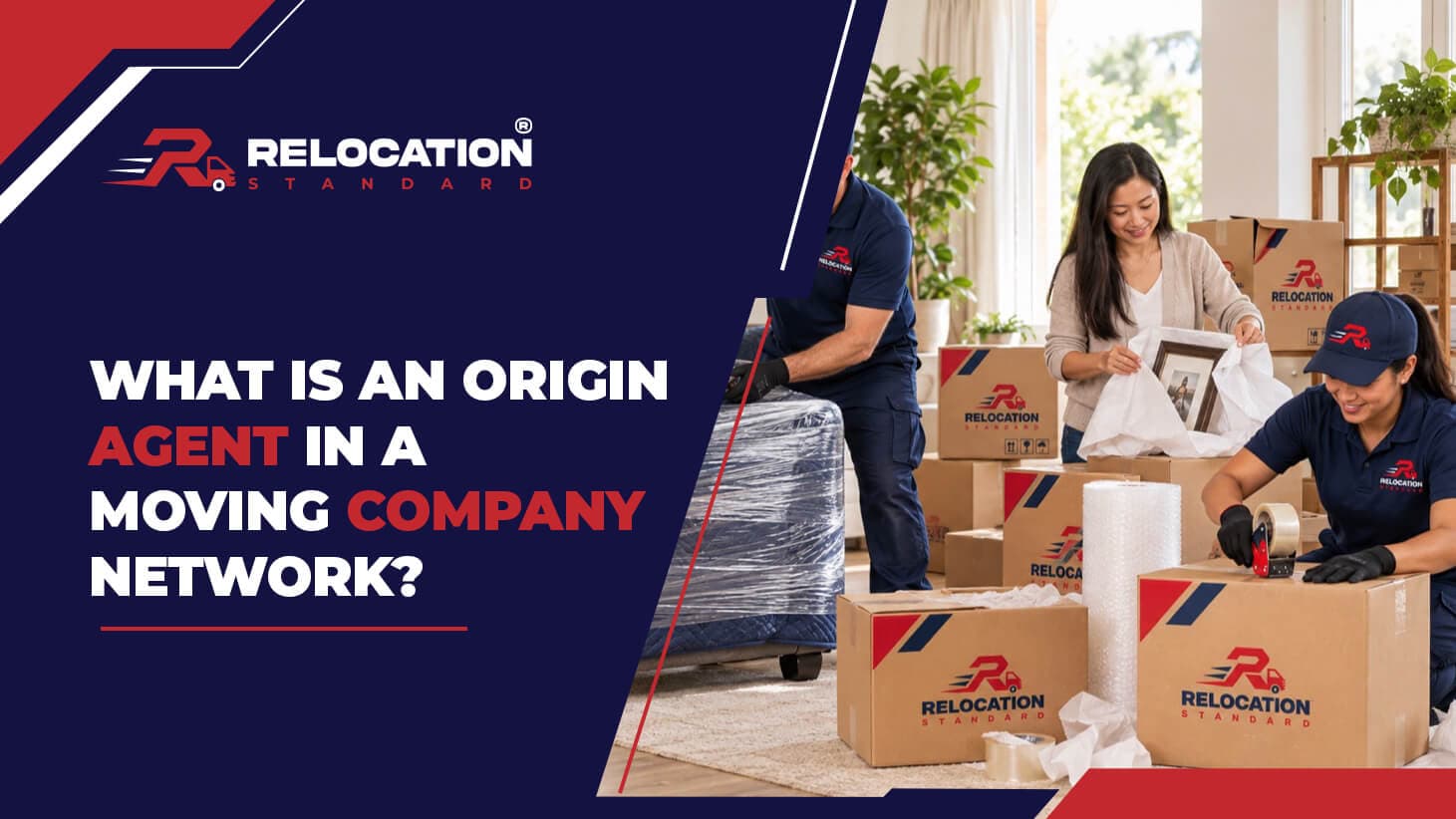
What Is an Origin Agent?
An origin agent is the agent designated in the shipment's pickup area to help prepare household goods for movement or provide information about the move. The FMCSA moving glossary uses this description, and United Van Lines' moving glossary describes the same basic function. The agent is usually a local business affiliated with a van line, not necessarily a separate transportation carrier for the entire interstate journey.
The word origin refers to where your belongings are picked up. An agent may survey the shipment, coordinate packing, confirm access conditions, provide crews, or communicate with the van operator. The precise services depend on the agency agreement and your order. Do not assume that every origin agent performs every task.
How an Origin Agent Fits Into a Van Line Move
A van line can coordinate shipments through multiple affiliated local companies. A booking agent accepts the order; the origin agent supports the pickup area; the hauling agent or van operator performs transportation; and a destination agent may assist near the new home. One company can fill more than one role.
For example, a family moving from Phoenix to Columbus might book with a Phoenix agency. That agency conducts the survey and provides packing labor. A driver operating under the interstate carrier's authority loads and transports the shipment. A Columbus-area agent helps with destination access. These are roles in a coordinated move, not proof that three unrelated companies have sold the shipment to one another.
Origin agent versus booking agent
The booking agent is the agency that accepts and registers your moving order. The origin agent is the agency assigned to help prepare the shipment in the pickup area. The same local agency often performs both functions, but the FMCSA glossary says a booking agent may or may not be the origin or destination agent. Confirm both roles when you receive the paperwork.
Origin agent versus hauling agent
A hauling agent or van operator moves the shipment over the road. The origin agent may supply labor or local equipment without operating the long-distance vehicle. Ask who will issue the bill of lading and whose USDOT number appears on it. That identifies the transportation arrangement more reliably than the branding on a shirt or truck.
Origin agent versus moving broker
A moving broker arranges transportation with a carrier but generally does not transport the goods. An origin agent acts for a carrier or van line under an agency arrangement. A local company can hold more than one registration, so verify the specific role in your transaction rather than relying on its marketing description. The FMCSA mover search identifies carrier and broker registrations.
What Does an Origin Agent Actually Do?
Survey belongings and identify access problems
An origin-area representative may complete an in-home or virtual survey, record bulky items, estimate packing needs, and identify stairs, elevators, long carries, or truck restrictions. The estimate itself must come from the responsible mover under the applicable federal requirements. Tell the representative about storage spaces, garages, unusually valuable items, and anything not visible during a video tour. Omissions can affect the price and the services available on loading day.
Coordinate packing and preparation
The agent may arrange cartons, protective materials, professional packing, or special handling for a piano, artwork, or fragile furniture. Ask which services are included in the written estimate and which are separately priced accessorial services. If you pack your own boxes, label them and clarify how the mover will document their condition.
Prepare the pickup location
Origin crews may confirm the loading address, building move hours, loading-dock rules, elevator reservation, parking permit, and any needed shuttle. These practical details can affect whether the assigned vehicle can safely access the residence. A local agent's knowledge is useful, but it does not replace your obligation to disclose restrictions before the move.
Assist with inventories and paperwork
The crew may prepare or review a household goods inventory showing the condition of items at loading. Compare the entries with what is actually placed on the truck. The order for service sets out agreed services and dates; the bill of lading is the transportation contract and receipt. Keep signed copies and photographs. A local agent can help explain documents, but do not sign inaccurate condition notes simply to keep loading on schedule.
Who Is Legally Responsible for the Shipment?
For an interstate household-goods move, the responsible motor carrier's obligations do not disappear because an origin agent performed packing or pickup support. Federal rules define a mover to include a motor carrier and its household-goods agents, and require written arrangements with prime agents. See FMCSA's general requirements and its guidance on agent agreements.
The correct claim recipient and liability terms depend on the carrier and shipment documents. If something is lost or damaged, document the condition, preserve the inventory and photographs, and follow the moving damage claims process. Do not assume the local origin office alone is responsible merely because its crew packed the item.
Does an Origin Agent Charge an Extra Fee?
Not necessarily. Agency participation is part of how some van lines deliver service, and there is no universal separate fee called an origin-agent charge. The estimate may include packing, loading, local handling, transportation, or other tariff-based services. Ask for an itemized quote and the relevant tariff provisions if you see a charge you do not understand.
A hypothetical $5,200 estimate might include $4,300 for transportation and $900 for packing and special handling. That breakdown does not mean the $900 is a fee for the agent's existence; it describes the services being purchased. Figures here are illustrations, not national prices.
What Should You Ask Before Loading Day?
Ask for the origin agent's legal name and phone number, the carrier's USDOT number, and the name of the office coordinating delivery. Confirm who will perform the survey, pack fragile items, prepare the inventory, and communicate changes to the driver. Ask what happens if your shipment exceeds the estimate or the truck cannot reach the building.
For interstate moves, FMCSA's pickup guidance explains the required order for service and pickup documentation. If the agent gives verbal promises about dates, charges, or special handling, request written confirmation from the responsible carrier. For planning help, review Relocation Standard's long-distance moving services and interstate moving services.
Final Takeaway
An origin agent is the local pickup-area partner in a moving company network. Its job is to help prepare the shipment or provide information, while booking, hauling, and destination responsibilities may belong to the same or different agencies. Verify the responsible carrier, review the paperwork, and keep every material change in writing. This makes a multi-agent move easier to understand without confusing local assistance with the carrier's legal obligations.