What Is a Pre-Move Survey?
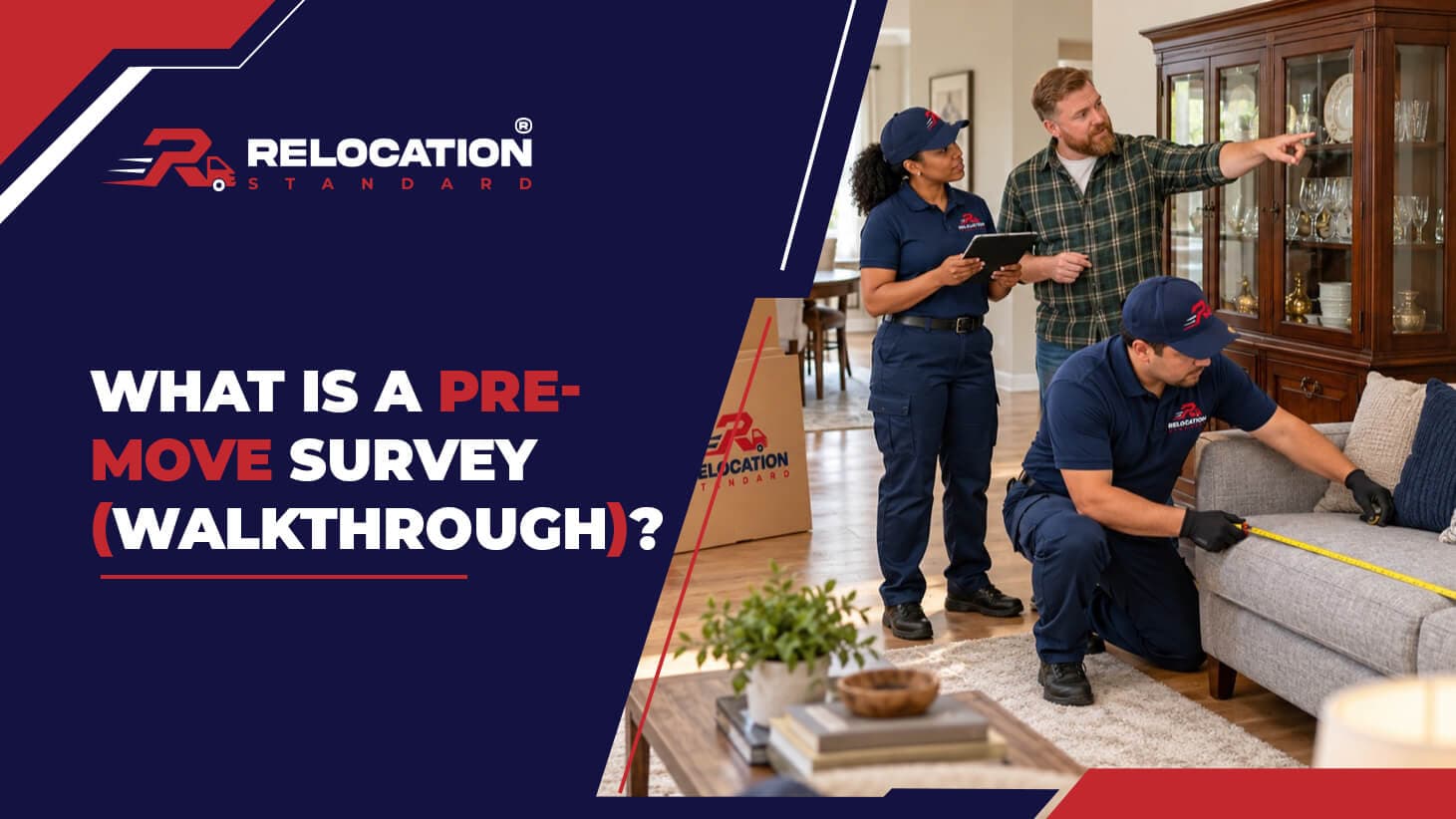
A pre-move survey is an assessment of the belongings, access conditions, and services involved in a planned move. A representative walks through the property in person or reviews it through a qualifying video process, records the items to be shipped, and asks about packing, storage, specialty handling, and destination access. The results help the mover prepare a written estimate.
For regulated interstate household goods shipments, 49 CFR § 375.401 generally requires a physical survey unless the shipper waives it in writing. Federal rules define a physical survey to include an on-site or virtual survey that allows the mover to see the goods clearly. A simple telephone conversation or online list is not necessarily the same as the required visual survey.
Why Does a Moving Company Conduct a Walkthrough?
The main purpose is to reduce surprises. The estimator needs to know how many cartons and pieces of furniture require transportation, which items are unusually large, and whether the crew needs packing supplies, extra labor, or special equipment. An accurate survey also helps the carrier plan truck capacity and loading time.
For example, two homes with the same number of bedrooms can have very different shipments. One may contain minimalist furniture and few boxes; the other may have a full garage, attic, and storage shed. A quote based only on bedroom count could miss a substantial part of the shipment.
The walkthrough is also a chance for you to explain building restrictions. Narrow staircases, long hallways, parking limits, and elevator rules may create accessorial moving charges. Disclosing them early makes it easier to compare complete estimates.
What Do Movers Look at During a Pre-Move Survey?
Furniture and household belongings
The estimator reviews major furniture, appliances, televisions, rugs, artwork, and other possessions you want transported. Show everything in closets, drawers, attics, basements, garages, sheds, and storage units. Explain what you intend to sell, donate, or leave behind so those items are not included in the quote.
Packing and fragile items
Point out glassware, artwork, mirrors, antiques, musical instruments, and electronics requiring special care. Tell the estimator whether you will pack your own boxes or want the crew to do it. Packing labor, materials, custom crating, and special handling can change the price. A survey is the right time to discuss high-value inventory forms.
Access at both addresses
The estimator should understand the truck's access to the pickup and destination. Discuss stairs, elevator reservations, gated roads, parking permits, loading docks, long driveways, and restricted move hours. A long carry fee or shuttle service fee may apply when access is difficult under the mover's pricing terms.
Scheduling and storage needs
Share your desired packing date, loading date, and delivery availability. If the new home will not be ready, ask about storage-in-transit and related handling charges. A survey can reveal needs that are not obvious from the driving distance alone.
In-Home Survey vs. Virtual Moving Survey
An in-home survey involves a representative visiting the property. It can be especially helpful for complex homes, awkward access, large furniture, or specialty items. The representative can see physical routes and ask follow-up questions while walking through the rooms.
A virtual survey uses video to show the estimator the items and property. The current federal definition in 49 CFR § 375.103 permits live or pre-recorded video that allows the mover to clearly identify the goods. Virtual surveys can save travel time and make scheduling easier, but they still depend on clear images and complete disclosure.
Allied Van Lines and Mayflower describe video surveys that examine shipment size, packing needs, and access conditions. Their workflows are examples of how companies implement the process; they do not create universal requirements for every mover.
How to Prepare for a Moving Walkthrough
Start by deciding what will move and what will stay. Walk through every room yourself and identify items that are easy to forget, including holiday decorations, outdoor furniture, tools, and items in off-site storage. Make a simple list of belongings requiring special handling.
For a virtual walkthrough, charge your phone, use a stable internet connection, and turn on lights. Open closets and cabinets when requested, and be ready to show the route from your home to the likely truck parking location. A tape measure can help with large pieces or tight doorways.
Have both addresses and approximate moving dates ready. Mention your building's insurance or certificate of insurance requirements if applicable. Do not hide belongings to obtain a lower initial estimate; doing so can lead to a quote that no longer reflects the actual move.
What Happens After the Survey?
The mover uses the survey to prepare a written estimate and service plan. Review the item list, transportation terms, packing charges, access services, valuation selection, and expected schedule. For an interstate move, confirm whether the quote is a binding estimate or a non-binding estimate.
A binding estimate covers the listed shipment and services at the agreed price, subject to applicable rules for changes. A non-binding estimate approximates charges that are calculated under the carrier's tariff and actual shipment information. Do not compare the two as though they are identical guarantees.
Ask for corrections if the estimate omits a room, specialty item, or service discussed during the walkthrough. Retain the survey notes and the final signed estimate. If your inventory changes before loading, tell the mover promptly and request updated written documentation when necessary.
Can You Waive a Pre-Move Survey?
For covered interstate household goods moves, the federal rule allows the shipper to waive the physical survey, but the waiver must be in writing, signed before loading, and retained with the bill of lading records. A waiver is not a recommendation to skip accurate disclosure; it changes the way the estimate is prepared.
Be cautious with advice that says a survey is never required when the home is more than 50 miles from the mover. That older distance exception was removed from the current federal rule. Check the current 49 CFR § 375.401 rather than relying on outdated summaries.
For local and intrastate moves, applicable state rules and contracts may differ. A company may offer a phone quote for a small local move, but you should still provide a complete inventory and request the price and scope in writing.
Example: How a Survey Changes a Moving Quote
Imagine a customer initially reports a two-bedroom apartment and receives a rough preliminary estimate. During the video survey, the estimator discovers a full storage unit, a heavy piano, and a building with a distant loading dock. The written estimate can now account for the extra shipment volume, specialty handling, and access work.
The example does not imply that any specific fee is automatically owed. The applicable tariff or agreement determines which services are chargeable. Its lesson is that the best estimate is based on the real shipment and real access conditions, not on an optimistic guess.
Common Pre-Move Survey Mistakes
A frequent mistake is showing only the main living rooms while overlooking garages, closets, outdoor furniture, or a second address. Another is assuming the estimator knows which furniture will be disassembled or which boxes you plan to pack. A third is forgetting to discuss delivery restrictions until the truck arrives.
Review the estimate while the survey is fresh in your memory. If you notice a missing item, ask for a correction before the move. Keep emails or written notes confirming any change. The survey is a planning tool, but the signed transportation documents govern the move.
Final Thoughts
A pre-move survey helps the moving company understand your belongings, access conditions, and service needs before pricing the job. Show every room, disclose specialty items, and compare the resulting written estimate with what you actually plan to move. For additional planning help, explore Relocation Standard's long-distance moving services and residential moving services.