What Is a Certificate of Insurance for Movers?
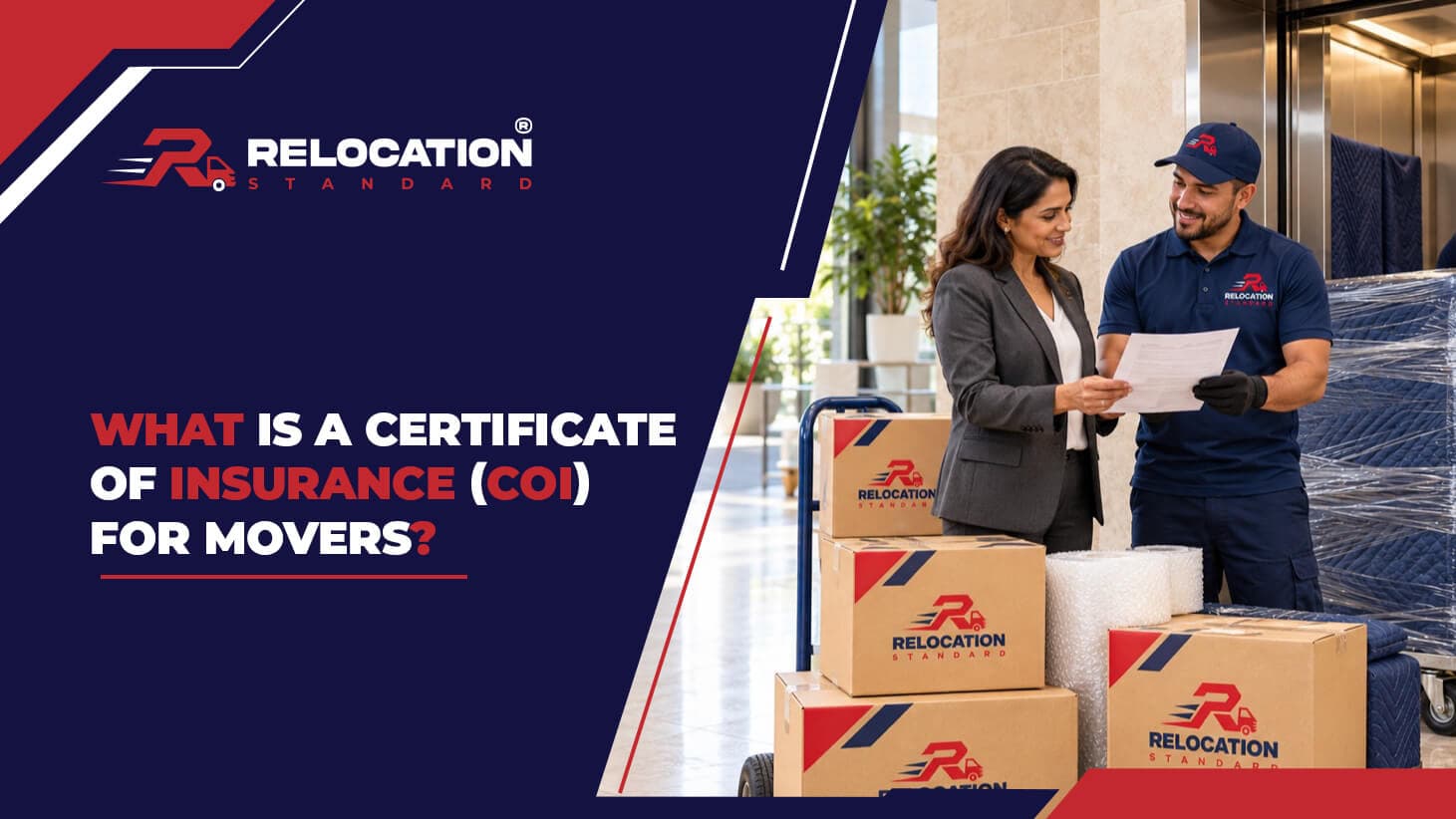
A certificate of insurance (COI) is a document issued by an insurance agent, broker, or insurer summarizing specified insurance policies held by a moving company. It typically identifies the insured business, insurance companies, policy dates, types of coverage, limits, and the party requesting the certificate.
For building moves, the most common document is a certificate of liability insurance, often using the ACORD 25 format. The COI helps a building manager check that a moving contractor has insurance associated with its work on the premises. It is evidence of reported coverage, not the insurance policy itself.
The standard ACORD 25 certificate explicitly says the certificate does not create rights or change the underlying policy. The policy and any applicable endorsements determine what is actually covered.
Why Do Buildings Require Moving COIs?
An apartment building may worry about damage to elevators, walls, doors, loading docks, or common areas while furniture is carried through the property. Management may therefore require proof of general liability coverage before allowing a moving crew to use its service entrance or reserve a freight elevator.
Requirements vary by property. Some buildings request a certificate naming the management company as certificate holder. Others require an additional insured endorsement, specified coverage limits, a waiver of subrogation, or advance submission by a deadline. Those requirements come from the building's contract or rules, not from one universal nationwide COI requirement for every residential move.
When should you ask about the COI?
Ask as soon as you know your moving dates. Buildings may require review several business days in advance, and obtaining a corrected certificate can take time. Confirm whether both the pickup and destination buildings need separate certificates, especially when moving between two managed properties.
What Information Is on a Moving Company's COI?
A typical certificate shows the moving company's legal name, the issuing insurance agency, the insurance carriers, policy numbers, effective and expiration dates, coverage categories, and limits. It also identifies the certificate holder and may describe the moving operation or location.
Common coverage lines include commercial general liability, automobile liability, umbrella or excess liability, and workers' compensation or employers' liability. Not every mover has every type listed, and the building may require only some of them. A COI may not show the mover's cargo insurance or your selected shipment valuation at all.
Certificate holder versus additional insured
A certificate holder is the person or organization receiving the certificate. Being named as certificate holder does not, by itself, make that organization insured under the mover's policy. Additional insured status requires coverage under the actual policy, often through an endorsement. A typed statement on the COI cannot replace the endorsement. The ACORD reference guide makes this distinction clear.
Does a COI guarantee cancellation notices?
No. A certificate alone does not promise that the holder will be notified if the insurance policy is canceled. Any enforceable notice obligation depends on the policy provisions, endorsements, and applicable law. Do not rely on a COI as an automatic ongoing monitoring service.
How to Request a COI From Your Moving Company
First, ask the building manager for the exact written insurance requirements. Get the legal name and address of the certificate holder, any additional insured wording, minimum limits, required policy types, and the submission deadline. Forward the complete instructions to your mover instead of paraphrasing them.
Next, ask the moving company to have its insurance agent issue the certificate. If an additional insured endorsement is required, ask whether the mover's policy permits it and whether the agent can supply the supporting endorsement. The mover should send the completed COI directly to you or the building, according to the property's procedure.
Finally, confirm approval before moving day. A COI sent to the wrong email address or listing the wrong legal entity may be rejected even if the mover has appropriate insurance. Keep the approved copy with your order for service and building reservation documents.
Example: Moving Into a Managed Apartment
Suppose you are moving from a house into a condominium. The destination building requires a liability COI showing its management company as certificate holder, a specified general liability limit, and proof of workers' compensation coverage. It also requires the document three business days before the freight elevator reservation.
You send the requirements to your mover a week ahead. The mover's insurance agent issues a certificate with the correct management name and policy dates. The building approves it and confirms the elevator booking. This example illustrates the workflow; it does not establish standard limits or deadlines for other buildings.
If the COI instead names the resident as certificate holder, management may request a correction. The fix usually involves having the issuing agent update the certificate, not editing the PDF yourself.
Does a Moving COI Cover Damage to Your Belongings?
Not necessarily. A building COI is commonly focused on liability policies relevant to damage or injury involving the property or third parties. It does not automatically mean the replacement value of your furniture is insured, and it does not override the mover's liability terms.
For a federally regulated interstate household goods move, the mover's responsibility for loss or damage is addressed through the applicable valuation choice and contract. Review Full Value Protection and Released Value Protection separately. A COI should not be presented as proof that either valuation option has been selected.
Likewise, if the mover scratches a building wall, the question of insurance coverage depends on the facts and the relevant policy. The presence of a COI is not a guarantee that every incident will be paid.
COI Versus FMCSA Insurance Filings
Interstate household goods movers are subject to federal registration and financial responsibility requirements. The FMCSA insurance filing chart identifies required filings for covered carrier categories, including bodily injury and property damage liability and certain cargo insurance requirements.
Those filings are not the same thing as the building-specific COI a condominium manager requests. An FMCSA registration check helps verify the carrier's federal operating information, while a COI summarizes particular insurance policies for a requesting party. For an interstate move, also use the FMCSA registered mover search to confirm the company's legal identity and business type.
Do not interpret federal cargo insurance minimums as a promise that every customer's belongings will be replaced up to their full value. Cargo insurance, valuation liability, and building liability coverage are related but distinct concepts.
What if Your Mover Cannot Provide the Required COI?
Ask which requirement is preventing approval. The problem may be an incorrect certificate holder name, an expired policy date, a missing endorsement, or coverage that does not satisfy the building's contract. A revised certificate may solve an administrative mismatch, but it cannot create insurance coverage that the mover does not have.
If the company cannot meet a genuine requirement, speak with building management about permitted alternatives before moving day. You may need to select another properly insured mover or change the plan. Never falsify a certificate or assume the building will waive its rules at the last minute.
A building can also require a refundable move-in deposit, elevator reservation, or move-day inspection. Those are separate obligations; a COI does not replace them.
Questions to Ask Before Booking Movers
Ask whether the company routinely issues building COIs, how much lead time it needs, and whether its insurance agent can supply additional insured endorsements when required. Confirm the legal business name on the certificate will match the company in your moving contract. If the job involves subcontractors or affiliated agents, ask which entity will perform the work and whose insurance applies.
Also ask the building about truck size, loading docks, elevator padding, permitted hours, and long carry fees. Insurance approval does not resolve access restrictions that could affect your schedule or price.
Final Thoughts
A moving certificate of insurance helps a building review a contractor's reported insurance, but it does not replace licensing checks, valuation choices, or the actual policy. Obtain the building's written requirements, request the COI through your mover's insurance agent, and confirm approval before the truck arrives. For help coordinating a move, explore Relocation Standard's residential moving services and local moving services.