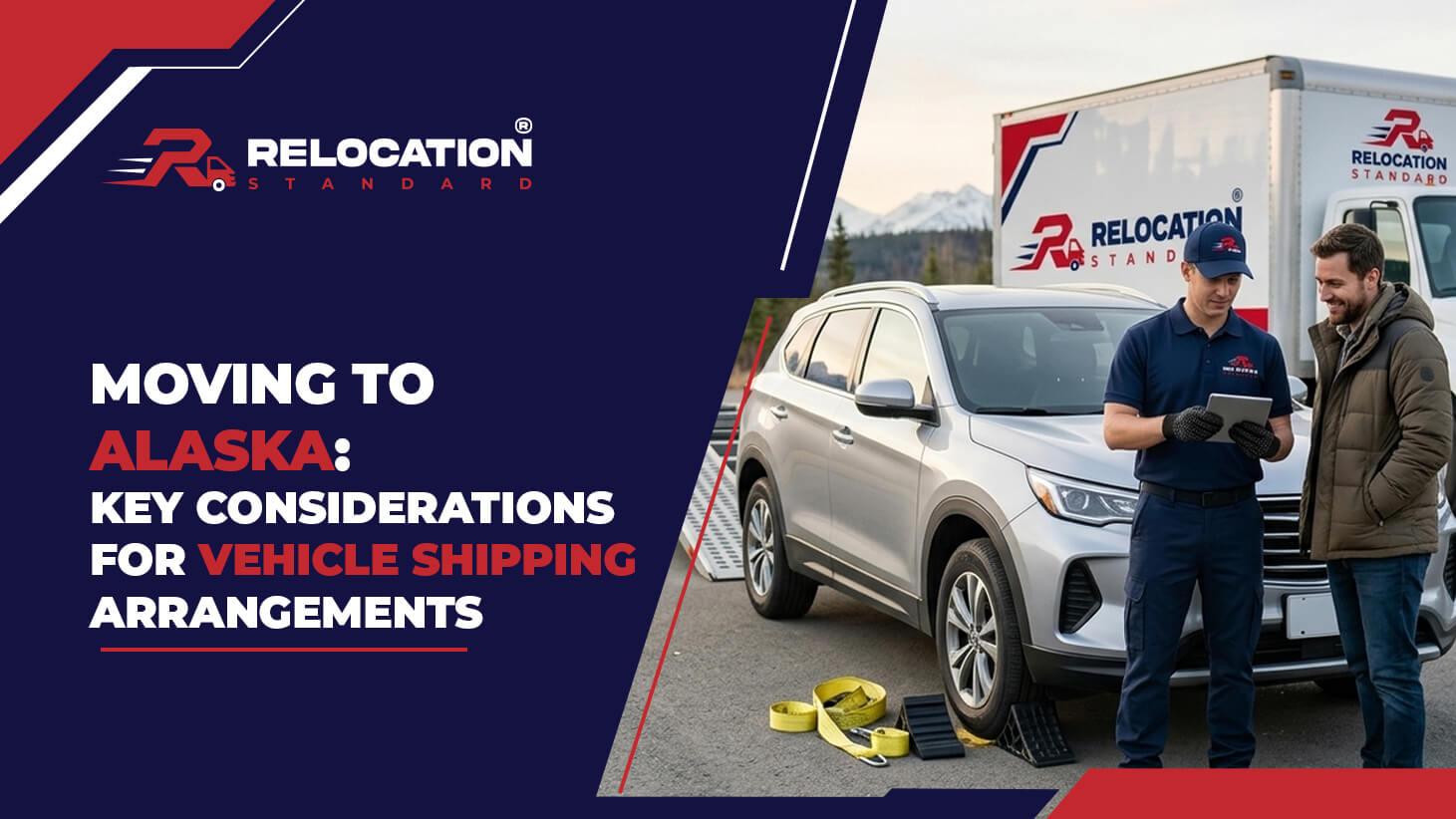
A vehicle arriving at a marine terminal is not necessarily ready to drive to your new home. The best arrangements account for port release, onward transportation, insurance and Alaska registration requirements. Start discussing these details when planning your household relocation with Alaska movers.
Quick Takeaways
A reliable vehicle shipping plan connects the transport route, carrier requirements and your arrival schedule before you make a booking.
- Compare port-to-port shipping, coordinated road and marine transport, and driving your vehicle yourself.
- Obtain a quote based on actual vehicle dimensions, condition and powertrain.
- Confirm whether the quote includes terminal charges, inland transport and any storage fees.
- Keep ownership documents, keys and condition photographs available.
- Do not pack belongings inside a vehicle unless every carrier on the route permits them.
- Make a temporary transportation plan and check Alaska DMV requirements before arriving.
What are the main ways to transport a vehicle to Alaska?
Most households can compare ocean vehicle shipping, a combination of truck and ocean transport, or a self-drive journey through Canada. The right option depends on the starting location, final Alaska community and your comfort with doing part of the journey yourself.
Port-to-port vehicle shipping
Port-to-port shipping moves your vehicle between designated marine terminals, leaving you responsible for any pickup or delivery outside those terminals unless you arrange additional service.
Tacoma, Washington, is a common mainland departure point. Anchorage is a major destination, while some carriers also serve other Alaska ports. Ask whether your preferred sailing reaches the correct terminal and whether you can collect the vehicle there.
For examples of how marine services differ, see Matson's Alaska vehicle transport information and TOTE's Alaska vehicle shipping service. These are examples of available transport models, not endorsements or guarantees of space on a particular sailing.
Coordinated road and marine transport
A coordinated shipment combines inland vehicle transportation with a marine crossing or other onward transport. It can be useful when you live far from the departure port or cannot collect the car personally in Alaska.
Find out who is responsible for each leg, especially when your quote is described as door-to-door. A street address outside a carrier's service area may require a separate pickup location or local delivery arrangement. Ask for the exact handover address before accepting the quote.
Driving your own vehicle through Canada
Driving can be an alternative for road-connected destinations, provided that you can meet border entry requirements and prepare for the seasonal conditions along your route.
Budget for accommodation, fuel, meals, maintenance and time away from work. Carry the appropriate travel and vehicle documents, and verify current border requirements with the relevant authorities. This option cannot replace marine transportation for destinations without a road connection to the mainland highway network, such as Juneau.
How do Alaska destinations affect your shipping arrangements?
Your final community determines whether a single terminal pickup is practical or you need a further road, ferry or marine shipment.
For Anchorage, a terminal near the metropolitan area may be convenient. If you are moving to Fairbanks or Wasilla, compare collecting the vehicle yourself with booking an onward road delivery. For Juneau, other Southeast Alaska communities or remote locations, confirm the specific available marine route and whether a local transfer is needed.
Do not assume that a carrier advertising Alaska service reaches the entire state. Check the moving cities and routes directory when planning your household relocation, and confirm vehicle service availability separately.
What information do you need for an accurate vehicle shipping quote?
A meaningful quote requires the precise route, vehicle specifications, operating condition and requested service level. A generic estimate based only on the make and model may not account for modifications or special handling.
- Exact origin and destination, including whether terminal collection is acceptable.
- Year, make, model, VIN and vehicle powertrain.
- Overall length, width and height, including lifts, racks, hitches or oversized tires.
- Whether the vehicle starts, moves, steers and brakes under its own power.
- Requested pickup window and earliest date you can accept delivery.
- Any approved personal belongings you hope to carry in the vehicle.
A modified pickup, oversized van, recreational vehicle or non-running car may require different equipment or a custom rate. Declare these details at the quote stage rather than waiting for the terminal inspection.
How much does it cost to ship a car to Alaska?
The cost depends on the route, vehicle size, transport method, service level and additional handling. Compare written quotes for the same start and end points instead of relying on a single advertised ocean freight price.
- Mainland collection or delivery to the departure terminal.
- Ocean freight and applicable fuel, port and terminal charges.
- Special handling for an oversized or inoperable vehicle.
- Delivery from the Alaska terminal to your destination.
- Permitted personal effects, storage beyond the free period and cancellation fees.
A port-only quote may appear cheaper than a coordinated service. But the difference can shrink once you account for driving to the port, travel back home, onward transport and time spent collecting the vehicle.
Keep the household moving estimate separate so that you can see the total cost of your long-distance relocation without counting the same transport leg twice.
How should you prepare your vehicle for shipping?
Prepare the car according to the booked carrier's written acceptance checklist, including its fuel level, mechanical condition and documentation requirements. Marine and road operators may apply different rules.
Documents and vehicle inspection
Keep the requested registration or proof of ownership, photo identification, booking confirmation and any required authorization accessible.
Check whether the person dropping off or collecting the car needs written permission from the registered owner. If your car is financed or leased, ask the lender or leasing company whether the proposed shipment requires authorization.
Wash the vehicle, photograph its exterior and interior, and record existing dents, scratches and glass damage. Review the condition report at the handover and retain a copy. Provide the necessary keys and alarm instructions as directed by the carrier.
Fuel, batteries and vehicle condition
Follow the operator's specific fuel and battery instructions rather than arriving with a full tank or assuming every vehicle qualifies for standard shipping.
Marine operators commonly limit the amount of fuel in vehicles; for example, Matson's vehicle preparation guide specifies a maximum of one-quarter tank for ordinary fuel-powered cars. Check the minimum as well as the maximum with your own carrier.
Disclose any fluid leaks, mechanical problems, recalls or battery damage. Arrange required repairs or specialist transport before drop-off. For a winter relocation, arrange appropriate cold-weather maintenance with a mechanic in advance and confirm whether removable accessories must be taken off.
Can electric and hybrid vehicles be shipped to Alaska?
Electric and hybrid vehicle acceptance depends on the operator, battery type, route and current safety requirements. Do not book a standard gasoline-vehicle service for an EV without explicit approval.
The Pipeline and Hazardous Materials Safety Administration's EV safety advisory explains maritime transport risks associated with damaged batteries and other electrical faults. Individual carriers may impose restrictions beyond regulatory minimums.
Disclose the precise powertrain, any battery recall, accident or flood history, and the vehicle's condition. Obtain written confirmation that every leg of the proposed shipment accepts it, and follow the approved carrier's charging and handover instructions.
Can you put household belongings inside a car being shipped?
Sometimes, but only when the operators explicitly allow personal effects on the specific route. Permission from an ocean carrier does not automatically extend to a connecting truck carrier.
For instance, Alaska Auto Transport's shipping FAQ describes personal-item allowances on certain Alaska-Washington services, with restrictions on other routes. Policies and additional charges differ by provider.
Ask about weight limits, packing, sight lines, prohibited contents and liability. Keep passports, medication, cash, important records and irreplaceable possessions with you. If items are not approved or protected under the vehicle shipping contract, move them with your household goods shipment instead.
How can you verify a vehicle shipping company and its coverage?
Identify the actual transporter and verify the relevant registration, contract terms and insurance before making a payment. A broker may arrange a shipment without transporting the vehicle itself.
The FMCSA automobile transporter consumer advisory recommends checking the registration of interstate road carriers and brokers. Confirm who handles each road leg and which marine operator is responsible for sea transport.
Ask what damage protection applies on each leg, whether there is a deductible, what exclusions apply and how to document a claim. A carrier's insurance or contractual liability may not cover every type of loss. Also speak with your own auto insurer before changing or cancelling coverage.
Retain your quote, contract, booking reference, condition reports and payment receipts. If changes are needed during the move, obtain written confirmation of any revised price or delivery arrangement.
How do you coordinate vehicle arrival with your household move?
Set separate delivery windows for your vehicle and household goods, then build a workable plan for the time between them. A vessel's estimated arrival date is not always the vehicle collection date.
Ask the carrier for its receiving deadline, sailing window, estimated availability, pickup appointment process and permitted free storage time. Weather, terminal handling and missed connections can change when a shipment is released.
If you plan to fly to Alaska, arrange rental transport, a ride or another practical option if the vehicle is not available when you land. If someone else collects it, confirm that the terminal will accept their authorization. Plan where the car will be parked if it arrives before the furniture or before your lease begins.
What should you do when the vehicle reaches Alaska?
Inspect the car before accepting it, confirm that it is legally ready for road use and complete any applicable title and registration requirements.
Compare its condition with your departure photographs and record any new damage on the release paperwork. Notify the carrier promptly under the contract's claims procedure. Check for warning lights, tire issues and fluid leaks before driving away.
According to the Alaska DMV's guidance for new residents, people establishing residency generally must apply for vehicle registration within 10 days of entering Alaska or beginning employment there. The DMV also explains that advance registration may be possible for a car still in transit. Military exemptions and individual documentation requirements can apply, so confirm your situation with the DMV rather than waiting for the car to arrive.
Conclusion
Shipping a vehicle to Alaska is easier to coordinate when you confirm the complete route, carrier acceptance, final cost, protection and handover arrangements before booking. Keep car transport and household moving schedules connected but independently documented.
If you are planning a household move to the state, explore Relocation Standard's Alaska moving services and share your final destination and target moving date. Confirm vehicle transportation separately so you know exactly what your household moving quote includes.