Although Puerto Rico is a U.S. territory, the logistics differ from a conventional mainland move. An ocean crossing, terminal handling and local release requirements can affect both the final price and delivery schedule.
Quick Takeaways
A successful household shipment to Puerto Rico depends on coordinating every stage, not simply booking space on a vessel.
- Compare full-container, shared-container and smaller freight options using the same inventory.
- Get a written estimate that identifies pickup, ocean freight, paperwork, release and final delivery charges.
- Confirm Electronic Export Information (EEI) requirements and Puerto Rico Treasury procedures with your carrier before shipping.
- Pack for repeated handling, humid conditions and possible delays.
- Keep essential documents, medication and a short-term living kit with you.
- Confirm who will arrange delivery at your actual address, especially if you are moving to a condo, rural property or smaller island.
How does household goods transportation to Puerto Rico work?
Most large household shipments travel by truck to a mainland freight terminal, by vessel to Puerto Rico and by local truck to the destination. Smaller consignments may use other freight services, including air cargo when suitable.
Mainland pickup and terminal handling
Your first transport stage moves belongings from your current home to the departure terminal or consolidation warehouse. Depending on the service, movers may pack and load your belongings at home, or you may deliver packed items to an agreed location.
Ask whether the pickup crew, ocean carrier and destination agent are separate companies. Obtain a contact for each handoff and confirm who is responsible for tracking the entire shipment. If you're moving from an inland state, include mainland transportation when comparing quotes.
Ocean transport and arrival
Ocean freight carries the container or consolidated cargo to a Puerto Rico terminal, where the cargo must be unloaded and released before the next transport stage. Arrival at the port is not the same as arrival at your home.
Ask for the estimated sailing date, the expected arrival window, the release process and the destination agent's contact information. An advertised sailing time may exclude terminal waiting, consolidation or inland trucking.
Final delivery to your residence
Your destination agent coordinates collection and onward transportation once the shipment is available for release. Confirm whether delivery includes unloading, furniture placement or only curbside service.
Share your municipality, physical address, urbanization or condominium name, gate instructions and any truck-size restrictions before booking. For Vieques or Culebra, ask whether an additional marine connection and a separate delivery agent are necessary. Do not assume a San Juan delivery quote covers those locations.
Which shipping option suits your household?
Choose a transportation method based on the actual packed volume of your shipment, your budget and how much handling and scheduling flexibility you can accept. A smaller shipment does not automatically need a dedicated container.
Dedicated versus shared containers
A dedicated container gives your household reserved container space, while shared freight consolidates multiple shipments into one unit. A dedicated option may suit a larger home, while a shared option may make sense for a smaller load with flexible timing.
With shared freight, ask about consolidation deadlines, minimum billable volume, the number of transfers and how individual shipments are identified. With dedicated freight, ask whether loading takes place at your home or a warehouse, and whether unloading and container collection are included.
Small shipments and air freight
Parcel, pallet or small-consignment shipping may work for a few boxes or selected furnishings; air freight may be useful for time-sensitive permitted items. Compare the full delivered price and service restrictions, not just the price per box or pound.
Measure large pieces before obtaining an estimate. Include packing dimensions, not just the dimensions of the unpacked item. Keep anything urgently needed at arrival out of the ocean shipment where possible.
If your household needs more than parcel shipping, discuss the options with Puerto Rico movers and ask how they coordinate the different transport stages.
What paperwork is needed to ship household goods?
You should prepare an itemized inventory, shipment value information, identification, pickup and delivery details and the transportation documents requested by your provider. Confirm federal reporting and Puerto Rico release requirements before the goods are collected.
Electronic Export Information and local release
Mainland-to-Puerto Rico shipping is domestic transportation, but federal trade reporting can still apply. Electronic Export Information is filed through the Automated Export System (AES) when applicable. The U.S. Census Bureau's Foreign Trade Regulations explain reporting requirements for U.S.–Puerto Rico shipments. Household goods also have specific reporting provisions in 15 CFR 30.38.
Ask the carrier or authorized filing agent whether your particular shipment requires EEI, who files it, what valuation method applies and which filing confirmation or exemption notation the carrier needs. Do not assume a general low-value exemption covers every household shipment.
Puerto Rico's Treasury Department (Hacienda) has separate requirements for applicable local taxes and release. Review Hacienda's excise tax information and ask your destination agent which declarations, receipts and tax payments, if any, are required for your belongings. Used possessions, newly purchased goods and vehicles can have different treatment. Get a shipment-specific answer rather than assuming every item is tax-free or taxable.
Build a shipment document folder
- A signed estimate, service agreement and bill of lading or freight receipt.
- A detailed inventory with used values and receipts for relevant new purchases.
- Identification and any authorization required for the filing or release agent.
- The Puerto Rico delivery address, telephone numbers and contact person.
- Shipment tracking reference, any required filing confirmation and release instructions.
- Written coverage terms and claims contact details.
Send sensitive identification only through the provider's confirmed secure process. Keep your originals accessible during travel.
How can you prepare an accurate shipping budget?
Compare written estimates using the same inventory and delivery address, then identify what is included, excluded or billed separately. The cheapest ocean freight rate may not be the cheapest complete move.
Compare the complete door-to-door cost
An itemized estimate should explain how the shipment is priced and whether additional services change the total. Ask the provider to address mainland pickup, packing, crating, line-haul transport, terminal handling, ocean freight, documentation, destination release, local delivery, storage and any special access charges.
Request a separate explanation of applicable taxes and the conditions that trigger additional charges. The FMCSA guidance on unexpected moving costs is a useful starting point for reviewing written interstate motor-carrier estimates; ocean and other service segments may have different contractual terms.
A practical comparison is to ask every provider to quote the same three scenarios: delivery as planned, delivery delayed because release takes longer, and delivery requiring a smaller vehicle because the residence cannot accommodate a large truck. This makes the potential cost differences easier to identify before committing.
Decide what to ship and what to replace
Ship items when their personal or replacement value justifies the full transportation cost. Compare the expected local replacement price and availability with the item's share of packing, freight and handling expenses.
For example, a bulky inexpensive bookcase may take up space better used by a hard-to-replace family heirloom. Consider the size of your new rooms and appliances before sending large furniture. Get measurements of doors, stairwells and elevator openings if possible.
How should household goods be packed for Puerto Rico?
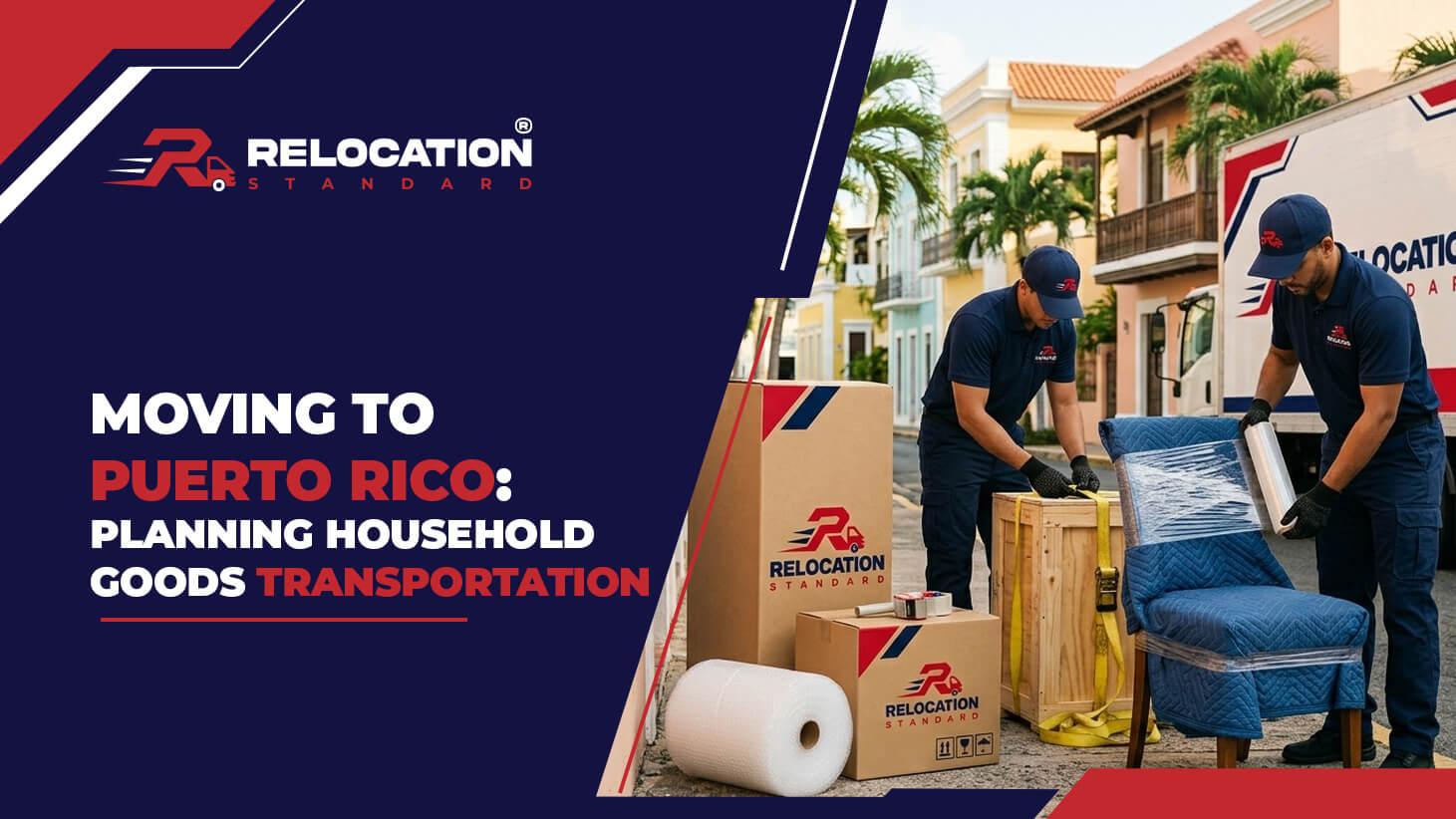
Pack belongings to withstand repeated loading, unloading and humid conditions during an island move. Use sturdy materials, clear labels and protection appropriate to the contents.
Keep fabric, wood and leather items dry before packing. Cushion breakables individually, avoid heavy cartons that are difficult to handle, and use suitable protection for electronics. Ask your mover whether moisture-control materials or professional crating are appropriate for valuable or sensitive items. Avoid trapping existing moisture inside sealed packaging.
Number every carton, identify its destination room and record its contents. Photograph high-value items and their condition before loading. Keep small furniture hardware together in labeled bags and back up electronic files separately.
Confirm the carrier's restricted-goods list before packing aerosols, fuels, paint, cleaning chemicals, batteries, food or plants. USDA APHIS guidance on moving agricultural products explains why moving plants, food and other agricultural materials requires care. Check the specific origin-to-destination rules and carrier restrictions; never pack a prohibited item on the assumption that domestic shipping permits it.
How should you coordinate timing and delivery?
Plan around separate pickup, vessel departure, port arrival, release and residential delivery windows. Leave flexibility between your personal travel date and the date your household goods arrive.
Before pickup
Confirm your inventory, booking, paperwork and both addresses in writing. Reserve any required building elevator, parking area or loading zone, and establish how you will receive updates. Arrange travel separately from the freight shipment.
While the shipment is in transit
Track the stages rather than relying on a single expected arrival date. Ask who contacts you if a sailing changes, a document is missing or the receiving address becomes unavailable. Confirm when storage charges can begin and who authorizes alternative arrangements. Weather disruptions, including tropical storms, may affect vessel and road operations.
When your household goods arrive
Be available or designate a trusted representative to receive the goods. Match carton numbers against the inventory, note visible damage or missing items on the delivery paperwork and take photographs. Retain packaging and records where needed for a claim. Ask about applicable deadlines and instructions before discarding damaged materials.
The FMCSA moving checklist offers useful preparation and inventory practices for motor-carrier moves. For the maritime leg, check the separate cargo liability or insurance terms, including deductibles, exclusions and claims procedures. A mover's valuation coverage is not automatically equivalent to marine cargo insurance.
Conclusion
Moving household goods to Puerto Rico is easier to manage when each transportation stage has a named responsible party, a written cost and an estimated time window. Start with an accurate inventory, clarify EEI and Hacienda requirements, compare complete delivered costs and prepare for a gap between arrival and delivery.
If you need help coordinating mainland collection, ocean transport and final delivery, explore island moving services or discuss your shipment with a long-distance moving provider. Provide your exact destination and inventory before requesting a quote.