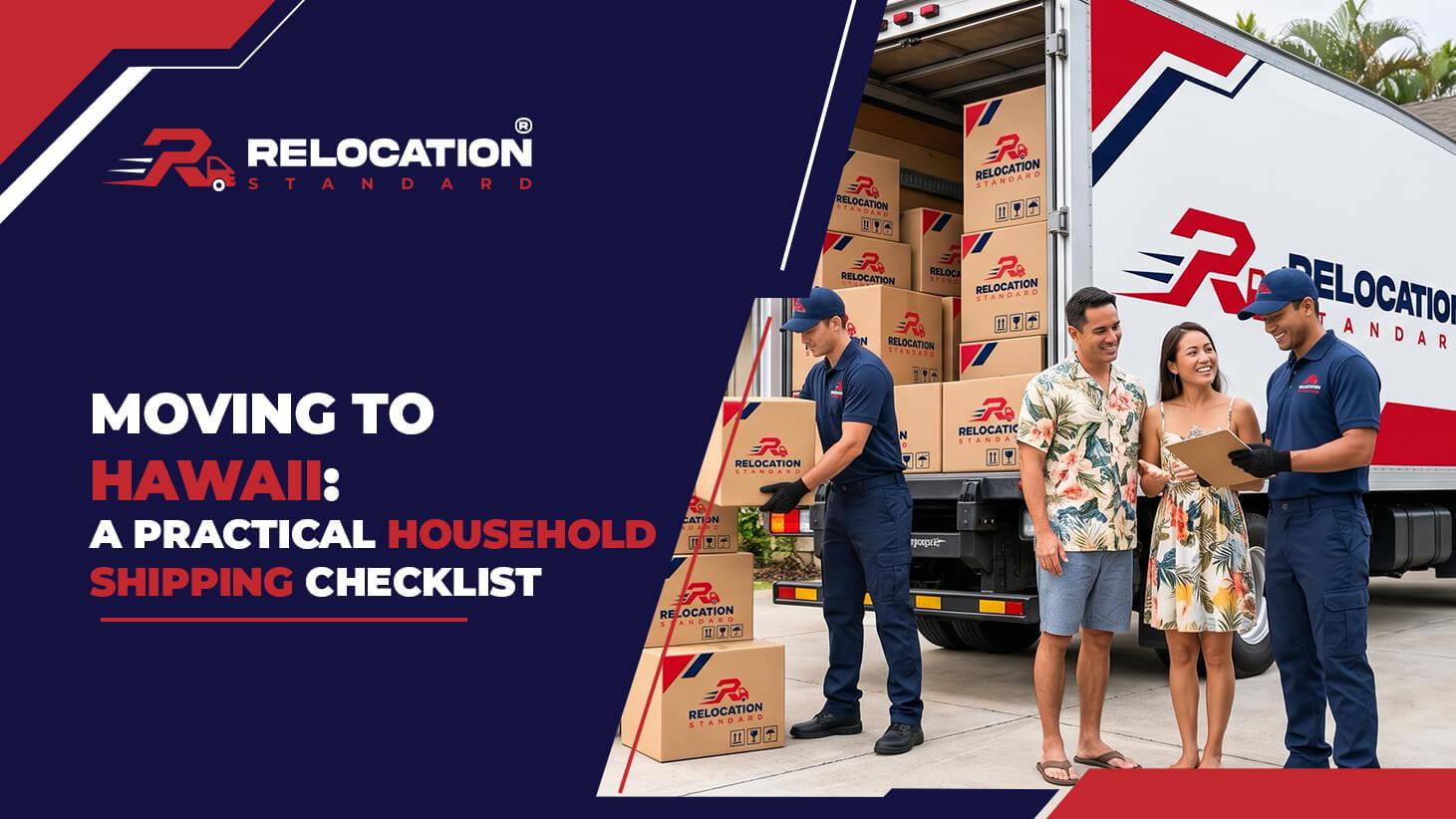
Unlike a mainland move, your delivery may depend on vessel departures, port handling and local transportation on the destination island. This checklist helps you plan for those handoffs without relying on a single estimated arrival date.
Quick Takeaways
A successful Hawaii move depends on knowing what to ship, how it will travel and what you need before it arrives.
- Compare door-to-door and container shipping quotes using the same inventory.
- Confirm which island your shipment is headed to, whether a transfer is needed and who handles final delivery.
- Check carrier restrictions and Hawaii agricultural entry rules before packing.
- Keep an inventory, shipping documents and essential belongings accessible during transit.
- Prepare for a delivery window rather than a guaranteed arrival date.
1. Decide what to ship, sell or replace
Walk through every room and make three lists: belongings to ship, items to sell or donate, and essentials to carry yourself. Measure large furniture and check the dimensions of your new home, including stairways and doors.
Consider replacement costs alongside freight charges. A bulky, inexpensive bookcase may not justify the space it takes up, while a quality mattress, specialized work equipment or sentimental furniture may be worth retaining. Avoid assuming that everything will be cheaper to replace on the island.
2. Compare household shipping options
Choose a shipping option based on your household size, packing preferences, budget and need for door-to-door delivery.
Full-service door-to-door moving
A full-service arrangement can cover packing, collection, ocean transportation and delivery to your new home, depending on the contract. Ask who handles each stage and whether unpacking, furniture assembly or debris removal is included.
Container and shared freight services
A self-loaded container can suit households comfortable with organizing packing and loading. Shared freight or consolidated shipments may be an option for smaller moves, subject to the carrier's routes, packaging rules and minimum charges. Confirm whether the price covers delivery to your address or ends at the terminal.
Compare your requirements with Hawaii moving services before choosing a shipping arrangement. Request a written breakdown of the same inventory and service scope from each provider.
3. Confirm the route, estimate and delivery window
Get a written estimate covering mainland pickup, ocean transportation and final delivery, along with an estimated delivery window.
Give the mover your mainland address, destination island, ZIP code, inventory and preferred pickup window. Ask whether the cargo travels directly to your destination island or requires a transfer. Port arrival is not the same as residential delivery.
- Pickup window, planned departure and estimated delivery range.
- Packing, freight, terminal handling and destination delivery charges.
- Storage, rescheduling, stairs and shuttle-service fees, if applicable.
- The carrier or agent responsible for each handoff and the contact for shipment updates.
- Coverage for loss or damage, exclusions and claim procedures.
The FMCSA mover selection guidance is a useful starting point for checking interstate motor carriers. For ocean transportation, also confirm the applicable shipping contract and coverage with the provider; motor-carrier protections do not automatically cover every marine freight arrangement.
4. Check what cannot go into the shipment
Separate hazardous materials and restricted agricultural items before packing, and confirm acceptance with your carrier.
Ask for a carrier-specific prohibited and restricted items list. Set aside fuel, solvents, aerosols and other potentially hazardous products until the carrier confirms whether they are accepted. Do not conceal regulated items in household boxes.
Plants, soil and agricultural materials may face Hawaii-specific inspection or entry requirements. Review the Hawaii plant quarantine import guidance and confirm requirements for your exact items. Arrange pet travel separately and check its entry requirements early. If shipping a car, obtain a separate vehicle quote and confirm whether it can travel under your household shipping arrangement.
5. Prepare your inventory and packing
Create a numbered inventory and protect belongings with packing materials suited to ocean transportation and repeated handling.
Number boxes and label them by destination room. Photograph high-value belongings, record serial numbers where useful, and note existing scratches or damage. Keep a digital copy of the inventory that you can access even if your computer is in transit.
Use suitable cartons, cushioning and protection for furniture. Consider professional packing or crating for delicate pieces and unusually shaped items. Ask the provider about packing requirements before sealing a self-packed container, especially for shared freight. The FMCSA moving checklist provides useful guidance on inventories and delivery checks for covered interstate moves.
6. Keep a separate arrival kit
Pack essential belongings separately so you can manage daily life if your household shipment arrives after you do.
Plan for the possibility that you reach Hawaii before your household goods. Carry essential clothing, medicines, documents, chargers, work and school necessities, and enough basic supplies for the first days. Keep valuables and important records with you when practical.
Confirm access to temporary housing, laundry, internet and transportation. Have a flexible budget for meals and basic household items if delivery is delayed. Do not book nonrefundable services that depend on an unconfirmed shipment arrival.
7. Prepare the destination and check delivery
Arrange building access before delivery and check every carton and furniture item against your inventory when it arrives.
Confirm the exact delivery address, parking restrictions, building access and elevator reservations with the destination agent. If you live on a narrow road or in a managed condominium, ask whether a smaller delivery vehicle or additional handling is necessary.
At delivery, compare the shipment against your inventory before signing the receipt. Record missing cartons or visible damage, take photographs and retain your shipping documents. Follow the claim instructions and deadlines in your contract.
Conclusion
A successful Hawaii relocation starts with an accurate inventory, a shipping estimate that covers each transportation stage and a realistic delivery plan. Check restrictions before packing, keep essentials with you and confirm access at your new home. Explore long-distance moving support if you need help coordinating the mainland and island stages.