A little preparation can prevent expensive surprises when your container arrives at an Alaska terminal but cannot yet be delivered to your home.
Quick Takeaways
A successful Alaska sea freight move depends on coordinating the cargo, departure schedule and local delivery before booking.
- Confirm which port or service center serves your destination and who handles the final leg.
- Compare shared freight and exclusive container options based on your actual inventory.
- Get cargo cutoff dates, equipment return deadlines and additional charges in writing.
- Protect furniture and boxes against shifting, moisture and repeated handling.
- Verify restricted items, cargo liability and claim procedures before loading.
How does sea freight work when moving to Alaska?
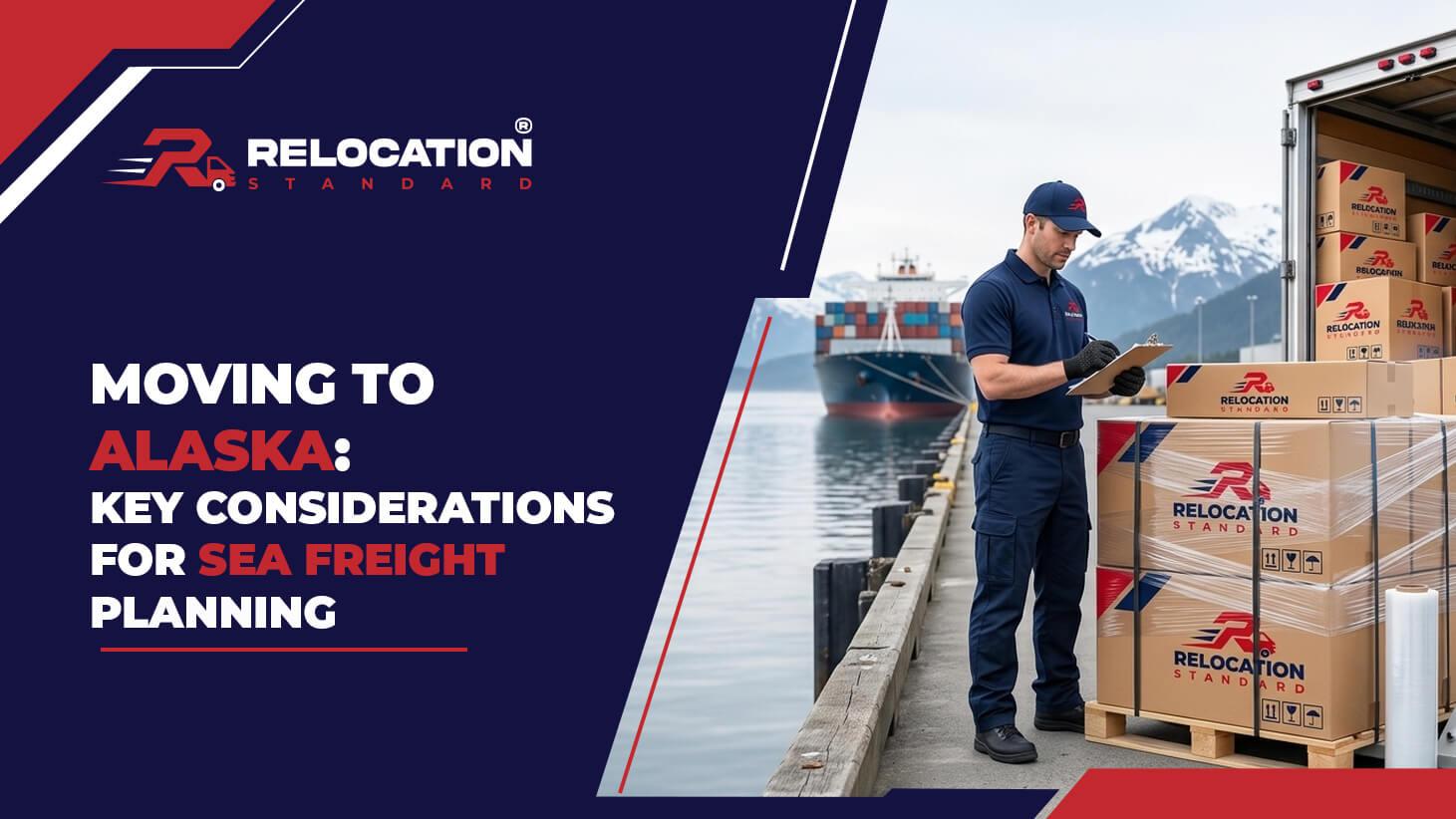
Sea freight moves household belongings in containers or other approved freight units between marine terminals, with trucks or other local services connecting the shipment to its origin and destination.
For a typical mainland-to-Anchorage shipment, a truck collects the goods or loaded equipment, the shipment reaches a Washington terminal, a vessel carries it north, and a local provider completes delivery. A move to Juneau or a smaller coastal community may follow a different route and require a separate regional barge or local pickup.
Not every Alaska move needs an ocean crossing. Some destinations can also be reached by highway through Canada. Discuss the available alternatives with Alaska movers before committing to a marine service.
Choose a marine route that serves your actual address
Select a route based on where your belongings must end up, not just the closest major port on a map. Alaska's regional transport networks vary significantly.
Matson's Alaska service information identifies Tacoma connections to Anchorage, Kodiak and Dutch Harbor. Alaska Marine Lines' household goods service describes service to Southeast and Central Alaska, with seasonal options for other regions.
Anchorage, Fairbanks and Wasilla may use a marine arrival followed by road transport. Juneau does not have a through-road connection to the mainland highway system, so its marine or air connection matters much more. Remote communities may require specific seasonal freight arrangements and a local receiver.
Ask the provider for the receiving terminal, any intermediate transfer points, the name of the final delivery company and confirmation that it serves your street address. A port-to-port quotation alone does not establish any of those details.
What type of container or freight service should you book?
Choose full-container or shared freight according to the shipment's volume, handling requirements, available routes and total cost. The cheapest ocean rate is not necessarily the best fit for a household.
Full container load (FCL)
A full-container arrangement usually reserves the entire container for your shipment, making it worth comparing for a larger home or belongings that would be difficult to consolidate with other cargo.
Ask about usable internal dimensions, weight limits, loading access and responsibility for supplying securing materials. A container's advertised length is not the same as usable space, and the appropriate size depends on furniture measurements, packing efficiency and cargo weight.
Less than container load (LCL)
Shared freight can suit a smaller move when the destination accepts consolidated household goods. Your cartons or crates may share shipping space with other consignments and need additional terminal handling.
Confirm whether the provider accepts household goods on your specific route, how items must be palletized or crated, and whether the service ends at a terminal. Ask about minimum charges, handling fees and whether separate home delivery is available.
Full-service or self-managed shipping
A full-service mover can coordinate more of the transport chain, while self-managed shipping leaves more work with the customer. Compare exactly who packs, loads, transports, unloads and returns the equipment.
A self-pack moving service differs from booking ocean freight directly. For example, U-Pack's Alaska guide describes a service combining mainland collection, a marine leg and delivery in selected areas. Read each provider's written scope instead of assuming all container moves include the same services.
Schedule freight around cutoffs and equipment availability
Build your moving calendar around the cargo acceptance deadline and confirmed booking, with extra time for collection and loading. The published vessel departure date is not the day your household goods must arrive at the terminal.
Work backward from the expected sailing. Allow for packing, container delivery or terminal drop-off and the carrier's documentation deadline. Confirm what happens if a truck arrives late or a sailing changes.
At destination, ask when unloading, release and local delivery can realistically take place. Review the actual vessel schedule or your chosen barge operator's calendar near the booking date. Seasonal service can limit options for some remote destinations.
Keep clothing, essential documents and other immediate necessities separate from sea freight. Arrange temporary living essentials until your delivery window is confirmed.
Compare the full cost, not just the ocean rate
A realistic sea freight budget includes every applicable transport, handling and delivery charge through the final address. Ask for an itemized estimate so you can compare equivalent scopes.
- Origin packing, loading, pickup and trucking to the terminal.
- Ocean or barge transport, applicable fuel charges and terminal handling.
- Consolidation, crating or special handling for unusually sized belongings.
- Destination trucking, unloading, stair carries and any shuttle service.
- Storage, container detention, additional equipment time and unsuccessful delivery appointments.
- Cargo protection, optional insurance and applicable taxes or fees.
Ask which charges are included, which depend on actual conditions, and what could trigger a revised quotation. Compare the marine option with other long-distance moving services using the same inventory and delivery address.
Prepare household goods for marine transport
Pack goods to withstand movement, handling and changes in humidity. An enclosed freight container reduces exposure to outside weather, but it does not guarantee a dry or temperature-controlled interior.
Make a numbered carton inventory, photograph valuable belongings and record existing furniture damage. Load only dry goods, cushion fragile pieces individually and protect finished surfaces. Have the mover or trained loading crew distribute the weight and secure the cargo using equipment suited to the container.
Avoid sealing damp textiles or furniture into airtight wrapping. Ask about moisture protection for electronics, books and upholstered items, and whether any temperature-sensitive possessions are better transported separately.
Check the container's condition before loading and note any visible damage. Keep photographs of the loaded shipment and the equipment identification number with your moving records.
Verify restricted items and shipment paperwork
Confirm acceptance of every unusual item and obtain the required paperwork before the cargo reaches the terminal. A household product that seems harmless in a garage may be restricted for marine transportation.
Discuss fuel, propane cylinders, aerosols, paint, solvents and battery-powered equipment with the carrier before packing. The Pipeline and Hazardous Materials Safety Administration explains that lithium batteries are regulated during transport, including by water. Follow the carrier's acceptance rules and applicable requirements; do not conceal or misdeclare restricted goods.
Keep the written quote, booking confirmation, inventory, transport contract or bill of lading, carrier contact details and any equipment information together. When hiring an interstate household goods motor carrier or broker, consult FMCSA's Protect Your Move resources to understand the applicable protections and verify the provider. A direct ocean freight agreement may have different terms and claims procedures.
Plan for cargo coverage and final delivery
Confirm liability limits and delivery responsibilities before the ship sails. Marine cargo liability, a household mover's valuation protection and separate insurance are not automatically equivalent.
Request written terms for each transport leg, including exclusions for owner-packed belongings, moisture damage and delays. Ask who receives damage claims, what evidence is needed and how long you have to report them.
At the destination, arrange a suitable place to unload and confirm access for the delivery vehicle. For direct container bookings, clarify the free equipment time, the deadline for returning an empty container and who pays if delivery is delayed. Matson's household goods information illustrates why a port-to-port booking may require customers to arrange additional transport.
Inspect goods when received, compare them with the inventory and document visible loss or damage. Keep delivery records and notify the appropriate provider promptly under the agreed claims terms.
Conclusion
Sea freight can be a practical way to move household goods to Alaska when the marine route, container choice and final delivery arrangements are coordinated in advance. Focus on the complete shipment rather than a single sailing date or ocean freight rate.
Prepare your inventory, compare written door-to-door costs and confirm cargo acceptance and equipment return conditions before choosing a provider. The clearer each handoff is, the easier it is to plan your arrival and avoid preventable charges.