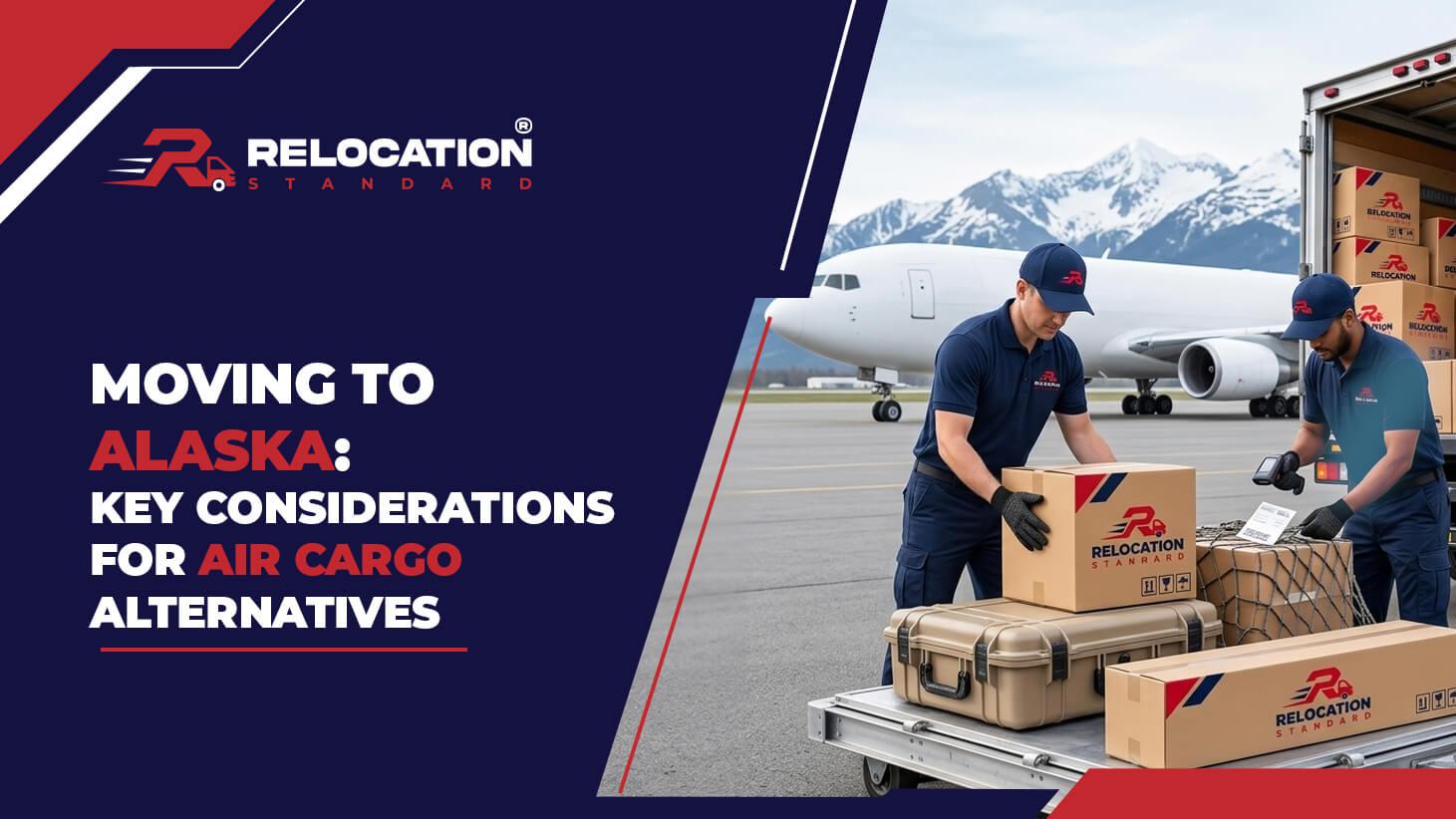
The best choice depends on your actual destination, cargo dimensions, delivery deadline and the total cost of getting belongings from your old home to your new one.
Quick Takeaways
Plan air freight around the items you need first, rather than assuming every household item should fly.
- Check cargo service to your final destination, including any connecting flights and local delivery.
- Compare actual weight and dimensional weight before requesting quotes.
- Confirm shipper eligibility, aircraft size limits and restricted items before packing.
- Use a separate inventory for air cargo and slower-moving household goods.
- Compare airport-to-airport charges with the full door-to-door cost and delivery commitment.
When does air cargo make sense for an Alaska move?
Air freight makes the most sense for compact, urgently needed belongings and destinations that have limited surface freight options. It can also help bridge the gap between your arrival and the delivery of your main shipment.
For example, a family relocating to Anchorage may send a few cartons of everyday clothing and school supplies ahead while furniture travels by truck or sea. Someone moving to a rural community may need to arrange an additional air freight leg from a regional hub, even if the first part of the move uses surface transportation.
Think about the cost of being without each item, rather than simply how much it weighs. A lightweight box of work clothing that you need immediately may be worth expediting. A large sofa that can wait usually deserves a separate surface freight quote.
Before selecting a transport mode, discuss the available routes with Alaska movers and confirm which services actually reach the address.
How does air freight reach different Alaska destinations?
The air cargo route depends on the airport, aircraft capacity and carrier network serving your destination. A flight into Anchorage does not necessarily mean your shipment can continue directly to your new home.
The Alaska Statewide Freight Plan update explains the importance of air and marine transportation for communities outside the road network. This makes regional connectivity an important consideration for household shipping.
Road-connected cities and communities
For places such as Anchorage, Fairbanks and Wasilla, compare air freight with surface shipping and decide whether airport collection or local truck delivery is more practical.
Wasilla may require an onward road transfer from a suitable cargo facility. Ask who handles this leg, whether it is included in the quote and when the goods will be available for collection.
Coastal and remote destinations
For communities outside the connected highway network, air cargo may be an essential part of delivery rather than simply an expedited option. Juneau, Nome and Bethel illustrate why the exact destination matters.
Northern Air Cargo's route information identifies regional hubs and connecting services. Lynden Air Cargo's scheduled Alaska service also covers several rural destinations from Anchorage.
Confirm the final airport, any necessary transfer to a regional carrier and whether a local receiver can collect the goods. Do not assume every carrier accepts personal shipments or every package fits the aircraft used on the last leg.
Compare the alternatives to a full air cargo shipment
A combination of air, marine, parcel and road transportation can be more practical than flying everything. Compare each option using the same origin, destination, inventory and delivery scope.
Ship a small essentials load by air
A small air shipment is a useful option when a few boxes need to arrive before the main household load.
Start with everyday clothing, approved work supplies and other compact necessities. Keep critical documents and essential medication with you when appropriate and permitted, rather than depending on freight delivery.
Send the main household load by sea or road
Surface freight is worth comparing for furniture, large appliances and other items that do not need immediate delivery.
Alaska Marine Lines' household goods service describes consolidated and container shipping options on applicable routes. Road transport may also be viable for road-connected destinations. Ask your long-distance moving provider whether both transport legs can be coordinated together or need independent bookings.
Use parcel shipping or checked baggage for smaller items
Parcel delivery or permitted passenger baggage may be simpler than commercial air freight for a handful of packages.
Compare the actual delivery address and applicable size, weight and contents rules. Checked baggage travels under passenger baggage rules, while a separate air cargo shipment follows freight acceptance requirements. They are not interchangeable.
How much does air cargo to Alaska cost?
Air freight pricing depends on the shipment's billable weight, dimensions, route, service level and additional handling charges. A flat price per pound alone may not represent the final cost.
Understand actual and dimensional weight
Air cargo may be billed using the greater of the measured weight and the weight calculated from the space a package occupies.
For illustration, a carton measuring 24 by 20 by 18 inches occupies 8,640 cubic inches. Using the domestic divisor of 194 listed in Alaska Air Cargo's pricing FAQ, its dimensional weight is approximately 44.5 pounds before any applicable rounding. A carton that actually weighs 25 pounds could therefore be charged at a higher weight.
This is an example, not a quote. Confirm the divisor, rounding, minimum charges and measuring rules with your selected provider, including any pallet or crate dimensions.
Compare total cost, not just the flight rate
A complete cost comparison includes all the services you need before and after the flight.
Request an itemized estimate that clarifies packing, origin pickup, security screening, air transportation, connecting freight, terminal handling, storage, destination pickup or delivery, and any optional cargo protection. Review the carrier's rates and fees as a starting point, but obtain a shipment-specific quote before committing.
If you split a move across two transport modes, include both freight bills and any duplicate pickup or delivery charges. A split shipment only makes financial sense if the combined cost and timing work for your household.
Confirm eligibility, size limits and delivery timing before booking
A shipment is ready to book only when the carrier confirms that it can accept the shipper, contents, dimensions and route under the chosen service level.
Check whether you qualify to ship
Some air cargo services require shipper vetting, particularly when goods travel on passenger aircraft. Requirements and exceptions depend on the carrier and itinerary.
Alaska Air Cargo's Known Shipper guidance explains its approval process and exceptions for certain shipments, including freight traveling wholly within Alaska or entirely on freighter aircraft. Check eligibility early, especially when shipping from the Lower 48. If you cannot qualify for a particular service, ask about an eligible freight-only route or an alternative provider.
Measure every package before requesting a quote
Each package must fit the aircraft and handling equipment used across the entire route. A package accepted onto one aircraft might not fit a smaller connecting plane.
Record packed length, width, height, gross weight and contents for each carton or crate. Include any pallet or protective packaging. Confirm per-piece limits with the carrier for every flight segment, not just the first departure.
Check service commitments and pickup availability
A flight schedule is not a promise that your belongings will be ready for home delivery at a particular time.
Alaska Air Cargo's general freight service operates subject to available capacity. Expedited services have different conditions. Ask whether the quoted delivery commitment covers airport availability or final home delivery, what exclusions apply and how a missed connection is handled.
Give yourself a buffer for weather disruptions, capacity constraints, cargo processing and local transport. Make temporary arrangements for anything you cannot afford to be without.
Packing and restricted items for air cargo
Use sturdy, carrier-approved packaging and disclose the contents accurately. Air transport has specific dangerous-goods rules that may differ from the rules for marine freight or a moving truck.
Empty liquids from equipment where appropriate, protect fragile items with cushioning and prevent boxes from shifting internally. Label each package and maintain a numbered inventory with a copy outside the shipment.
Check batteries, aerosols and other regulated goods
Lithium batteries, power banks, some aerosols and other everyday products may be restricted or require special handling under air cargo rules.
The FAA's lithium battery shipping guide provides regulatory awareness, but the current regulations and your airline's acceptance policies determine whether a shipment is allowed. Disclose batteries and potentially hazardous products to the carrier; do not conceal them inside a carton or assume passenger baggage allowances apply to freight.
If an item cannot travel on your chosen air route, confirm a lawful alternative arrangement before moving day. Some items may need to be purchased again at your destination instead.
A practical air cargo booking checklist
Prepare a separate air freight inventory and confirm responsibilities in writing before handing over any belongings.
- Record the full origin and destination addresses and your required delivery date.
- Identify the smallest realistic air shipment and separate it from the main move.
- Measure and weigh each packed piece; disclose all restricted or special-handling items.
- Confirm shipper approval, routing, flight connections and acceptance deadlines.
- Obtain an itemized quote and ask about liability limits, optional coverage and claims deadlines.
- Identify the person who will drop off and collect the cargo, or arrange local delivery.
- Retain the air waybill, inventory, receipt and tracking details until the entire shipment is received.
An air waybill identifies the air freight consignment and helps you track its progress. For a separate interstate household-goods moving service, review the FMCSA Protect Your Move resources and confirm the moving company's responsibilities and transport documents. Do not assume that a standalone air cargo booking provides the same consumer protections or valuation terms as an interstate household-goods motor carrier move.
Conclusion
Air cargo can make a move to Alaska more manageable when it is used for the right items and the right route. Compare direct air freight, a split shipment and surface transport based on complete delivery costs, realistic arrival windows and the accessibility of your destination.
A well-planned move separates urgent belongings from items that can wait, confirms carrier eligibility and restrictions, and establishes who handles the last mile. Discuss these details with your residential moving provider before booking so your transportation plan matches your household's priorities.