What Is Third-Party Valuation Coverage in Moving?
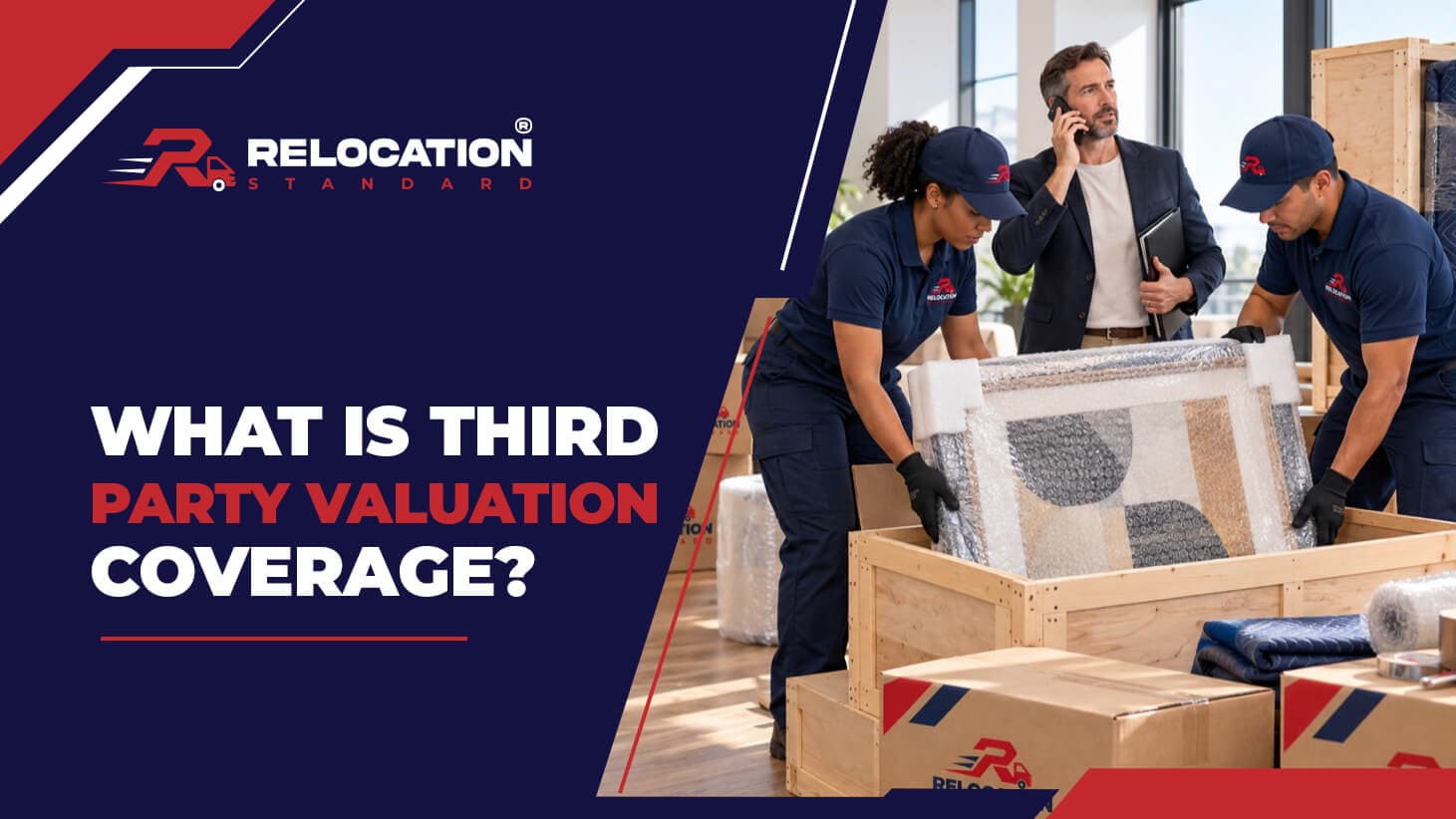
The phrase third-party valuation coverage is often used informally to describe protection purchased from an insurance company outside the mover's standard liability options. Technically, the more accurate term is third-party moving insurance or separate cargo liability insurance. It is not one of the two federally required carrier valuation levels.
The federally required levels are Full Value Protection and Released Value Protection. The FMCSA consumer guidance distinguishes additional liability insurance from carrier valuation and says the insurance policy is subject to its own terms. The Surface Transportation Board likewise explains that selecting the carrier's full-value rate is not the same as buying private insurance.
Why Might Someone Buy Third-Party Moving Insurance?
Customers may consider a separate policy when the mover's liability option does not match their financial exposure or when they want a specific type of protection. For example, an owner of a costly instrument may want to examine whether a policy addresses accidental damage, theft, or other risks under clearly stated conditions.
Buying an insurance policy does not guarantee every type of loss is covered. A policy may exclude inadequate packing, mechanical breakdown, certain high-value articles, unexplained disappearance, or damage that occurred before the coverage period. Read the actual policy, not only a sales summary.
How Is Third-Party Insurance Different From Mover Valuation?
Mover valuation concerns the carrier's liability for the goods it transports. Insurance concerns the insurer's promise to pay for defined covered losses under the policy. The two may operate together, but they are administered under different legal and contractual frameworks.
| Question | Carrier valuation | Third-party insurance |
|---|---|---|
| Who provides the protection? | The moving carrier through its liability obligations | An insurance company |
| Governing documents | Bill of lading, tariff, valuation selection, federal rules | Insurance policy and applicable state insurance law |
| Typical options | Full Value or Released Value | Policy-specific insured value and covered risks |
| Who evaluates a claim? | Carrier or its claims administrator | Insurer or its administrator |
| Is it federally required? | Interstate mover must offer both liability options | Generally optional |
An insurer may pay a covered loss even where the carrier's limited liability leaves a gap, depending on the policy. Conversely, a loss covered by carrier liability may fall outside a separate policy's exclusions or limits. Do not assume that one automatically replaces the other.
Can a Moving Company Sell or Arrange Third-Party Insurance?
Yes, in the circumstances allowed by federal rules. The FMCSA service-options page explains that a mover may sell, offer, or procure additional liability insurance when a shipment is released at a value not exceeding 60 cents per pound per article. If the mover sells or arranges such insurance, it must provide the customer with the policy or appropriate written evidence at the time of purchase.
FMCSA also explains that failure to provide the required insurance documentation can subject the mover to full liability for claims attributed to its negligence. The precise legal consequences depend on the circumstances; it is not a reason to proceed without the policy. Ask for the insurer's name, policy number, declarations, coverage limits, and claim contact before paying.
What Does Third-Party Moving Insurance Cover?
Coverage depends entirely on the product. Some policies address specified accidental physical loss or damage during transit; others may cover only named causes of loss or impose limits for particular property. Packing and unpacking, temporary storage, loading, and unloading may or may not be included.
Transit and handling
Ask when coverage begins and ends. Does it start when movers enter the home, when the goods are loaded, or when the truck departs? Does it continue until delivery, or until unpacking? A gap in the definition of the insured journey can matter if damage occurs at a warehouse or during transfer between vehicles.
Storage-in-transit
If your belongings will spend time in a warehouse, confirm whether the policy includes storage-in-transit, how long coverage lasts, and whether a separate endorsement is needed. A policy that covers only road transportation may not address an extended storage period.
High-value and fragile items
Jewelry, art, antiques, collectibles, and electronics may have special limits or require a schedule, appraisal, or declaration. An item can also qualify as an extraordinary-value article under the mover's liability rules. The insurer's declaration rules and the carrier's declaration rules are separate obligations.
How Much Does Third-Party Moving Insurance Cost?
There is no universal premium. Insurers may consider the declared value, type of belongings, distance, packing arrangements, deductible, covered risks, and storage or handling requirements. A policy with a lower premium may carry a larger deductible or more exclusions.
For a hypothetical comparison, imagine one policy costs $180 with a $500 deductible and another costs $260 with a $100 deductible. The second costs $80 more, but the difference in the deductible could matter after a covered claim. These numbers are invented to illustrate how to compare terms; they are not representative quotes.
How Do Claims Work Under a Separate Policy?
Start by notifying the insurer through the policy's stated channel and within its deadlines. You may need the policy number, mover's inventory, bill of lading, photographs, purchase records, repair estimates, and evidence of the item's condition before the move.
You should also notify the carrier promptly if you believe it caused the damage. A claim against the mover and a claim under a private policy are not necessarily interchangeable. The FMCSA loss-and-damage guidance explains carrier claim steps, while the insurance contract sets the separate insurer's process. If both could respond to the same loss, disclose that fact to avoid duplicate recovery or conflicts with subrogation provisions.
What if the insurer denies the claim?
Request the denial in writing and ask which policy provision supports it. Review the policy's appeal or complaint procedure and contact the appropriate state insurance regulator if necessary. The federal mover arbitration program generally concerns carrier loss, damage, and certain charge disputes; it does not automatically govern a dispute with a third-party insurer.
Questions to Ask Before Buying Coverage
Ask who the insurer is, whether the seller is authorized to offer the policy, and what risks are covered. Confirm the insured value, deductible, exclusions, claim deadline, storage treatment, and whether self-packed boxes are included. Check whether the policy uses replacement cost, actual cash value, or another valuation method. Ask how the policy interacts with the mover's liability selection and any other household insurance.
Do not rely on phrases such as "fully covered" without a written explanation. Keep the declarations page, payment receipt, and policy wording outside the moving truck.
Final Takeaway
Third-party moving insurance can supplement the protection available through a mover, but it should be evaluated as a separate contract with its own limits and exclusions. Identify the insurer, read the policy, and understand how claims interact with the carrier's liability before paying. Explore Relocation Standard's residential moving services and long-distance moving options as you prepare your move.