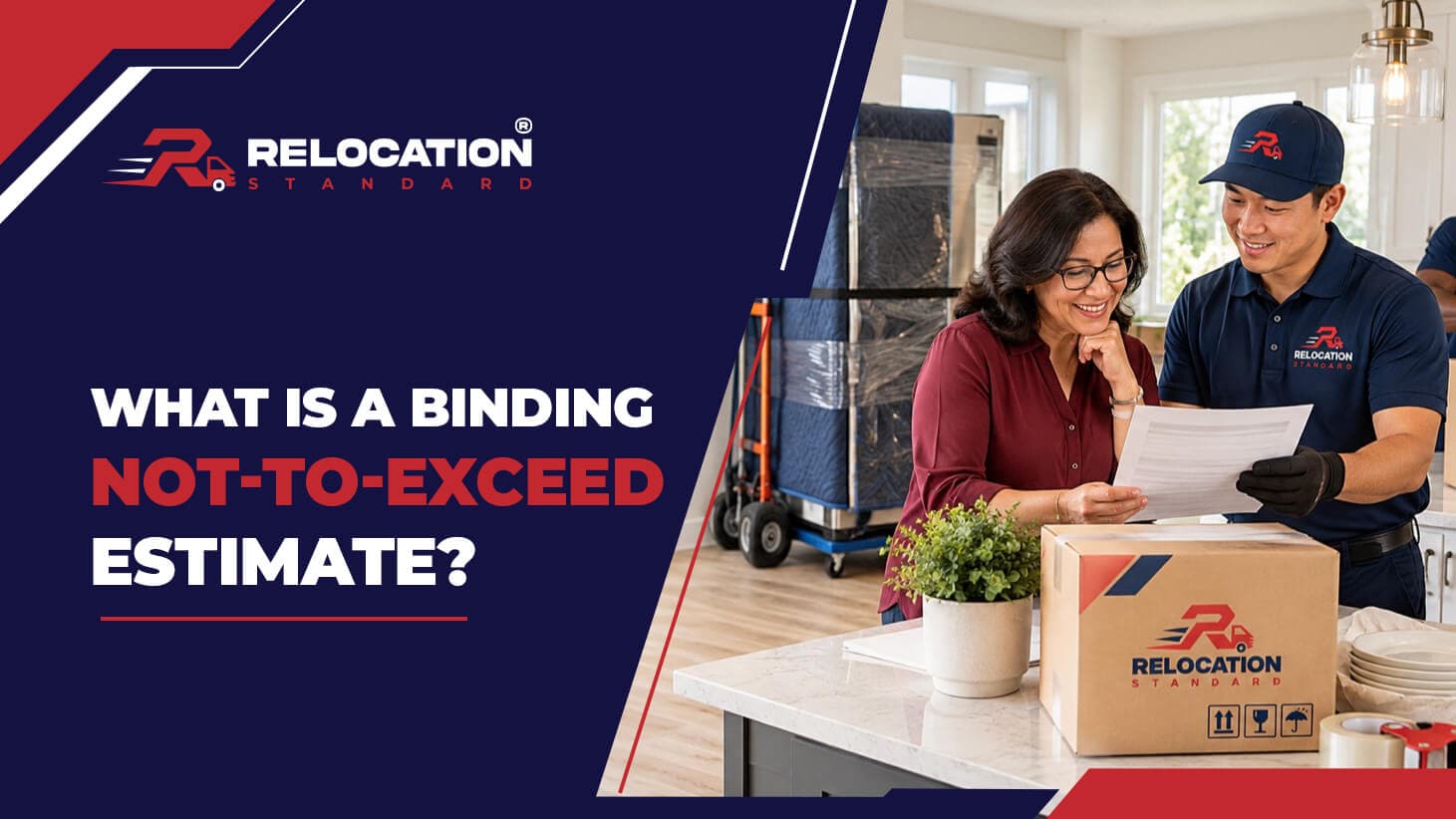
What Is a Binding Not-to-Exceed Estimate?
A binding not-to-exceed estimate is an industry pricing arrangement intended to set a maximum price for defined moving services while allowing a lower final charge when the agreed calculation produces one. The written terms must describe the covered shipment, services, calculation method, and maximum. The label alone does not establish a new federally recognized estimate type.
For example, if a written arrangement promises that the covered price will be the lower of calculated charges or $4,500, you might pay $4,100 when actual covered charges are $4,100 but no more than $4,500 when they calculate to $5,000. This describes a hypothetical commercial promise, not a standardized federal formula.
How Does a Not-to-Exceed Price Work?
Inventory and survey
The mover surveys belongings and special handling needs so the agreement specifies exactly what it covers. An incomplete inventory can create disputes about extra items and services. For interstate shipments, federal survey and written-estimate requirements still apply.
Maximum and calculation method
The company sets a written maximum and explains what happens if actual charges are lower. A weight-based calculation might rely on certified shipment weight and tariff rates, while fixed packing costs may not change. Ask about minimum charges and excluded services.
Transportation and settlement
The carrier transports the agreed shipment. The contract then governs whether lower calculated charges are passed on and which lawful extras may apply. Do not assume lighter weight creates a refund unless the written pricing terms say so.
Worked Price-Ceiling Example
| Actual covered charges | Promised ceiling | Covered payment under hypothetical terms |
|---|---|---|
| $4,100 | $4,500 | $4,100 |
| $4,500 | $4,500 | $4,500 |
| $5,000 | $4,500 | $4,500 |
This is a hypothetical explanation, not an actual quote or a federally mandated computation. The ceiling applies only to the defined covered services. Separate authorized extra charges may still arise.
How Does It Compare with Binding and Non-Binding Estimates?
| Question | Binding | Non-binding | Not-to-exceed marketing arrangement |
|---|---|---|---|
| Core idea | Fixed agreed amount for covered work | Approximate charge | Advertised ceiling with possible downward adjustment |
| Can lighter weight reduce payment? | Generally not | Often, depending on tariff | Only if written terms provide |
| Can heavier weight raise covered charge? | Generally not | It may | Intended ceiling may prevent it for covered work |
| Federal estimate category | Yes | Yes | No separate third category |
The correct regulatory classification must be clear. Under 49 CFR § 375.401, an interstate household-goods mover must issue a compliant written estimate stating whether it is binding or non-binding. Review binding moving estimates and non-binding moving estimates before evaluating a price-cap promise.
Does FMCSA Recognize a Third Estimate Type?
No. Federal regulations separately address binding estimates in 49 CFR § 375.403 and non-binding estimates in 49 CFR § 375.405. FMCSA enforcement guidance cautions that words such as 'not to exceed,' 'guarantee,' or 'flat rate' do not, by themselves, make an estimate compliant. Ask how the written agreement and carrier tariff support the advertised promise.
A useful question is: 'Is this a binding or non-binding estimate for federal purposes, and which written provisions create the not-to-exceed price?' The carrier should provide a clear, documented answer rather than relying on advertising language.
Can the Price Still Rise?
The intended ceiling typically applies to the originally listed shipment and services, not every possible moving situation. Added furniture, packing requested after the original estimate, an extra pickup stop, or qualifying access problems may create separate lawful charges. For binding interstate estimates, changes discovered before loading require the applicable procedures; the mover ordinarily cannot rewrite the agreed price for covered work after loading.
A large vehicle unable to access your residence may require a shuttle. In some circumstances this is an impracticable operation under the tariff. Federal rules generally limit the amount collectible at delivery for qualifying impracticable operations to 15% of all other charges then due, with any lawful remainder handled later. That is not a universal 15% cap on total extra fees. Read the future guide to shuttle service fees for practical access examples.
What Must You Check in the Agreement?
- Which legal estimate category applies under federal rules?
- What exact dollar amount is the price ceiling, and which services does it cover?
- How does the contract calculate a lower final amount?
- Do minimum charges prevent a downward adjustment?
- Which accessorial services and fuel adjustments are included or excluded?
- Are the inventory, moving dates, and destination details accurate?
- Which carrier is responsible for the shipment, and is it properly authorized?
Compare complete written prices, not simply whether the company's marketing calls its proposal guaranteed or maximum. A lower standard binding estimate may be more useful than a higher not-to-exceed quote with many exclusions.
Local and Intrastate Not-to-Exceed Quotes
Some states regulate maximum-price arrangements for in-state moving independently of federal interstate estimates. California, for example, has state-specific not-to-exceed estimate requirements. If the route remains inside one state, check the governing state consumer rules and read about intrastate moving.
Final Thoughts
A binding not-to-exceed estimate is best understood as an advertised pricing promise that needs careful contractual support. Verify the legally applicable estimate type and documented ceiling before hiring a mover. Review interstate moving services or long-distance moving assistance when requesting a detailed quote.