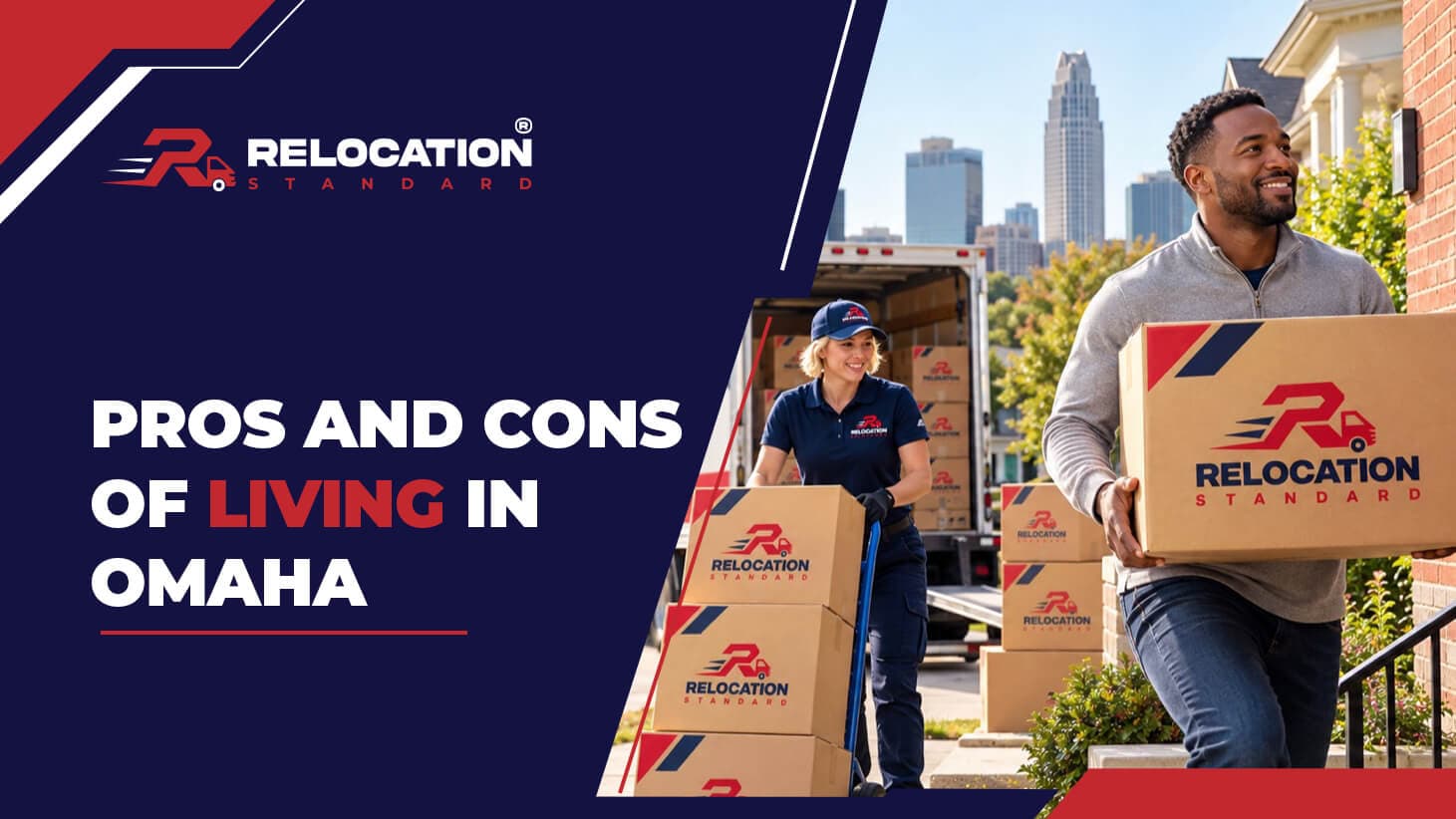
Maybe you have a job offer from an Omaha insurer, railroad or hospital. Maybe you are tired of big-city prices and want a home you can afford. Or you have orders to Offutt Air Force Base. Either way, you want the honest trade-offs before you sign anything.
Omaha suits families, young professionals, first-time buyers and retirees who value a calm pace and a friendly community. It also fits people in finance, insurance, health care, logistics and defense. It is a harder sell if you hate cold weather, want strong transit or need big-city nightlife every weekend.
Omaha Pros and Cons at a Glance
Omaha gives you 14 clear advantages and 13 real drawbacks. On the plus side, homes and rent cost far less than in most big metros. Berkshire Hathaway, Union Pacific, Kiewit and Mutual of Omaha anchor a job market that rarely swings hard.
Daily life feels easy, since most commutes run about 20 minutes. You get a top-ranked zoo, a rebuilt riverfront, free art museums and the College World Series every June. Health care is a real local strength, with a top academic medical center.
The city is also changing fast. A new tower now tops the skyline, and the airport is halfway through a major rebuild. A streetcar is on the way too.
On the minus side, property taxes run high, and many bills rose again in 2026. Winters are long and cold, and spring storms bring hail, tornadoes and flash floods. Summers can turn hot and sticky, and the weather swings fast.
You will need a car for most errands. Omaha also sits hours from other big cities and has no major-league pro teams. Radon is common in local homes, and power and dining costs keep creeping up.
14 pros
Pros of Living in Omaha
Omaha's best pros are low costs, dependable work and an easy daily routine. Its zoo, food and arts scene punch well above the city's size. Here are 14 advantages residents mention most often.
1. Living Costs Stay Below the National Average
Omaha's cost of living runs well below the national average. Costs run about 10% below the U.S. norm. Housing, utilities and transportation all help keep prices down.
Utilities give you a real edge here. Rates at OPPD, the public power district, sit about 30% below the national average. The typical residential bill was about $115 a month before the 2026 increase.
Everyday costs feel reasonable too, since groceries and prescription drugs are not taxed in Nebraska, which helps families on a budget. Housing, the biggest monthly cost for most people, offers the largest savings of all.
You also get big-city amenities without big-city prices. Omaha offers a major airport, pro arts groups, top hospitals and a full calendar of events. Most of it costs far less than it would in Chicago or Denver.
2. Homes and Rent Are Affordable
Buying a home in Omaha is far easier than in most metros. The typical home value was about $294,600 in September 2026, up 2.3% from a year earlier. The median sale price sat near $287,000 that month.
Homes also sell at a healthy pace. The average home went pending in about 16 days in September 2026. That pace gives buyers time to look without a frantic bidding war on every house.
Renting works well too, and Zillow listed average rent near $1,455 a month in October 2026. That leaves room in your budget compared with most large metros.
You can choose your style of home. Dundee and Benson offer older homes on tree-lined streets, while Elkhorn, Gretna and Papillion offer newer builds. Midtown and the Old Market suit people who want a walkable apartment near restaurants.
3. A Stable Job Market Runs on Fortune 500 Headquarters
Omaha's economy holds up well and is hard to shake. Metro unemployment was 3.0% in August 2026, below the national rate. That figure was down slightly from a year earlier.
Four Fortune 500 companies run their headquarters here. Berkshire Hathaway, Union Pacific, Kiewit and Mutual of Omaha give the city a deep base of corporate jobs. Finance, insurance, logistics, construction and health care all hire in large numbers.
Defense work adds more stability, since Offutt Air Force Base in Bellevue hosts U.S. Strategic Command and the 55th Wing. Large data centers from Google and Meta have also brought new building and tech work to the area.
Locals say Omaha avoids the worst booms and busts. Home values dipped only modestly during the Great Recession compared with hard-hit markets. That track record gives workers and buyers some peace of mind.
4. Health Care Is a Local Strength
Omaha has health care that many larger cities would envy. Nebraska Medicine and the University of Nebraska Medical Center form the region's top academic medical center. Nebraska Medicine runs the area's Level I trauma center.
You also get many choices. CHI Health runs several hospitals in the metro, and Methodist offers a campus focused on women's health. Children's Nebraska has ranked nationally in several pediatric specialties.
Research adds depth, too. Boys Town National Research Hospital studies hearing, balance, speech and behavior. UNMC also trains doctors, nurses and other health workers for the whole region.
That strength helps in two ways. You get strong care close to home, and health care offers thousands of jobs. It is one reason families and retirees feel comfortable here.
5. Income Taxes Are Falling
Nebraska is cutting its income tax rates, and the top rate is 4.55% for 2026 and drops to 3.99% in 2027. That is a big change from the 6.84% top rate the state charged a few years ago.
Retirees get extra help, since Nebraska fully exempts Social Security benefits from state income tax, starting with the 2024 tax year. Seniors and disabled veterans may also qualify for homestead exemptions on property taxes.
These cuts do not erase high property taxes. Still, a higher earner keeps more of each paycheck than before. Compare your full tax picture, including property and sales taxes, before you decide.
6. Commutes Are Short
Getting to work in Omaha rarely eats up your day. The average one-way commute in the city was about 20 minutes in 2024. That is shorter than in most large metros.
The road network helps a lot. Interstate 80 crosses the city, and I-680 and I-480 link the suburbs to downtown. West Dodge Road works as a fast east-west route.
Short drives free up real time. You can get home for dinner, coach a youth team or reach a lake after work. Many newcomers from Chicago or Denver notice this change in the first week.
Rush hour still exists on Dodge Street and I-80. Still, a bad day in Omaha usually means a few extra minutes, not an extra hour.
7. Omaha Has the Best Zoo in the Country
Omaha's Henry Doorly Zoo and Aquarium is a true national standout. It ranked No. 1 in the USA Today 10Best Readers' Choice Awards for 2026. That was its fourth straight year in the top spot.
The zoo covers about 160 acres. The Desert Dome is the world's largest indoor desert. The Lied Jungle ranks among the largest indoor rainforests in the country. Below the dome, Kingdoms of the Night is a huge nocturnal exhibit.
Families keep coming back, since you can walk through a shark tunnel at the aquarium or watch butterflies in the insect pavilion. A yearly membership makes repeat visits cheap.
Readers also voted the Desert Dome the best zoo exhibit and the zoo's Lee G. Simmons Wildlife Safari Park the best safari park in 2026. Out-of-state guests often plan whole trips around these spots.
8. The College World Series and Big Events Put Omaha on the Map
Every June, Omaha hosts the NCAA Men's College World Series. The city has held the event every year since 1950. In 2026, Oklahoma beat North Carolina 13 to 2 in the final at Charles Schwab Field.
The whole city joins in, and fans fill downtown bars, food stands and fan zones for nearly two weeks. Locals plan summer around the "Road to Omaha."
Other big events follow through the year. The Berkshire Hathaway annual meeting draws shareholders from around the world each spring. In May 2026, Greg Abel led it as chief executive for the first time.
The CHI Health Center hosts concerts, Creighton basketball and major tournaments. For a city of this size, the event calendar runs surprisingly full.
9. Arts and Culture Are Strong for the City's Size
Omaha's arts scene surprises many newcomers. The Joslyn Art Museum reopened in 2024 with a new pavilion, and general admission is free. The Bemis Center and Kaneko add contemporary art.
Live performance runs deep too. The Omaha Symphony, Opera Omaha and touring Broadway shows fill the Holland Center and the Orpheum Theater. The Omaha Community Playhouse is one of the largest community theaters in the country.
Music fans have options, too. Steelhouse Omaha hosts touring bands, and the MAHA Festival brings national acts each summer. Benson First Friday turns one neighborhood into an open art walk each month.
Film fans get Film Streams, a nonprofit theater with classic and new films. For history, the Durham Museum fills the old Union Station with vintage train cars.
10. The Food Scene Goes Beyond Steak
Omaha still loves its steakhouses, but the food scene has grown far beyond them. Local chefs now earn national attention. David Utterback of Yoshitomo and Ota was a 2026 James Beard finalist for Best Chef: Midwest.
Le Bouillon also made the 2026 James Beard semifinal list for its wine program. Those honors put Omaha on the national food map.
Local classics stay part of daily life. Omaha claims the Reuben sandwich, and Runza sells a regional favorite of beef, cabbage and onion baked in bread. Omaha Steaks remains the city's best-known food name.
Craft beer fills the gaps, and Kros Strain, Infusion and Kinkaider pour inventive beers across the metro. Blackstone, Benson and the Old Market pack many good spots into a few walkable blocks.
11. Parks and the Rebuilt Riverfront Offer Room to Play
Omaha has more green space than many people expect. The RiverFront links three downtown parks along the Missouri River. The rebuilt Gene Leahy Mall offers a playground, slides, a skating area and an amphitheater.
You can even walk to Iowa, since the Bob Kerrey Pedestrian Bridge crosses the river to Council Bluffs. Locals love to stand with one foot in each state.
Bigger parks sit close by. Zorinsky Lake and Standing Bear Lake offer trails, fishing and boating. Fontenelle Forest in Bellevue protects woods and wetlands along the river.
Paved trails run along the Papillion Creek, and Lauritzen Gardens grows formal gardens beside the river. Weekend outdoor time rarely requires a long drive.
12. Family Life and a Friendly Community
Omaha works well for family life. The Kiewit Luminarium offers hands-on science exhibits near the riverfront. The Omaha Children's Museum and the Rose Theater give kids more to do on cold days.
Schools give you choices, too. Omaha Public Schools is the largest district in the state, while Millard, Elkhorn and Westside draw many families. Creighton, the University of Nebraska Omaha and Metropolitan Community College add college options.
People here live up to the Midwestern reputation for friendliness. Neighbors check in, and newcomers often say strangers start conversations in line. The city also has a strong habit of giving, with many nonprofits and volunteers.
That "big small town" feel helps you settle in fast. Many residents say they made friends sooner here than in larger cities.
13. Crime Keeps Falling
Omaha's crime trends have improved for years. The city recorded 26 homicides in 2025, compared with 50 in 2015. Overall crime fell about 10% from 2024 to 2025.
Police also solve serious cases. Omaha police cleared 100% of homicide cases for the third straight year. Property crime dropped about 11% in 2025.
Community programs play a part, too. Violence Prevention Omaha 360 brings police, schools, churches and nonprofits together to reach young people early. Crime fell about 14% in 2024 after the program took hold.
Safety still varies by area, so check crime maps for any address. Still, the overall trend points in the right direction.
14. Downtown and the Airport Are in the Middle of a Building Boom
Omaha is investing in its future at a fast pace. Mutual of Omaha's new headquarters rose to 677 feet, making it the tallest building in Nebraska and Iowa. The company planned to open it in November 2026.
Eppley Airfield is getting a $950 million terminal rebuild. Work was 60% complete in September 2026, and new gates are opening ahead of schedule. Officials plan to open a central terminal with one security checkpoint in 2027.
The airport already makes travel simple. It sits about four miles from downtown and served more than 5.2 million passengers in 2025. Seven airlines fly nonstop to 37 destinations.
The full rebuild should wrap up in 2028, with an international arrivals area. New apartments and an expanded convention center are also adding life downtown.
13 cons
Cons of Living in Omaha
Omaha's biggest cons are taxes, weather and distance. Most of them hit your budget or your daily routine. Here are 13 drawbacks to weigh before you move.
1. Property Taxes Are High and Still Climbing
Property taxes are the most common complaint in Omaha. Nebraska ranks among the highest-tax states for homeowners. Lower home prices help, but the yearly bill can still shock newcomers.
The numbers add up fast. One local agent sold a $586,000 home with a 2023 tax bill of about $7,800. Douglas and Sarpy counties also collect taxes in arrears, so you pay last year's bill this year.
Bills rose again in 2026. Taxable value in Douglas County climbed 5.63%, so even flat rates raised many bills. Omaha Public Schools proposed an 8.2-cent levy increase after losing about $50.6 million in state aid.
Plan ahead before you buy. Ask for the actual tax bill on any home, and add taxes and insurance to your monthly payment. The protest window for valuations closes on June 30 each year.
2. Winters Are Long and Cold
Omaha winters test newcomers, and January lows often fall into the teens, and subzero nights happen most years. Cold winds sweep across the plains with no hills or mountains to block them.
Snow can pile up, since a normal season brings more than two feet. Big storms also happen, like the March 19, 2025 blizzard and the back-to-back storms and extreme cold of January 2024.
Short days make it harder, since darkness arrives around 5 p.m. by December. Gray, sunless stretches can last for weeks.
You will need good boots, a warm coat and maybe a block heater or remote starter. Some winters run mild, like 2025-26, but you cannot count on that.
3. Tornadoes, Hail and Flash Floods Are a Real Risk
Omaha sits in Tornado Alley, and severe storms come every spring and summer. On April 26, 2024, an EF4 tornado tore through Elkhorn and Bennington. The storm destroyed 173 homes in Douglas County and damaged hundreds more.
Storms keep coming, year after year. The National Weather Service logged tornado outbreaks across the area on May 15 to 18 and June 11, 2026. Hail can wreck a roof on one block and miss the next.
Flooding is a risk too. On September 30, 2026, parts of west Omaha got more than 8 inches of rain in one night. Crews rescued people from cars near Millard and Ralston.
Most homes have basements, which helps during tornado warnings. Still, plan for higher homeowners insurance, and check flood maps before you buy. The city tests its sirens at 11 a.m. on the first Wednesday of each month.
4. Summers Get Hot and Weather Swings Fast
Omaha summers can feel steamy, and July highs average in the upper 80s, and humidity makes many days feel much hotter. Highs in the 90s are common in July and August.
The weather can also swing wildly. Omaha hit 96 degrees on March 21, 2026, breaking a record from 1907 by 9 degrees. On October 9, 2026, the high reached a record 91 degrees.
Locals joke that you should wait a day if you dislike the weather. You may need your heater and your air conditioner in the same week.
Plan for air conditioning bills from June to September. Outdoor plans work best in the morning or evening during heat waves.
5. You Need a Car
Omaha revolves around driving. Its Walk Score is about 48, and its Transit Score is only about 24. Most errands outside downtown and Midtown require a car.
Buses help in some areas, where Metro runs regular routes and the ORBT rapid bus along Dodge Street. Service thins out the farther you get from the core.
Better transit is still years away. The Omaha Streetcar will link the riverfront to the UNMC campus, but service is not expected until 2028. The project costs about $421 million, paid mainly through tax increment financing.
A car also adds costs, since Nebraska charges a yearly motor vehicle tax and fees based on your car's age and value. Budget for that when you register a vehicle after you move.
6. Construction and Potholes Slow You Down
Road work never seems to stop in Omaha. Freeze-thaw cycles crack the pavement each winter, and pothole season follows every spring. Locals joke that Omaha has two seasons: winter and construction.
Downtown adds its own detours. Streetcar track work is closing lanes in zones along Farnam and Harney Streets. Most blocks face about nine to twelve months of work, and some stretches last longer.
Growth on the west edge adds more work. New roads, sewers and subdivisions keep crews busy in Elkhorn, Gretna and beyond.
Check closures before you drive, and expect routes to change week to week. Much of the work should pay off later, but it tests your patience now.
7. Omaha Can Feel Isolated
Omaha sits far from other big cities. Lincoln is about 55 miles away, and Des Moines is about 140 miles east. Kansas City sits about 185 miles south, roughly a three-hour drive.
Everything else takes longer, and Denver and Chicago each sit about seven hours away by car. People often call Omaha "triple landlocked," since you must cross three states to reach an ocean.
Flights help, but the choices stay thin. Eppley serves 37 nonstop destinations, far fewer than larger hubs. Many trips still need a connection.
If you love mountains or beaches, plan on long drives or connecting flights. Some people enjoy the quiet, while others feel boxed in.
8. Nightlife and Big-League Sports Are Limited
Omaha nightlife stays fairly low-key outside a few districts. The Old Market, Blackstone and Benson pack the weekend crowds. Most other areas quiet down early.
Omaha has no NFL, NBA, MLB or NHL team. The nearest big-league teams play in Kansas City or Minneapolis. Many locals follow the Nebraska Huskers, who play in Lincoln.
You still get games to watch. Creighton basketball fills the CHI Health Center, and the Storm Chasers play minor league baseball at Werner Park. Union Omaha plays pro soccer, and the Omaha Supernovas play pro volleyball.
If you want a packed club scene or pro games every week, Omaha may feel slow. If you like breweries, local music and college sports, you may not miss much.
9. Radon and Old Lead Are Common Hazards
Radon is a real health issue in Omaha homes. About 59% of Nebraska homes tested came in above the EPA action level of 4.0 picocuries per liter. Radon is the leading cause of lung cancer among nonsmokers.
The fix is affordable, since a short test costs around $200, and a mitigation system runs about $2,000 in many homes. Nebraska homes built after September 1, 2019 must include a passive radon system.
Lead is the other concern. A former smelter left lead in the soil across about 27 square miles of eastern Omaha. The EPA has cleaned more than 13,600 properties there, but a few hundred still tested above its limit in 2024. Homes built before 1978 may also have lead paint.
Test for radon during your inspection window, and ask sellers for any lead records. These steps protect your family and your investment.
10. Sales and Restaurant Taxes Add Up
Omaha's other taxes catch many newcomers off guard. The combined sales tax in Omaha is 7%. That includes the state's 5.5% and the city's 1.5%.
Eating out costs more, since Omaha adds a 2.5% restaurant tax on food and drinks. That charge comes on top of the regular sales tax.
Cars cost more too, since you pay sales tax when you register a vehicle, plus yearly vehicle taxes and fees. Those costs can surprise you right after a move.
Groceries and prescription drugs stay untaxed, which helps. Still, add these costs to your budget if you dine out often or plan to buy a car.
11. Power Bills Are Rising
Omaha's cheap power is getting less cheap. OPPD raised residential rates about 6% on January 1, 2026. A typical $115 monthly bill went up about $7.
Demand is the main driver. OPPD added about 23,000 customers in five years, and energy demand rose by about 500 megawatts. Data centers and new homes keep pushing that number higher.
More costs may follow, too. OPPD cited rising fuel prices, grid upgrades and new reserve rules from its regional grid operator. It is also working on plans to convert and retire units at North Omaha Station.
Rates still sit well below the national average. Still, expect higher summer and winter bills than a few years ago.
12. Growth Spreads to the Edges
Omaha's growth is moving outward to new suburbs. The city's own population slipped about 0.6% from 2020 to 2025, to about 488,800 people. Meanwhile, new subdivisions keep spreading west and south.
That pattern changes daily life, since new homes in Elkhorn, Gretna and Bennington often sit 20 minutes or more from downtown. Shopping, schools and parks are still catching up in some areas.
Older parts of the city face their own problems. Some North Omaha residents saw steep valuation jumps on homes that still need repairs.
Before you buy on the edge, drive the commute at rush hour. Check which school district serves the address, since boundaries shift with growth.
13. Safety Still Varies by Neighborhood
Crime is falling, but some areas still struggle. Violent crime stayed about flat in 2025, even as property crime dropped. Some neighborhoods report far more violent crime than others.
Car break-ins and thefts still happen, as in any city. Busy commercial strips tend to see more of them than quiet residential streets.
The gap shows up block by block. Two homes a mile apart can have very different crime rates.
Check crime maps from the Omaha Police Department for any address. Visit at night before you sign a lease, and talk to neighbors if you can.
Who Omaha Suits and Who Should Think Twice
Omaha suits people who want low costs, stable jobs and an easy daily routine. It frustrates people who hate cold winters, need transit or want big-city nightlife. You will likely do well here if you value space, family time and a friendly community.
Finance, insurance, rail, construction and health care workers find strong options. Families like the zoo, parks and school choices. Retirees like the falling income taxes and the Social Security exemption.
Military families with orders to Offutt Air Force Base often settle in Bellevue, Papillion or south Omaha. Our military moving services plan PCS moves around your report date.
Think twice if high property taxes would strain your budget. The same goes if severe storms or long winters would wear you down.
Comparing Midwest and Plains cities? Read our guides to the pros and cons of living in Kansas City, Oklahoma City and Indianapolis. Kansas City offers big-league sports, Oklahoma City has lower property taxes and Indianapolis sits closer to other large metros.
The Bottom Line on Living in Omaha
Omaha is worth it if you want an affordable home, a stable career and short commutes. You get a top zoo, strong hospitals, good food and a friendly, family-centered pace. It works best if you budget for property taxes and can handle real winters.
Look elsewhere if you need transit, mild weather or easy weekend trips to big cities. Get a radon test, check flood maps and ask for the actual tax bill on any home. If you are unsure, rent for a year before you buy.
Moving from nearby? See our Kansas City movers and Denver movers pages. Our residential movers handle apartments and family homes. For a cross-country trip, we offer long-distance moving services and interstate movers.
Leaving the Chicago area? We also plan moves out of Chicago. You can browse all the cities and routes we serve. Relocation Standard is a moving carrier, not a broker. Get a free, no-obligation moving quote or request a callback.