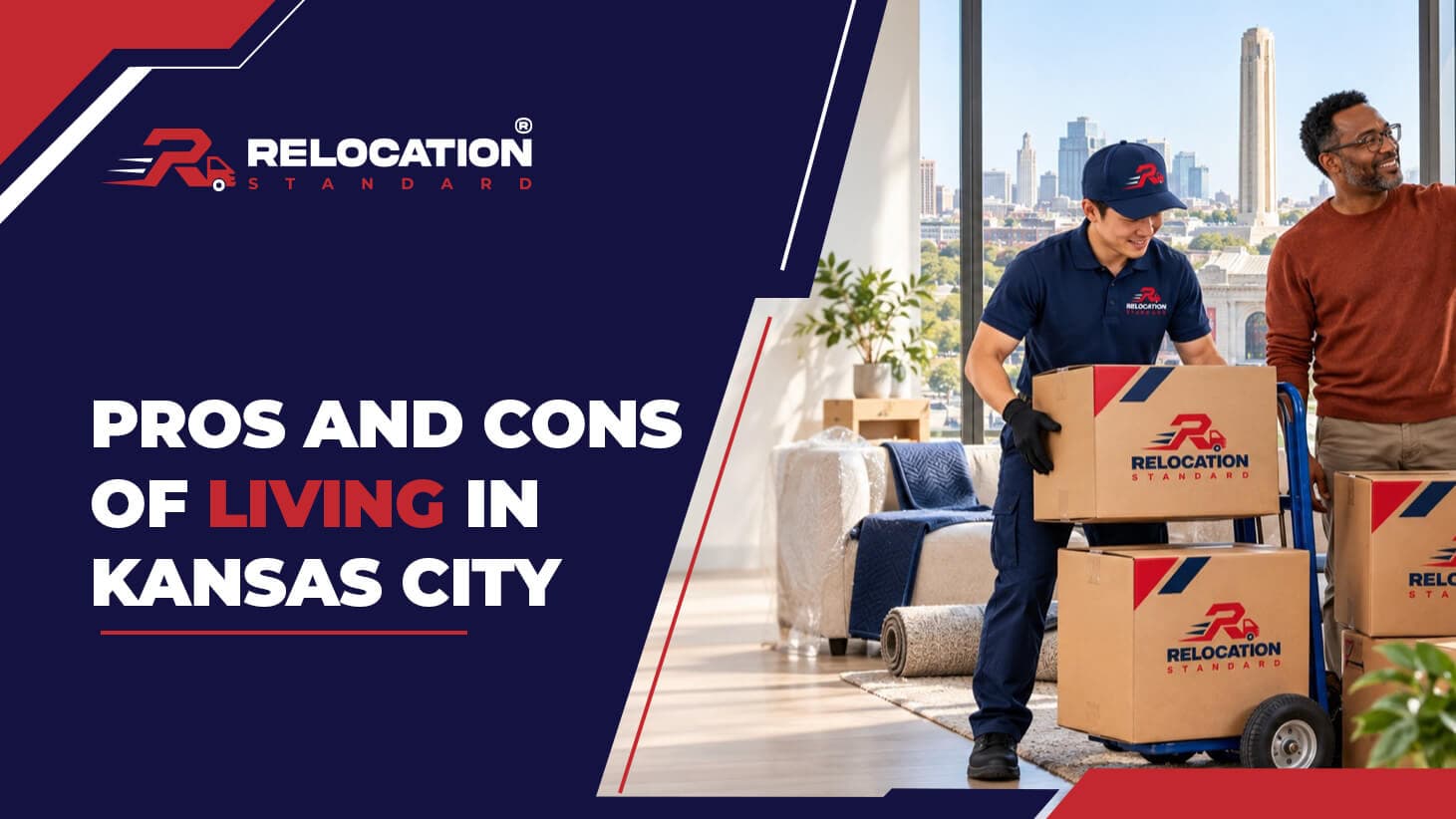
Perhaps you have a job offer in the metro, or you want a big city where a house still feels within reach. Maybe you are leaving Denver or the coasts for more space. Either way, you want the honest trade-offs before you pick a side of the state line.
Kansas City suits families, first-time buyers, remote workers and sports fans who want culture without a coastal price. It also fits people who like four real seasons. It is a harder sell if you fear storms, want a car-free life or need mountains and beaches nearby.
Kansas City Pros and Cons at a Glance
Kansas City gives you 14 clear advantages and 13 real drawbacks. On the plus side, homes cost far less than in most large metros, and renters have room too. The barbecue, the jazz district and the free museums give the city a strong identity.
History runs deep here. You can visit the national World War I museum, the Negro Leagues Baseball Museum and more than 200 fountains. Pro sports and the 2026 World Cup matches made this a true sports town.
Daily life is easy for a metro of more than 2 million people. A free streetcar links the urban core, the airport has a new terminal and most commutes run short. You can choose from old city blocks, Northland suburbs and highly rated school districts on both sides of the state line.
On the minus side, the weather swings from humid summers to icy winters, and spring brings tornado warnings. Violent crime stays high in parts of the city, even after recent drops. Outside the core, you will drive for almost everything.
Taxes take some planning, with a city earnings tax, a high sales tax and recent property assessment fights. City schools vary a lot, the air fails on ozone and scenic nature sits far away. Nightlife clusters in a few districts, and big stadium deals lean on public money.
14 pros
Pros of Living in Kansas City
Kansas City's main advantages are lower housing costs, deep food and music culture, free museums, easy travel and broad jobs. The list starts with money and moves out to culture, getting around and daily life.
1. Homes Cost Far Less Than in Most Big Metros
Kansas City gives you more house for the money than most metros its size. The median sale price was about $312,000 in the three months to September 2026, up 5.7% from a year earlier. The median price per square foot sat near $165.
The market moves fast, so plan ahead. Homes received about two offers on average and sold in around 24 days. Hot homes can sell for about 2% above list price within five days.
Prices rise as you move into the suburbs. Recent medians ran about $416,000 in Lee's Summit and about $530,000 in Overland Park. Leawood, one of the priciest suburbs, sat near $783,000.
Renters have options too. Typical rent runs about $1,240 to $1,510 a month, depending on the source and the period. Buyers from Denver searched for homes here more than buyers from any other metro, followed by Seattle and Los Angeles.
2. The Barbecue Has More Than a Century of History
Kansas City is one of America's great barbecue towns, and the tradition goes back more than 100 years. Henry Perry opened his barbecue business here in 1908. Locals still call him the father of Kansas City barbecue.
His apprentice Charlie Bryant later opened his own place, and his brother Arthur took over in 1946. Arthur Bryant's still serves on Brooklyn Avenue. In 1972, writer Calvin Trillin called it the best restaurant in the world and spread the word about burnt ends.
Today the city has more than 100 barbecue restaurants. The big names include Joe's Kansas City, Jack Stack, Gates, Q39 and Slap's. Joe's, which started inside a gas station, made Yelp's Top 100 U.S. Restaurants list in January 2026.
3. Jazz Still Plays at 18th and Vine
Kansas City helped shape American jazz, and you can still hear it live most nights. The Historic 18th and Vine Jazz District sits on the east side of downtown. The American Jazz Museum tells the story and hosts shows in its Blue Room club.
Live jazz spreads well beyond that district. Locals point visitors to the Green Lady Lounge, Lonnie's Reno Club and the Black Dolphin for regular shows. Between the museum and the clubs, you can find a live set after work most nights of the week.
4. World-Class Art Is Free or Close to It
You can see major art in Kansas City without paying a cent. The Nelson-Atkins Museum of Art offers free admission and ranks among the best art museums in the country. Note that it closes on Tuesdays and Wednesdays.
The Kemper Museum of Contemporary Art adds a second free collection. The Kauffman Center for the Performing Arts hosts the Kansas City Symphony, the Kansas City Ballet, the Lyric Opera and Broadway tours.
The Crossroads Arts District holds First Fridays each month, with gallery openings, artists and live music. Murals and sculptures also fill streets and building walls across the city.
5. Two National Museums Tell American Stories
Kansas City is home to two museums that Congress named as national institutions. In 2004, Congress designated the National WWI Museum and Memorial as the country's official World War I museum. The museum sits beneath the Liberty Memorial tower on a hill facing Union Station.
The memorial grew out of a remarkable local effort. In 1919, residents raised more than $2.5 million in just 10 days to build it. Today the museum holds artifacts and stories from every nation in the war.
The Negro Leagues Baseball Museum sits in the 18th and Vine district. It stands two blocks from the Paseo YMCA, where the Negro National League took shape in 1920. The museum has welcomed more than 2 million visitors since it opened.
Both museums sit a short drive from Union Station and the streetcar line. History buffs can fill many weekends without leaving the city.
6. Sports and the 2026 World Cup Bring the City Together
Kansas City is a true sports town, and game days shape the local calendar. The Chiefs play in the NFL, and the Royals play in Major League Baseball. Sporting Kansas City plays in MLS, and the KC Current plays in the NWSL at CPKC Stadium.
The city also hosted six FIFA World Cup matches at Kansas City Stadium in 2026. A total of 413,169 fans attended, an average of 68,862 per match. Lionel Messi scored the tournament's first hat trick here, in Argentina's win over Algeria.
Big changes are coming. The Chiefs plan to move to a new domed stadium in Wyandotte County, Kansas. The Royals plan a new downtown ballpark at Crown Center, with an opening target of the 2030 season.
7. Fountains, Boulevards and Big Parks Fill the City
Kansas City calls itself the City of Fountains, and the name fits. The metro has more than 200 registered fountains, and the public owns 48 of them. Each April, the city turns them on for Fountain Day.
Several stand out. The Bloch Fountain at Union Station has 232 water jets that put on a show every half-hour. The Mill Creek Park fountain near the Plaza came from Paris, where artisans made it in 1910. It arrived here in 1951.
Green space is generous too. Swope Park covers 1,805 acres and holds the Kansas City Zoo, hiking trails and golf courses. Loose Park, Berkley Riverfront and tree-lined boulevards add easy places to walk.
8. A Free Streetcar Links the Urban Core
Kansas City runs a fare-free streetcar, and it now reaches much farther than before. The Main Street Extension opened on October 24, 2025, and added 3.5 miles of track to UMKC. The Riverfront Extension opened on May 18, 2026.
The full line now runs 6.5 miles from UMKC at 51st Street to Berkley Riverfront Park. Cars come every 10 to 15 minutes during peak weekday hours. Riders took 3.5 million trips from January to August 2026, more than triple the same stretch in 2025.
The neighborhoods along the line are the most walkable in the city. Old Westport has a Walk Score of 93, and the Crossroads scores 85. If you want to live with one car or none, start your search near the streetcar.
9. A New Airport Terminal and a Central Location Make Travel Easy
Getting in and out of Kansas City is simple. Kansas City International Airport opened a new single terminal on February 28, 2023. The $1.5 billion terminal has 40 gates and covers just over 1 million square feet.
Most central neighborhoods sit about 25 to 30 minutes from the airport. Security runs through one central checkpoint with 16 lanes, including PreCheck and CLEAR.
The city's location helps on the ground as well. Several interstates meet here, near the middle of the country. Hunt Midwest's SubTropolis, a business park dug into an old limestone mine, uses that location to ship goods across the country.
10. Jobs Span Logistics, Health Care and Business Services
Kansas City has a broad job base, so no single industry carries the economy. Trade, transportation and utilities form the largest sector, with about 226,400 metro jobs. Professional and business services and education and health services each employ about 180,000 people.
Health care has been the growth engine. Education and health services added about 5,300 jobs over a year, the only sector with a clear gain. Major employers include Children's Mercy, Saint Luke's Health System, HCA Midwest, Hallmark, Garmin and American Century Investments.
Big recruits still arrive. Fiserv signed a lease for a 427,000-square-foot hub in Overland Park that will bring about 2,000 jobs. Kansas officials called it the largest office recruitment in state history when they announced it in April 2025.
11. Commutes Run Short for a Big Metro
You will likely spend less time on the road here than in most large cities. Kansas City workers average about 21.7 minutes to get to work, based on 2020 to 2024 Census data.
Parking is usually easy, and errands rarely eat a whole day. Rush hour slows traffic on the main highways, but it rarely brings the gridlock you see in larger metros.
Short drives also make the two-state metro feel smaller than its size. Many residents live in one state and work in the other without much thought.
12. Neighborhoods Range From Old City Blocks to New Suburbs
Kansas City offers a wide mix of places to live across two states and about 15 counties. You can pick an older city block, a Northland suburb or a newer subdivision in Johnson County.
Brookside and Waldo offer older homes, big trees and local shops. Westport, the Crossroads and the River Market suit people who want restaurants, bars and shorter drives. Parkville, Liberty and Gladstone in the Northland offer hills, trees and quick airport access.
Overland Park, Leawood, Lenexa and Olathe on the Kansas side offer newer homes and polished suburbs. Lee's Summit and Blue Springs give Missouri buyers newer construction and larger floor plans. Test your commute from each area before you choose.
13. Strong School Districts Sit on Both Sides of the State Line
Families can find highly rated public schools in many Kansas City suburbs. Blue Valley, which serves parts of Overland Park and Leawood, holds an A-plus from Niche and ranks first in Kansas. Shawnee Mission and Olathe both earn A ratings.
Missouri has strong options too. Lee's Summit R-7 and Blue Springs earn A ratings, and Park Hill and Liberty earn A-minus grades. Private schools such as Pembroke Hill and Barstow add more choices.
School boundaries do not follow city names, so check each address. One Overland Park street can sit in a different district than the next.
14. Growth Runs at a Comfortable Pace
Kansas City is growing, but not at a pace that strains roads and home prices. The metro had about 2,270,682 people in July 2025, up from 2,253,287 a year earlier. That works out to growth of roughly 1% a year.
The city itself had about 521,220 residents in July 2025, up 2.6% since 2020. That pace contrasts with the rapid growth Denver, Austin and Phoenix saw in the 2010s.
Many residents say community is what keeps them here. Events such as the Plaza Art Fair, Big Slick and the St. Patrick's Day Parade bring neighbors together each year.
13 cons
Cons of Living in Kansas City
The main disadvantages of living in Kansas City are weather swings, severe storms, high crime in some areas and car dependence. Each con below includes ways to soften it.
1. The Weather Swings From Humid Heat to Ice
Kansas City has four strong seasons, and both ends of the year can be tough. July highs average about 88°F, and the area sees about 36 days a year at 90°F or above. Summer humidity makes those days feel hotter.
Winters turn cold, with January lows averaging about 20°F. The airport averages 18.2 inches of snow a year, based on 1991 to 2020 data. The snowiest winter on record, 1911 to 1912, brought 68 inches.
Ice often causes more trouble than snow. Freezing rain can knock out power, glaze overpasses and turn a 20-minute commute into an hour. Buy a real winter coat, and leave early on icy mornings.
2. Spring Brings Tornado Warnings and Severe Storms
Tornadoes are a real part of life in Kansas City. The metro sits on the eastern edge of the traditional Tornado Alley region. A few nights each spring, you may head to the basement while you watch the radar.
Most tornadoes in Missouri and Kansas touch down in rural areas. Still, storms do reach the metro. In mid-April 2026, an EF-1 tornado with peak winds of 110 mph hit Belton, south of the city, with no injuries.
May is also the wettest month, with about 5.3 inches of rain on average. Choose a home with a basement or a safe interior room. Sign up for local weather alerts on your phone as well.
3. Violent Crime Stays High in Parts of the City
Crime is the con that worries most people moving here, and the concern is real. Kansas City set a homicide record in 2023, with 182 to 185 killings depending on the count.
The trend has improved since then. Police recorded 138 homicides in 2025, the lowest total since 2018. Non-fatal shootings fell 31%, robberies fell 27% and stolen cars fell 32% compared with 2024.
Our estimate: 138 homicides in a city of about 521,000 people works out to about 26 per 100,000 residents. That is still high for a large city. Crime also varies sharply by area, so check police crime maps for any address before you sign.
4. You Will Need a Car Outside the Core
Most of Kansas City grew up around the car. The city has a Walk Score of 35, a Transit Score of 25 and a Bike Score of 35.
RideKC buses cover the city, but trips can take a long time. The streetcar helps only along its 6.5-mile route. Some roads also suffer from potholes and rough surfaces. In the suburbs of Johnson County and Clay County, you will drive for nearly every errand.
Budget for at least one car per working adult if you live outside the core. If you want a car-light life, look at homes within walking distance of the streetcar.
5. Sprawl Puts Many Places Far Apart
The metro spreads out more than up, so many destinations sit far from one another. Kansas City, Missouri alone covers about 315 square miles of land. The wider metro stretches across about 15 counties in two states.
That spread can make shopping, dining and visits with friends take longer than you expect. A dinner in Overland Park and a game downtown can mean two separate drives.
Pick a home near the places you visit most each week. Map your work, school and gym trips before you choose a neighborhood.
6. The State Line Complicates Your Taxes
Taxes in Kansas City depend on which state and city you live and work in. Kansas City, Missouri charges a 1% earnings tax on wages and other earned income. Residents pay it even when they work elsewhere, and nonresidents pay it on work done inside city limits.
Voters renewed the tax on April 7, 2026, with about 75% voting yes. On a $100,000 salary, it adds about $1,000 a year. Retirees living on Social Security, pensions and retirement accounts do not pay it.
State income taxes differ too. Missouri's top rate is 4.7% for 2026, and the state now lets you subtract capital gains. Kansas charges 5.2% and 5.58% depending on income. Compare your full tax bill on both sides before you buy.
7. Property Taxes Can Swing by County and Assessment
Property tax bills vary a lot across the metro, and recent assessments caused a fight. The State Tax Commission, the state auditor and a court each found flaws in Jackson County's 2023 reassessment.
A class action settlement covers owners whose 2023 or 2024 values rose more than 15%, and more than 207,000 taxpayers received notice. Current owners receive tax credits on their 2026, 2027 and 2028 bills. Former owners must file claims by December 3, 2026.
Local levies also differ by county and school district. One local agent compared a $350,000 home in Gladstone, Missouri with the same home in Kansas City, Kansas. Using 2025 levies, the gap came to about $1,605 a year. Ask for the real tax bill on any home you consider.
8. Sales Tax Runs High
You will pay a high sales tax on most purchases in Kansas City, Missouri. The minimum combined rate is 8.975% for 2026. That includes the 4.225% state rate and the 3.25% city rate.
Special taxing districts add more at many shopping centers and entertainment areas. Check the rate for the stores you use most. Over a year of household spending, the difference adds up.
9. City School Quality Varies a Lot
School quality inside Kansas City, Missouri varies a lot from one school to the next. The state stripped Kansas City Public Schools of accreditation in 2011. The district returned to provisional status in 2014.
The state board restored full accreditation in January 2022, and recent scores have stayed in the accredited range. Still, results differ by school, and many families weigh charters, private schools or a suburban district.
Some nearby districts face pressure as well. Center and Grandview must raise their scores or risk losing full accreditation. Check state report cards for the exact school tied to your address.
10. The Air Fails on Ozone
Kansas City air looks clean on most days, but it fails on ozone. The metro ranks 35th worst in the country for ozone smog in the 2026 State of the Air report. Clay County earned an F, with about 7.7 unhealthy days a year.
Particle pollution shows a mixed record. Wyandotte County failed the year-round particle measure, though the metro improved on short-term spikes. Heat and humidity in summer can make bad air days worse.
Pollen adds trouble in spring and fall for people with allergies. If you have asthma or allergies, check air alerts and keep your medicine close during peak seasons.
11. Scenic Nature Sits Far Away
Kansas City has good parks, but it lacks big natural scenery. The city sits on the Great Plains, far from mountains, oceans or the Great Lakes.
Local options still help. Smithville Lake sits less than an hour away for camping, fishing and hiking. Weston Bend State Park and the Missouri River offer trails, kayaking and fishing.
For bigger trips, you will need a long drive or a flight. Plan your outdoor weekends around the lakes and trails you can reach in a day.
12. Nightlife Clusters in a Few Districts
Kansas City has fun nights out, but they center on a handful of districts. Westport, the Power and Light District and the Crossroads hold most of the late-night bars, clubs and live music.
That scene is smaller than what you find in Chicago or other big cities. If you live in the suburbs, a night out often means a long drive or a ride home.
13. Big Stadium Deals Lean on Public Money
Kansas City is reshaping its sports map, and residents will help pay for it. In October 2026, the City Council approved a funding plan for a new Royals ballpark at Crown Center. The package includes $510 million for the stadium and $90 million for infrastructure.
The council also approved up to $537 million in state-issued revenue bonds, and two members voted no. A city forecast assumes the Royals will draw nearly 26,000 fans a game, about 20% more than their 2025 average.
Meanwhile, the Chiefs plan to leave Arrowhead for a new stadium in Kansas. The Country Club Plaza is also in the middle of a long redevelopment. Expect years of construction, debate and possible tax changes around these projects.
Who Kansas City Suits and Who Should Think Twice
Kansas City suits people who want big-city culture and sports at a price that still works. It frustrates people who need mild weather, low crime everywhere or a car-free routine. You will likely do well here if you have a job in the metro, a remote job or a growing family.
Families who choose a strong district and check schools by address do well. Food lovers, music fans and sports fans also find plenty to enjoy. Military families stationed at Fort Leavenworth, northwest of the metro, often look here, and about 22,459 veterans live in the city. Our military moving services plan PCS moves around your report date.
Think twice if severe storms frighten you or if icy roads would keep you home. The same goes if you want to live without a car or need mountains close by. Buyers who want one simple tax setup may also find the state line confusing.
Weighing other Midwest or Plains cities? Compare our guides to the pros and cons of living in Omaha, St. Louis and Colorado Springs. Omaha feels smaller, St. Louis offers older city neighborhoods and Colorado Springs trades storms for mountains.
The Bottom Line on Living in Kansas City
Kansas City is worth it if you want a big metro with low home prices, deep culture and short commutes. You get barbecue, jazz, free museums and a wide choice of neighborhoods. It works best with a metro job, a remote job or a family that values strong suburban schools.
Look elsewhere if storms, icy winters or high crime in parts of the city would wear you down. Plan for a car and a careful tax comparison across the state line. If you are unsure, rent for a year in the area you like before you buy.
Our Kansas City, MO movers page explains how we plan moves into and out of the metro. Our residential movers handle apartments, condos and family homes on both sides of the state line.
For a cross-country trip, we offer long-distance moving services and interstate movers. Leaving the Chicago area? We also plan moves out of Chicago, and you can browse all the cities and routes we serve.
Relocation Standard is a moving carrier, not a broker, and we plan long-distance moves around your route and schedule. Get a free, no-obligation moving quote or request a callback.