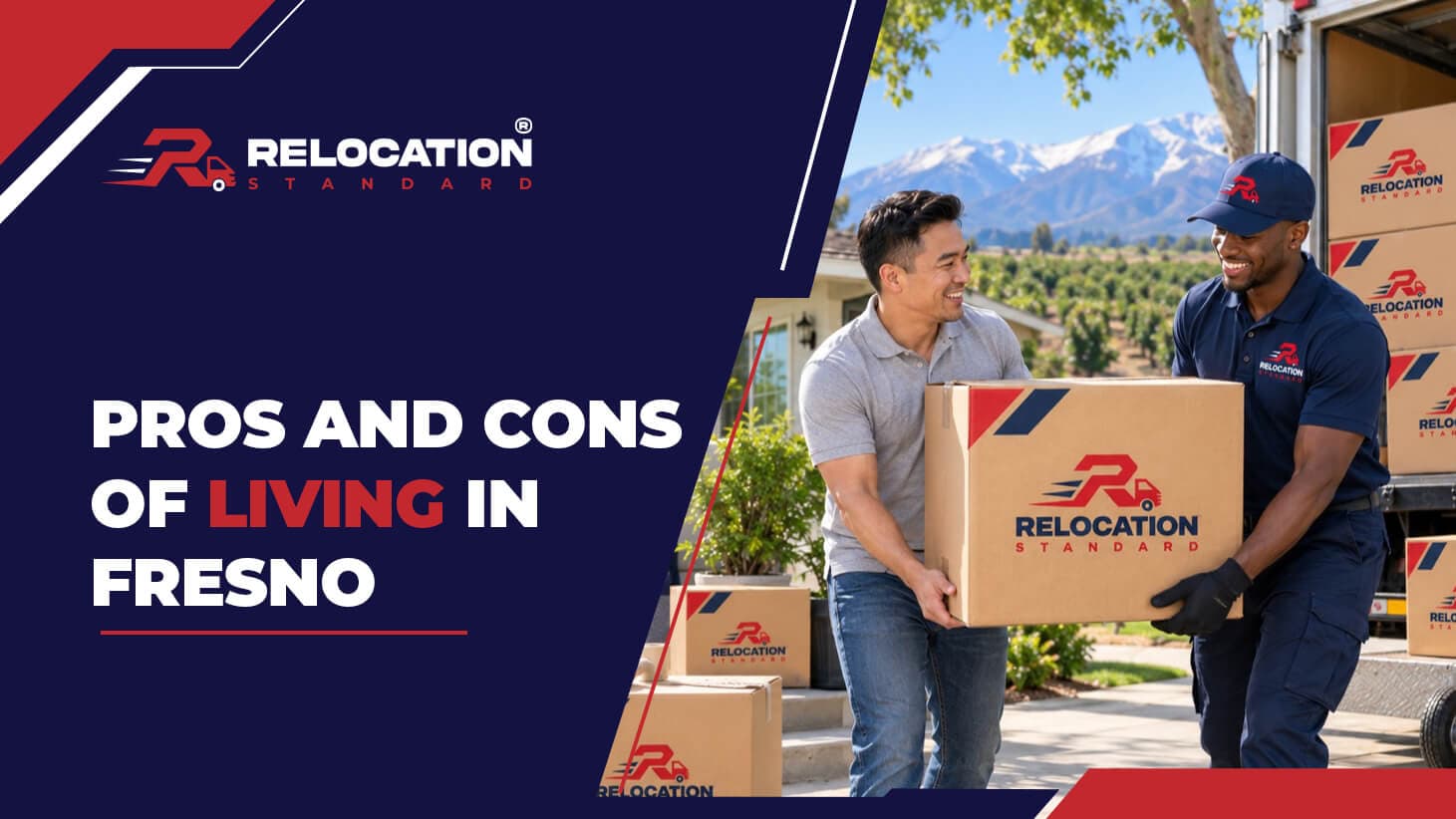
Maybe your rent in Los Angeles or the Bay Area now eats half your paycheck. Or you want to stay in California and still buy a house with a yard. Fresno keeps coming up, and you want to know what life there is really like before you call a mover.
Fresno suits first-time buyers, remote workers with coastal salaries and anyone who wants Yosemite as a weekend habit. Families who pick their school district with care do well, too. It is a harder sell if you have asthma or hate heat. The same goes if you want to live without a car or need a deep market for tech and finance jobs.
Fresno Pros and Cons at a Glance
Fresno gives you 14 clear advantages and 12 real drawbacks. On the plus side, homes and rents cost far less than on the California coast. Yosemite, Sequoia and Kings Canyon sit within an easy drive. Los Angeles and San Francisco are each about three to 3.5 hours away.
You also get more than 270 clear days a year and mild winters. Your produce comes straight from one of the richest farm regions on earth. The food scene draws on Mexican, Southeast Asian, Middle Eastern and many other cooking traditions.
City life brings the Tower District arts scene, a small-town feel, growing healthcare and education jobs and Fresno State. Families get Clovis and North Fresno schools, plus parks, the zoo and the Forestiere Underground Gardens. Commutes stay short by California standards.
On the minus side, the valley traps smog and smoke, and summers run brutally hot. Utilities, gas and California taxes take back part of the housing savings. Pay runs low and unemployment runs high.
You will need a car, and the roads are hard on walkers and cyclists. Crime is falling but still uneven by area, and school results vary by campus. Nightlife is low-key, the beach is hours away and winter brings tule fog.
14 pros
Pros of Living in Fresno
Fresno's main advantages are lower housing costs, a central California location, national parks, sunshine, fresh food and a close community. The list starts with money and moves out to the mountains and the people.
1. You Can Afford a House in California Again
Fresno gives you California homeownership at a price many coastal renters can still reach. The median sale price was about $400,000 over the three months ending September 2026. That figure is down 3.7% from a year earlier, so prices are flat to soft right now. Zillow's typical home value sat near $391,000 in spring 2026, which tells the same story.
The coastal gap is what makes people move. In older Redfin data, Los Angeles sat near $922,000 and San Francisco above $1.2 million, while Fresno sat at $350,000. More recent figures show about $783,000 for San Diego and about $1.3 million for San Francisco. The exact gap shifts each year, but a Fresno house still costs roughly half of a coastal one, or less.
Renting saves you money, too. The average one-bedroom rents for about $1,285 to $1,435 a month. The figure depends on the source, the year and the unit. Newer north-side complexes sit at the top of that range, and older central addresses come in cheaper. A similar coastal one-bedroom often costs about twice as much.
The market moves at a calm pace. Homes sold in about 43 days on average in late 2026, with about two offers each. The typical home went for about 1% below list price. So you can tour, compare and negotiate instead of bidding blind. Good homes still go in about 20 days, so get your loan approval done before you start.
You also get range for that money. North Fresno and neighboring Clovis offer newer, master-planned homes near strong schools. The Tower District has 1920s bungalows close to theaters and restaurants. Central and southwest Fresno have the lowest entry prices, and Sunnyside and the southeast draw buyers who want a yard. Two homes a mile apart can differ a lot, so research each block.
California's property tax rules help owners, too. Prop 13 keeps the statewide effective rate near 0.68%. That is far below a high-tax state such as Texas, at about 1.47%. Your bill starts from your purchase price, so budget from that number, not the seller's old bill.
Most people who look at Fresno come from the coast. San Francisco homebuyers search for Fresno homes more than buyers from any other metro, with Los Angeles and Sacramento next. If that is you, our San Francisco movers, Los Angeles, CA movers page and Sacramento, CA movers page cover those routes.
The catch is local pay. Fresno households earn about $63,000 a year, against about $92,000 statewide, in 2018 to 2022 Census figures. About 22% of residents lived below the poverty line in that period, about twice the national rate. The savings go furthest if you bring a coastal or remote salary with you.
2. Three National Parks Sit Within About 90 Minutes
Fresno puts Yosemite, Sequoia and Kings Canyon closer to your door than almost any other big California city. Sequoia and Kings Canyon are about an hour away. Yosemite takes about 1.5 to 2 hours, depending on which entrance you use. That is why locals call Fresno the Gateway to the Sierras, and why the airport carries Yosemite in its name.
That distance turns the parks into a weekend habit instead of a once-a-year trip. In Yosemite, families can take easy day hikes off Glacier Point Road. You can also swim in alpine lakes that rangers have opened for the season. Climbers come for the big granite walls. In Sequoia, the climb up Moro Rock gives you a view over the giant sequoias and the whole range.
Closer in, the Sierra National Forest offers hiking and camping. China Peak gives you a ski hill for winter weekends. Death Valley and Pinnacles National Park sit within about half a day's drive, too.
The honest catch is timing. Summer weekends bring crowds, and winter can close high roads, so check park alerts before you go. In fire season, smoke can drift into the same mountains you moved here to enjoy.
3. Los Angeles, San Francisco and the Coast Are All Within Reach
Fresno sits near the middle of California, so most of the state is a day trip away. San Francisco is about three hours by car, and Los Angeles is about 3.5. Sacramento takes about three hours, and Monterey about 2.5. Leave at 8 a.m., and you can be on a Monterey beach by lunch.
Highway 99 and Highway 41 carry you north, south and up into the mountains. Amtrak runs south to Bakersfield and north toward San Jose and the Bay Area. The state's high-speed rail line is under construction through the valley, though it is not open yet.
Fresno Yosemite International Airport is the largest airport in Central California. It has direct flights to 13 major U.S. cities, including San Diego, Los Angeles and San Francisco, plus three destinations in Mexico. One local put it this way. You can ski in the morning and watch the sun set over the ocean the same day.
For you, this means Fresno works as a base. You can keep coastal friends, family and clients without paying coastal rent. The trade-off is that you will drive a lot, and the coast cons below explain what you give up day to day.
4. You Get More Than 270 Sunny Days a Year
Fresno is a sunny city, with more than 270 clear days a year by one count and close to 300 by another. Rain falls mostly in winter, about 11 inches a year. January through March bring about two inches a month. From June to September, you can expect almost no rain at all.
Winters stay mild. The city rarely drops below freezing, so you will not shovel snow or scrape ice. You can hike, bike or eat outside in January, then drive to the Sierra when you want snow.
The air is dry, too. Summer evenings usually cool below 70°F, and you do not get the sticky humidity of the Southeast. Readers of the Fresno Bee also point out what the valley lacks: hurricanes, tornadoes, massive floods and deadly freezes.
The same sun has a cost. Summers get very hot, and the clear, still air traps smog. Both get their own cons below.
5. You Live Next to the Farms That Feed the Country
Fresno sits at the center of one of the most productive farm regions on earth, and you will taste it every week. Fresno County grows about 300 crops. Grapes and almonds lead the list, and tomatoes and garlic make the top ten. Agriculture adds more than $8 billion to the state economy and supports about 20% of local jobs.
Fresno is also the raisin capital of the world. Farmers grow and sun-dry all U.S. raisins within about 60 miles of the city. Fresno State's agricultural programs carry that farm economy into the university, too.
For you, that means fresh produce year-round. The Vineyard Farmers Market sells organic pistachios, heirloom tomatoes and fresh orange juice. Each fall, the same market hosts the Fresno Fungi Festival. In spring, the Blossom Trail draws crowds as orchards bloom across the county, and fall harvest festivals follow the crops.
One caveat: access is uneven. Some Fresno neighborhoods still struggle to get affordable fresh food close to home, even with farms all around. If good groceries matter to you, check what sits near the address you choose.
6. The Food Scene Rewards Locals Who Know Where to Look
Fresno's food is better and more varied than its reputation. Its farm-to-table restaurants buy from nearby growers. Its many cultures bring Mexican, Southeast Asian, Middle Eastern and Italian cooking. You get both at prices well below coastal California.
A few names come up again and again. The Annex Kitchen serves Italian-style dishes built on local ingredients. Pismo's Coastal Grill, Max's Bistro & Bar, Elbow Room and Trelio Food & Wine round out the sit-down list. On the casual side, locals rave about old-school spots such as Mom's Ol Fashion Burgers.
The scene leans toward comfort food and strip-mall finds rather than destination dining. You will find some of the best meals in unassuming places in Tower, downtown and the suburbs. Give yourself a few months and a few local recommendations, and you will have favorites.
7. Fresno Is One of the Most Diverse Cities in California
Fresno is a true mix of cultures. More than half of residents are Hispanic or Latino, and about 14% are Asian. More than 20% were born outside the U.S. English and Spanish are the main languages you will hear.
The city's immigrant communities give it a character you will not find in many places. Fresno is home to large Hmong and Punjabi Sikh communities and to Indigenous Mexican families. Many come from farming cultures in their home countries. Many also face real hardship, which shows in the city's income gaps.
You can see that history in the city's museums. The Armenian Heritage Museum and the African American Historical and Cultural Museum of the San Joaquin Valley tell parts of it. The Fresno Greek Fest is a yearly favorite.
For newcomers, this mix makes it easier to find people with a shared background or language. It also gives you a calendar of food and cultural events through the year. The caveat is that diversity does not erase gaps. Income and opportunity still vary a lot from one part of town to another.
8. The Tower District and Downtown Give the City an Arts Scene
Fresno has a real arts scene, centered on the Tower District and a growing downtown. The Tower District is the city's historic arts neighborhood, with theaters, restaurants, small galleries and 1920s bungalows. Corridor 2122, an art cooperative there, shows contemporary work.
Larger institutions anchor the rest. The Fresno Philharmonic and the Fresno Art Museum lead the list. Arte Américas has celebrated Latino arts and culture for nearly 40 years and helped build the Fresno Arts District. Downtown has public murals, and the yearly Rogue Festival brings fringe theater and performance.
The local music scene runs deeper than cover bands. Small punk and hardcore shows happen at places such as Great Room, Tioga Brewing, Ragin' Records and Sour Milk. A growing downtown brewery circuit adds more live music.
Do not expect Los Angeles. The scene is grassroots and neighborhood-based, and the biggest tours still skip town, as the nightlife con explains. If you like small venues and local artists, though, you will find more here than you expect.
9. A Big City That Still Feels Like a Small Town
Fresno has about 545,000 people, yet many residents describe a small-town feel. Neighbors show up for block parties, school events and local charities. Neighborhoods such as the Tower District, Fig Garden, downtown and Fresno High each have their own tight community.
The city's calendar helps you meet people. The city hosts the Big Fresno Fair each year, and farmers markets and community parades fill the rest of the calendar. Faith groups play a big role, too. The metro has more than 975 religious organizations and churches, and many run service days and food programs.
You can make a mark here faster than in a giant metro. Local leaders describe Fresno as small enough for one person to make a real impact. Makers can join Fresno Ideaworks, a community workshop with welding, woodworking and pottery classes. One resident put it simply: most of your people sit no more than 20 minutes away.
The flip side is that Fresno does not try to impress. People describe it as plain-spoken and a little rough around the edges. If you want polish, you may struggle. If you want to belong somewhere, it is easy to get started.
10. Healthcare, Education and Logistics Jobs Are Growing
Fresno's job base is growing in healthcare, education, government and logistics, not only in farming. Education and healthcare together employ about 87,600 people in the metro. That sector grew 3.8% from August 2023 to August 2024. Most other sectors added jobs over the same period, and the labor force grew 2.2%.
Healthcare anchors the private side. Community Medical Centers is the region's largest private employer, with several thousand workers across its hospitals. Kaiser Permanente is another major employer, and Foster Farms adds food processing jobs.
Public employers give the market ballast. Fresno State, Fresno Unified School District, Fresno County and the City of Fresno hire year-round, which evens out seasonal farm swings. Government employs more than 78,000 people in the area.
Fresno is also home to the 144th Fighter Wing, part of the Air National Guard since 1948. If you are moving on military orders, our military moving services can plan around your report date.
Trade, transportation and utilities add about 77,000 more jobs. Fresno's central spot on Highway 99 makes it a logistics hub. A small startup community gives entrepreneurs support, too. The base is real, but the unemployment con below shows its limits.
11. Fresno State and Fresno City College Anchor the City
Fresno State gives the city a major university with real reach into the local economy. About 22,759 students enrolled there in spring 2025. Its agricultural programs tie straight into the valley's farms and food companies. Fresno City College adds an affordable path for local students and career changers.
The university also helps people move up. A College Futures Foundation study ranked Fresno State fifth of 25 California colleges for return on investment in social mobility. That makes it a strong local option if you or your kids want a degree without coastal costs.
Game days give the city something to rally around, too. Fresno State football joins the rebuilt Pac-12 Conference starting in 2026. That brings bigger opponents to town. If you like college sports, you get a bigger stage than most mid-size cities can offer.
12. Clovis and North Fresno Give Families a Strong Starting Point
Clovis and North Fresno give families newer homes, strong schools and a calmer feel. That is why most family searches start there, among tree-lined streets and quiet cul-de-sacs. Clovis Unified, which serves much of the northeast metro, is the standout district. It enrolled more than 43,000 students in 2025 to 2026. Its test scores rank in the top fifth of California on Niche.
That strength has a price. Homes inside Clovis Unified boundaries cost more and sell faster than similar homes nearby. If schools are your top concern, budget for that premium and check the attendance map for each address. The schools con below covers the wider city.
Families also get plenty to do outside school. The city has more than 80 public parks, including Woodward Park and Roeding Park. Fresno Chaffee Zoo has a walk-through Roo Walkabout with kangaroos, wallabies and kookaburras. Fresno Grizzlies minor league baseball and Fresno State games fill summer and fall nights.
The Forestiere Underground Gardens is the outing you will not find anywhere else. Sicilian immigrant Baldassare Forestiere dug its rooms and passages by hand about a century ago to escape the heat. Citrus trees and grapevines still grow underground. It makes a cool escape on a hot day.
13. Commutes Stay Short by California Standards
Commutes in Fresno are short compared with Los Angeles or the Bay Area. The average trip to work in Fresno County is about 23 minutes. A Lyft analysis ranked Fresno fourth among 35 large U.S. cities for the shortest commute times.
For you, that means more time at home. Crossing town outside rush hour rarely takes long. Many workers reach their jobs in well under half an hour. A transplant from a long coastal commute can win back real time each day.
The trade-off is that nearly everyone drives. Rush hour still slows the main roads. The city's streets are also hard on people who walk or bike, as the cons explain. Short drives are a pro only if you are fine with driving.
14. The River and Bike Paths Make It Easy to Get Outside in Town
You do not have to drive to the Sierra to get outside. The San Joaquin River Parkway runs along the city's northern edge, with trails, river access and wildlife. Woodward Park and the San Joaquin River bluffs give North Fresno plenty of green space close to home.
Fresno also has more dedicated multi-use bike paths than many newcomers expect. Residents report stumbling onto long, scenic paths off roads such as Herndon Avenue. The city keeps adding bike lanes, too.
Nearby, the Madera Wine Trail makes an easy weekend outing. The open skies also give you big sunsets and the occasional eagle along the river. The catch is heat. In summer, plan walks and rides for early morning or after dark.
12 cons
Cons of Living in Fresno
The main disadvantages of living in Fresno are poor air quality, extreme summer heat, high utility costs, low wages and car dependence. Each one below includes ways to soften it.
1. The Air Ranks Among the Worst in the Country
Air quality is the biggest downside of living in Fresno. The Fresno metro ranked fifth worst in the U.S. for ozone in the 2026 State of the Air report. It logged about 54.5 unhealthy ozone days a year. It ranked fourth worst for year-round particle pollution and sixth for short-term particle days. Fresno County earned a failing grade on all three measures.
The valley's shape causes much of it. The mountains around the valley trap pollution from traffic, farms and industry. Summer heat turns exhaust into ozone. Wildfire smoke adds to the problem from late summer into fall. Some years bring more than 100 days of unhealthy air.
This hits hardest if you or your kids have asthma, heart disease or another breathing condition. More than 78,000 Fresno County residents have asthma. If that includes your family, talk to your doctor before you commit to a move.
There is real progress, though. Fresno posted its lowest year-round particle levels and fewest unhealthy particle days in the report's history in 2026. Pollution has fallen a lot since the mid-1990s.
Most residents adapt with a few habits. Check the daily air quality index, run a good air purifier and move workouts indoors on bad days. When smoke is heavy, keep windows closed. Those habits will not change the valley's air, but they cut what you breathe.
2. Summers Bring Four Months of Triple-Digit Heat
Fresno summers are hot, dry and long. Expect highs above 100°F for at least four months a year. August 2022 hit 114°F. From June through September, rain almost never falls, and the heat sets the rhythm of your day.
Air conditioning is not optional here. Plan on AC that works well from June through September, and expect your power bill to climb. Outdoor plans shift to early morning and evening. Playgrounds, yard work and runs all move to the cooler hours.
The relief comes at night and in other seasons. Evenings usually cool below 70°F, and the dry air feels less oppressive than Southern humidity. Spring and fall are short but pleasant. If you hate heat, though, no amount of dry air will make a 108°F afternoon comfortable. Visit in July or August before you decide.
3. Utilities, Gas and California Taxes Eat Into Your Savings
Fresno's low housing costs do not carry over to every bill. The overall cost of living runs about 3% to 9% above the national average, depending on the source. That still sits far below the California norm. Housing creates the savings, while most other costs track state prices.
Utilities sting the most. They run about 27% to 29% above the national average, with monthly energy bills near $308 in one estimate. Summer air conditioning drives most of that. Water bills can run high, too. Groceries cost about 5% more than the national average, and transportation runs about 37% higher in one estimate.
Gas is another line item. Fresno averaged about $4.65 a gallon in June 2026. That is about 11 cents below the state average, and the city sprawls, so you will buy a lot of it.
Taxes are the other surprise for anyone moving from out of state. California's graduated income tax has a top rate of 13.3% on income over $1 million. The state's average sales tax runs near 8.8%. Property taxes stay low, as the housing pro explains. Income and sales taxes still take back part of what you save on rent.
So budget carefully. Run your numbers with real utility and gas costs, not only rent or a mortgage. For many households, lower housing costs still close most of the gap. The savings are just smaller than the home prices suggest.
4. Wages Run Low and Unemployment Runs High
Fresno's job market is soft by California standards. Metro unemployment ran about 8.2% in late 2025, well above the state and national rates. It sat at 7.6% in August 2024, and older figures put it above 10%. If you need to find work after you arrive, plan for a longer search.
Farming explains much of it. About a fifth of the workforce depends directly on agriculture. Farm jobs are often seasonal, low-paying and tied to weather and crop prices. That pulls unemployment up even when other sectors grow.
Some fields are thin. Tech and finance jobs are far fewer than on the coast. The information sector shrank 7.1% in the year to August 2024. Wages trail the Bay Area and Los Angeles, too.
What this means for you depends on where your paycheck comes from. If your income travels with you, Fresno's low housing costs can more than make up the gap. If you will depend on the local market, line up a job before you move, ideally in healthcare, education, government or logistics.
5. You Will Need a Car for Almost Everything
Fresno is a car-first city, and most residents drive everywhere. Its Walk Score is about 47, its Transit Score about 33 and its Bike Score about 58. Most errands mean a drive. If your household shares one car now, you may need two here.
Fresno Area Express (FAX) runs buses across much of the city. Still, service runs less often and covers less ground than in bigger California cities, especially outside the center. If you live in the suburbs or commute across town, you will likely find the bus too slow.
Walking is hard in many areas. Sidewalks end without warning, and some residents say they do not feel safe walking or biking on busy roads. The Tower District and downtown are the easiest places to walk.
So budget for a car, insurance and gas from day one. If you want to drive less, look at homes near those walkable pockets or near the river bike paths.
6. Rush-Hour Traffic and Risky Roads Take Getting Used To
Fresno's traffic is light by California standards, but its roads carry real risks. Rush hour still slows the main roads and highways as the city grows. Locals also complain about aggressive and careless driving more than almost anything else.
Pedestrian safety is the hardest number to ignore. Fresno regularly ranks high on national lists for pedestrian deaths. In 2025, the city recorded 28 pedestrian deaths, more than its 22 homicides. Police say most involved people in the roadway illegally or impaired.
There are signs of progress. Total traffic deaths fell from 54 in 2024 to 45 in 2025. Police issued 17% more traffic citations and made more than 2,400 DUI arrests.
For you, the lesson is simple. Drive defensively, cross only at signals and use bike paths rather than busy arterials. If you have kids who walk to school, check their route before you buy.
7. Crime Is Falling but Still Uneven by Neighborhood
Crime in Fresno has fallen sharply, but safety still varies a lot from one area to the next. The total crime rate ran well above the national average in older data. Some residents still name public safety as their top worry. The good news is that the trend has turned.
The city recorded 22 homicides in 2025, its lowest number since 1974. That is down 27% from 2024 and about 70% from the 2020 and 2021 peaks. Violent crime fell 5% overall, and non-fatal shootings dropped from 221 to 162.
Property crime is what you are most likely to face, and it fell fastest. Property crime dropped 24% in 2025. Car theft fell 34%, with 1,250 fewer cars stolen. That is a big shift for a city once called the car theft capital of America. Vehicle break-ins fell 27%, and residential burglary fell 16%.
The pattern is what helps you most. Areas such as North Fresno and Clovis have a reputation for feeling safer. Central and southwest neighborhoods need closer research block by block. Residents also mention homelessness, illegal dumping and litter in some parts of town.
Before you sign, check the city's crime map for each address and visit at night. Lock your car and keep valuables out of sight. If crime is your top worry, Clovis may suit you better than the urban core.
8. School Quality Depends on Your District and Campus
School quality in Fresno varies widely, and it often decides where families settle. Fresno Unified serves about 70,000 K-12 students, which makes it one of California's largest districts. Its student-teacher ratio sits near 19 to 1. Some of its schools have struggled with low graduation rates and test scores.
Results vary a lot by campus, so families research single schools rather than the district as a whole. Charter and magnet programs give parents more choice. Enrollment has slipped in recent years, as it has across the state.
Clovis Unified is the main alternative, as the family pro explains. Its homes cost more, so you trade a higher price for a more reliable school zone. Look up the school for each address before you fall for the house.
9. Nightlife and Big Concerts Are Low-Key
Fresno's nightlife is quieter and more spread out than a big-city scene. You will find bars, clubs and live music venues, but not in one dense, walkable district. The Tower District is the closest thing to a nightlife hub, with DJs and some touring acts.
The bigger gap is major events. Large concerts, festivals and tours come through less often than in Los Angeles or the Bay Area. Many residents drive to other cities for big shows, which can mean a three-hour trip and a hotel.
Locals often find their fun elsewhere. Small music venues, breweries, college games and community events fill a lot of weekends. If your ideal Saturday is a backyard show and a burger, you will be fine. If you want a new club every weekend, you will feel the limits.
10. The Coast and Big-City Culture Are Hours Away
Fresno is an inland city, so beaches and big-city culture take a real drive. Monterey is about 2.5 hours away, San Francisco about three and Los Angeles about 3.5. You trade ocean breezes and beach days for lower costs.
The city also has fewer museums, theaters and cultural institutions than Los Angeles or San Francisco. The local scene covers a lot, as the arts pro explains. Still, some exhibits and shows mean a road trip.
How much this bothers you depends on your habits. If you go to the beach every weekend now, the drive will wear on you. If you go a few times a year, Fresno's central spot makes those trips easy enough.
11. Winter Brings Tule Fog and Gray, Damp Mornings
Fresno winters are mild, but they bring tule fog, a dense ground fog that settles over the valley on cold mornings. It can cut visibility on Highway 99 and rural roads to almost nothing. Winter is also when most of the year's rain falls.
The fog adds a gray stretch to an otherwise sunny year. Lows can dip near freezing on the coldest nights, and January through March bring about two inches of rain a month.
The fix is mostly about driving. Slow down, use low beams and leave extra time on fog mornings. When you want real winter, the Sierra ski slopes sit only a short drive away.
12. Some Areas Feel Rough Around the Edges
Fresno is an unpolished city, and some parts of it show neglect. Residents complain about litter, illegal dumping and visible homelessness in some areas. The city is slowly reviving its older central districts, but the change is uneven.
This is the con that a quick visit may hide. A strip of North Fresno can feel polished, while a drive downtown shows a grittier side. Visit several areas at different times before you choose.
Many residents see the same roughness as part of the city's character. Locals call Fresno raw, resilient and full of people who want to fix things. If you like a city with room to improve, that can be a reason to stay.
Who Fresno Suits and Who Should Think Twice
Fresno suits people who want California homeownership, national parks and sunshine. It frustrates people who need clean air, coastal culture, transit or a wide job market. You will likely do well here if you bring a remote or coastal salary and want a house with a yard. It also fits outdoor lovers, college sports fans and anyone who likes a close community.
Families who will research schools by address do well, especially in Clovis and North Fresno. Workers in healthcare, education, government, agriculture and logistics will find the most local openings.
Think twice if you or a family member has asthma or another breathing condition. The same goes if you cannot stand heat, want to live without a car or need a tech or finance job. Fans of busy nightlife and weekly beach trips should look elsewhere, too.
If you want to stay in California and compare, read the pros and cons of living in Sacramento. It is another valley city with a bigger government job base. The pros and cons of San Jose and Los Angeles show what the coast costs.
The Bottom Line on Living in Fresno
Fresno is worth it if you will trade clean air and the coast for an affordable California home near the Sierra. You get houses at about half of coastal prices, short commutes and three national parks within easy reach. It works best when you bring your income with you or have a local job lined up.
Look elsewhere if bad-air days, 105°F afternoons or a car-dependent life would wear you down. If you are on the fence, rent for a year in an area you like. Live through one July and one fire season before you buy.
If you decide to go, our Fresno, CA movers page explains how we plan moves into and out of the city. Our residential movers cover apartments, condos and family homes. For a cross-country trip, we offer long-distance moving services and interstate movers. Leaving the Chicago area? We also plan moves out of Chicago, and you can browse all the cities and routes we serve.
Relocation Standard is a moving carrier, not a broker, and we plan long-distance moves around your route and schedule. Get a free, no-obligation moving quote or request a callback.