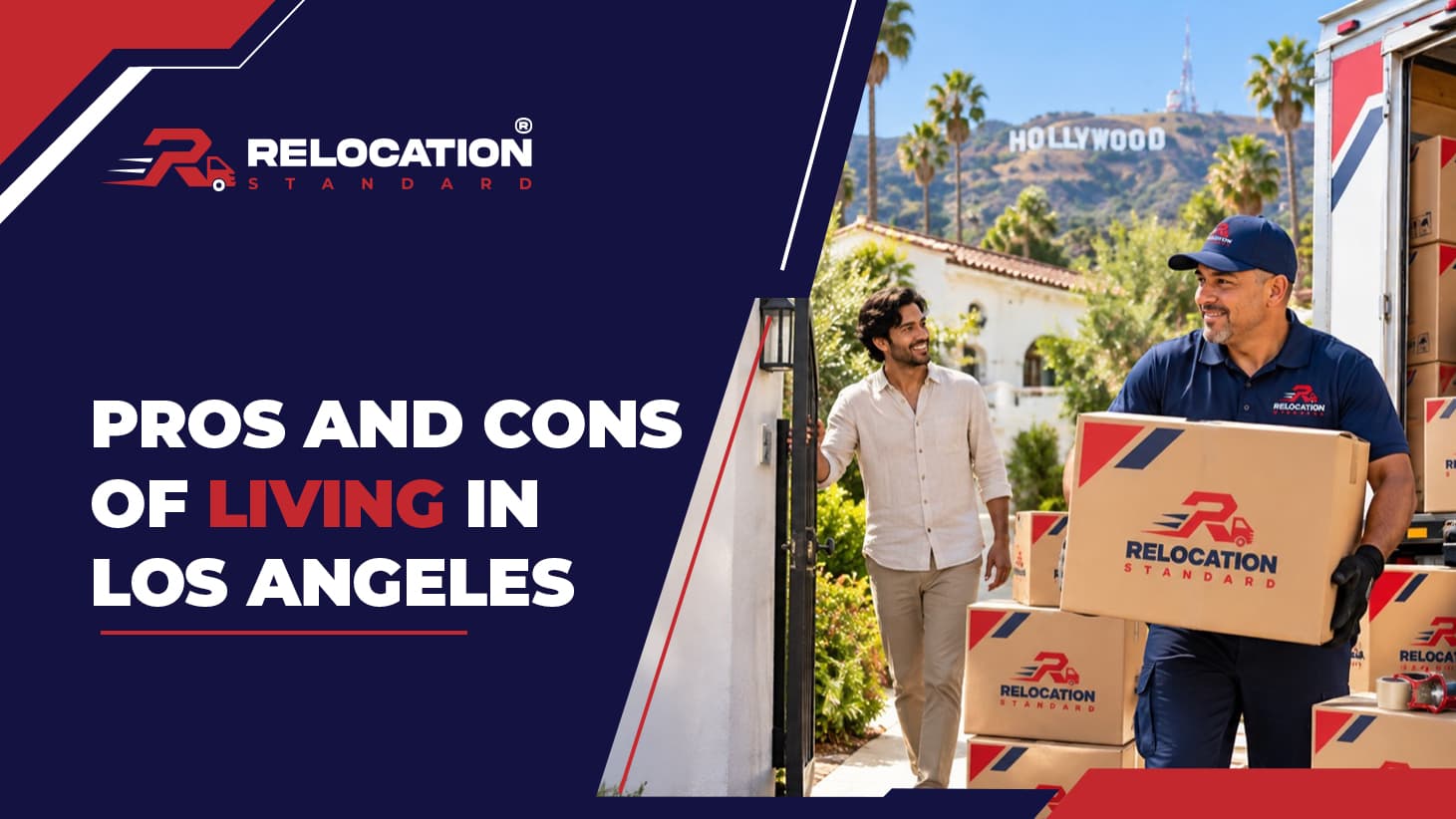
Maybe you have a job offer in Santa Monica, Burbank or El Segundo, and the beach sounds perfect after another gray winter. Or you love the idea of LA but cannot separate the postcard from daily life. These pros and cons of living in Los Angeles give you the full picture before you sign a lease.
LA suits people who love the outdoors, entertainment, food and creative work, and who earn enough to absorb high housing costs. It is a harder sell if you want short commutes, a car-free life or a home far from fire and earthquake risk.
Los Angeles Pros and Cons at a Glance
Los Angeles gives you 12 big advantages and 13 real drawbacks. The pros start with mild, sunny weather and beaches, mountains and parks close to home. Entertainment, museums, music and shopping fill every week, and the food scene covers almost every cuisine.
Diversity runs deep, and the job market spans entertainment, aerospace, tech and healthcare. Pro sports, top universities and family attractions add to the draw. LA is also one of the most LGBTQ-friendly cities in the country.
Older apartments come with rent stabilization, and the rest of Southern California sits within a day trip. Three nearby airports make flying easy.
The cons start with cost. Daily bills run far above average, and rent and home prices rank among the highest anywhere. Traffic is the worst in the country, and most people need a car because transit trails driving.
Sprawl and parking add hassle, and taxes take a big bite. Smog, wildfires, earthquakes and inland heat come with the location. The job market is uneven in 2026, safety varies by neighborhood and homelessness stays visible.
12 pros
Pros of Living in Los Angeles
Los Angeles' main advantages are weather, outdoor access, entertainment, food, diversity and creative careers. The list starts with the climate and the coast, then moves to work, school and daily life.
1. The Weather Is Mild and Sunny Almost All Year
Los Angeles has a Mediterranean climate, with warm, dry summers and mild winters. The average temperature is about 64 degrees year-round. Summer averages about 70 degrees from June through September, and many days reach the mid-80s. Winter averages about 59 from December through March.
Sunshine is the norm. Estimates run from about 292 to more than 300 sunny days a year. Winter highs hover around 67 degrees, and lows rarely dip below the low 40s. Rain is rare outside the winter months.
That means you can plan a hike, a beach day or dinner on a patio without checking the forecast. Locals say the weather is predictable most of the time. Many people move here for the climate alone.
Two quirks come with it. A marine layer called "May Gray" and "June Gloom" often keeps early summer mornings gray. The coast also stays cooler than inland areas. The same day can feel very different in Santa Monica and the San Fernando Valley.
2. Beaches, Mountains and Parks Sit Close to Home
Los Angeles puts the ocean, mountains and big city parks within a short drive of most neighborhoods. LA County has about 75 miles of coastline and 20 beaches. They start at Malibu's dramatic shore on one side of Santa Monica Bay. The hidden coves of Palos Verdes sit on the other side.
Each beach has its own feel. Surf or play volleyball at El Porto, Venice or Will Rogers State Beach. Kayak among sea lions or fish at Redondo Beach, and paddleboard or watch for whales at Marina del Rey. Manhattan, Hermosa and Redondo beaches in the South Bay draw bikers, skaters and rollerbladers.
The Marvin Braude Bike Trail, which locals call the Strand, runs 22 miles from Will Rogers State Beach to Torrance Beach. Most beaches are open from sunrise to sunset. Check parking lot hours before you leave your car.
Trails and green space fill the city, too. Griffith Park covers more than 4,200 acres, with hikes such as Runyon Canyon and the Ferndell Nature Trail. Exposition Park adds 160 acres, and Echo Park Lake, Elysian Park and MacArthur Park serve their neighborhoods. Mountains around the city offer mountain biking and rock climbing.
For you, this means outdoor time is part of a normal week, not a vacation. The catch is traffic. A beach that looks close on a map can take an hour on a summer weekend. Many locals simply pick the beach or trail nearest home.
3. Entertainment, Music and Museums Fill Every Night
Los Angeles has events every night of the week, from concerts and film screenings to theater, comedy and sports. As the center of the country's film and TV industry, it also lets you tour studios such as Warner Bros. You can also join a live taping as an audience member or contestant.
Music runs deep. The Hollywood Bowl has hosted summer concerts for more than a century, and the LA Philharmonic plays there. Rock fans head to the Whisky a Go Go and the Troubadour. The Art Deco Wiltern, the outdoor Greek Theatre and the Kia Forum in Inglewood draw major acts.
Museums give you options at every price. The Getty Center in Brentwood is free to visit, and the Getty Villa near Santa Monica shows Greek and Roman art. The Broad sits across from the Museum of Contemporary Art downtown. LACMA and the Academy Museum share Museum Row on the Miracle Mile.
Comedy and nightlife round it out. The Laugh Factory and The Comedy Store host famous comics. Hollywood and West Hollywood have the busiest nightlife. The calendar adds the LA Marathon and the Academy Awards in March and large Pride festivals in June.
Shopping and style are part of the culture, too. Rodeo Drive in Beverly Hills, The Grove, Melrose Avenue and the Third Street Promenade in Santa Monica draw shoppers from everywhere. You will notice how many people treat fashion as self-expression. The downside is cost, because concerts, nights out and shopping add up fast.
4. The Food Scene Covers Almost Every Cuisine
Los Angeles has one of the most varied food scenes in the country. It runs from taco stands and food trucks to Michelin-starred dining rooms. Street vendors have sold food here since at least the 19th century. Many credit LA with starting the modern food truck boom across the country.
Some of the best meals hide in plain sight. Strip malls hold many of the city's top restaurants. Try spicy miso ramen at Daikokuya in Little Tokyo, or the quick eats along Sawtelle Japantown. Koreatown and Little Ethiopia run on mom-and-pop spots, while Beverly Hills and Little Tokyo hold Michelin stars.
Mexican food shapes the city. El Paseo Inn is one of LA's oldest Mexican restaurants and bars. Food trucks sell gourmet tacos, bao and spicy Korean street food. Locals say you can find almost any dish, even something close to your mother's menudo.
Eating well is easy whatever your diet. Many restaurants offer vegetarian, vegan and gluten-free options without fuss. You can also eat well on a budget here, because global cuisine runs from cheap counters to tasting menus. Once you arrive, eating your way through the neighborhoods is part of learning the city.
5. Diversity Shapes Every Neighborhood
Los Angeles is one of the most diverse cities in the country. People from 140 countries call it home. About 39% of households speak Spanish at home, based on 2020 Census data. That mix shows up in the food, music, art and neighborhoods.
You feel it in daily life. Koreatown, Little Tokyo and Little Ethiopia each carry their own traditions and businesses. Día de los Muertos, Chinese New Year and LA Pride fill the calendar. Hispanic food and events shape the whole city.
For newcomers, this makes LA easier to settle into. You can usually find a community, a grocery store or a place of worship that feels familiar. Locals often name the multicultural mix as their favorite part of living here.
6. The Job Market Rewards Creative and Technical Work
Los Angeles has a huge, varied job market, with more than 5 million adult workers in its labor force. Entertainment is the famous employer, but tech, aerospace, healthcare, fashion, tourism and manufacturing run deep. Fortune 500 companies sit alongside thousands of small businesses. The region also anchors California, now the fourth-largest economy in the world.
Big names hire here. Major employers include UCLA, Warner Bros., Google and Kaiser Permanente. SpaceX, Hulu and Trader Joe's also call the area home. The South Bay is a major aerospace hub.
Creative work is LA's biggest edge. The metro has more working artists than any other in the country, across film, fine arts, fashion, architecture and design. Groups such as the Los Angeles Artists and Creatives Meetup and the Creative Lunch Club help newcomers connect. Coworking spaces such as NeueHouse and Secret Spot DTLA host freelancers.
Income runs high on paper. The typical household income was $102,058 in February 2026. Common jobs include office and administrative support, food service, transportation, sales, healthcare and management.
The catch is that finding a job that pays enough is harder than finding a job. Hollywood hiring has slowed in 2026, as the job market con explains. Recruiters suggest you land a job before you move.
7. Pro Sports Teams Play in Every Season
Los Angeles gives sports fans a team in nearly every major league. The Lakers, the Sparks and the Kings play at Crypto.com Arena downtown. The Clippers play at the Intuit Dome in Inglewood. The Rams and the Chargers share SoFi Stadium nearby.
Baseball and soccer add more choices. The Dodgers are eight-time World Series champions and play at Dodger Stadium above downtown. LAFC plays at BMO Stadium near downtown, and the LA Galaxy plays at Dignity Health Sports Park. College football fills the Rose Bowl in Pasadena every New Year's Day.
For a sports fan, this means a game almost any week of the year. Tickets and parking for the big teams cost a lot, though. Plan on rideshare or transit for some venues, because stadium traffic adds to the usual freeway delays.
8. Top Universities and Some Strong Schools
Los Angeles is home to some of the country's best universities. UCLA often ranks as the top public university in the country. USC is home to the Annenberg School for Communication and Journalism. The American Film Institute's Conservatory trains filmmakers. Caltech sits about 20 minutes away in Pasadena.
Families have strong school options in parts of the city. Harvard-Westlake School (private) and the California Academy of Mathematics and Science (public) earn A+ ratings. Granada Hills Charter also earns an A+.
Quality varies a lot, though. LAUSD is the largest district in California, serving about 550,000 students. About 34% of LA schools rate above average on GreatSchools, compared with 44% in San Diego. If you have kids, check the school assigned to each address before you pick a neighborhood.
9. Families Get Theme Parks, Museums and Hands-On Fun
Los Angeles keeps kids busy with world-famous attractions and museums. The Natural History Museum of Los Angeles County has Dinosaur Hall, the Nature Garden and an annual Dino Fest. Griffith Observatory is the most-visited public observatory in the world. Its planetarium and theater run shows for all ages.
Hands-on fun extends past the city. Kidspace Children's Museum in Pasadena has the Physics Forest and trike tracks. Universal Studios Hollywood and Six Flags Magic Mountain are nearby. Disneyland sits in Anaheim, and LEGOLAND in Carlsbad is about 90 minutes away.
Brentwood and Porter Ranch are popular with families for schools and bigger homes. The trade-off is price, because family-size homes in those areas cost far more than the citywide median. Theme park passes also add up, so most families budget for a few big trips a year.
10. LA Is One of the Most LGBTQ-Friendly Cities
Los Angeles is one of the most LGBTQ-friendly cities in the country, with a long history of activism. West Hollywood and Silver Lake have welcoming communities, inclusive businesses and busy nightlife.
The Los Angeles LGBT Center offers wellness services, advocacy groups and support for queer artists. Pride festivals fill June, and the largest runs on Hollywood Boulevard. For LGBTQ newcomers, this means community and support are easy to find from day one.
11. Older Apartments Come With Rent Stabilization
Many Los Angeles renters get a yearly cap on rent increases. The city's Rent Stabilization Ordinance (RSO) generally covers rental properties first built on or before October 1, 1978. Landlords can raise rent in those units only once every 12 months, by a set percentage.
The cap is modest. The allowable increase runs from 1% to 4% based on inflation. It is 3% for July 1, 2026 through June 30, 2027. Since February 2, 2026, landlords can no longer add extra percentages for utilities or for a new dependent in your household.
For you, this means an RSO unit gives you more predictable costs over time. Ask whether a building falls under the RSO before you sign, and check the city housing department's rules. Newer buildings fall outside it, and the RSO does not limit the rent a landlord sets for a new tenant.
12. Southern California Is a Day Trip Away
Living in LA puts beaches, deserts, mountains and other cities within an easy drive. Locals say you can drive an hour and be at the beach, in the desert or at Disneyland. San Diego is about 130 miles south, and Palm Springs is a little more than 100 miles away.
San Francisco sits about 400 miles north, roughly six and a half hours by car. Amtrak trains along the coast offer a scenic way to reach San Diego.
Flying is easy, too. LAX ranks as the eighth-busiest airport in the world, and the LAX FlyAway bus helps if you live farther out. Hollywood Burbank Airport suits the Eastside, and Long Beach Airport suits the South Bay and areas farther south.
These perks come at a steep price. Los Angeles charges for its lifestyle in rent, taxes and time behind the wheel.
13 cons
Cons of Living in Los Angeles
The main disadvantages of living in Los Angeles are high costs, expensive housing, heavy traffic, car dependence and natural hazards. Most of them have workarounds, and each item below says what helps.
1. Nearly Every Bill Costs More Than Average
Los Angeles is one of the most expensive places to live in the country. Estimates put the overall cost of living about 50% to 72% above the national average. The LA-Long Beach area ranked ninth most expensive of 248 U.S. urban areas in mid-2026.
Housing drives most of the gap, but transportation also runs about 65% above average. Groceries cost a bit more than average, and the LA region ranks 13th for grocery prices nationally. Health costs come in near the national level.
Driving costs hit hard. A gallon of gas averaged about $5.98 in the second quarter of 2026, tied for second-highest nationally. LA drivers paid about $3,730 on average for car insurance last year, more than 50% above the national average. Edison electric customers also got a 9% rate hike last year.
Pay does not keep up for everyone. The average LA County weekly wage was $1,704 in early 2026, lower than in most other high-cost areas. One estimate puts a single person's total spending near $6,233 a month. The MIT Living Wage Calculator says a single adult needs at least about $57,845 a year to stay above the poverty line.
A state benchmark tells the same story. California's housing department counts a family of four earning under $100,000 as low-income in Los Angeles. Roommates and house shares are the most common fix. Run a full budget, including gas and insurance, before you accept an offer.
2. Rent and Home Prices Rank Among the Highest Anywhere
Housing in Los Angeles costs far more than in most of the country, whether you rent or buy. Zillow's typical rent was $2,884 a month in February 2026. You would need about $115,365 a year to keep that rent under 30% of income.
Other trackers show different numbers because they measure different units. Average rent ran $3,388 in September 2025, about 61% above the national average, with one-bedrooms at $2,596 and two-bedrooms at $3,975. A 950-square-foot apartment cost about $3,084 a month in 2026, the 15th-highest among U.S. urban areas.
Neighborhoods swing widely. One-bedrooms averaged about $2,122 in East Hollywood and $2,566 in North Hollywood. Downtown LA ran about $2,967, and Brentwood about $3,176. Living in the suburbs outside the city and commuting in, or finding a roommate, can cut costs.
Buying is a bigger stretch. The typical home value was $954,296 in February 2026, and median sale prices have topped $1 million. You would need about $229,508 a year to buy with 20% down. Owning costs about $5,738 a month once you add insurance, property taxes and maintenance.
Supply explains a lot of it. LA built very little new housing during the 2000s boom, and the shortage never caught up. Take your time on the search. Compare prices, visit at different times of day and choose a neighborhood you will enjoy, because rushing usually costs you more.
3. Traffic Is the Worst in the Country
Los Angeles is the most congested city in the U.S., and traffic shapes daily life. Expect to spend about five days a year sitting in traffic. The average commute runs about 31 to 32 minutes, roughly 4.5 minutes longer than the national average.
Rush hour lasts for hours. The evening peak runs roughly from 3 to 6 on weekdays, and the morning rush is long, too. Most commuters spend 30 to 34 minutes a day in traffic. A few miles can turn into an hour or more on a bad day.
Locals give the same advice again and again. If you have to go into an office, live close to it. Give yourself more time than the map says. You will also learn the local language fast, because nobody here says "I-405," only "the 405."
4. Most People Need a Car Because Transit Trails Driving
Most Los Angeles workers drive their own car, because buses and trains are still slower than driving for most trips. LA Metro runs 112 rail stations across six lines, from Long Beach to the Valley and Santa Monica to North Hollywood. Metro buses run 117 routes.
Transit is cheap when it works for you. A ride costs $1.75. With a TAP card or the same contactless card, rides are free after $5 in a day. They also turn free after $18 in a rolling week. Metro Micro offers on-demand rides in some areas, and Metro Bike Share covers short trips.
The system is growing ahead of the 2028 Summer Olympics. The D Line subway extension will run toward UCLA, and the NextGen Bus Plan is redesigning bus service. Peak-hour riders still crowd trains and buses, and some suburbs have little service.
Walkability depends on the neighborhood. LA's overall Walk Score is 69, its Transit Score is 53 and its Bike Score is 59. MacArthur Park, West Hollywood and Koreatown rate highly for walking. Uber, Lyft and Waymo fill the gaps, but surge pricing at rush hour adds up quickly.
You can live here without a car if you choose your neighborhood carefully. For most people, though, a car remains part of the cost of living in LA.
5. Sprawl and Parking Make Every Errand Bigger
Los Angeles sprawls, so distance and parking shape your social life and your budget. The city covers about 470 square miles. Driving from Santa Monica to Pasadena can feel like a road trip. Los Angeles County holds 88 separate cities, each with its own neighborhoods.
That sprawl complicates commutes, friendships and weekend plans. Friends who live across town can be an hour away. Crowded public spaces and noise add to the strain in dense areas. High costs also mean smaller homes, and the average one-bedroom runs about 627 square feet.
Parking is its own skill. Street-cleaning days, time limits, colored curbs and hidden driveways all apply. Read every sign before you walk away from your car, because tickets and tows come fast. When you look at apartments, ask about assigned parking, because street spots can be scarce at night.
6. Taxes Take a Big Bite
Los Angeles residents pay some of the highest income and sales taxes in the country. California's income tax rates run from 1% to 12.3%. An extra 1% applies to income above $1 million.
Sales tax went up twice recently. It rose to 9.75% in April 2025, then to 10.25% on October 1, 2026, under the temporary countywide Measure ER. That higher rate runs through October 1, 2031. Groceries and prescription drugs remain exempt.
What this means for you: a raise for moving to LA can shrink fast once state tax comes out. Compare offers on take-home pay, not gross pay. If you come from a state with no income tax, the difference can be thousands of dollars a year.
7. Smog Still Settles Over the Basin
Los Angeles still has some of the worst air quality in the country. The region's geography traps pollution in the basin. Traffic, industry, wildfire smoke and the busy shipping ports add to it. The American Lung Association has consistently given LA a poor air-quality grade.
Smog builds most on hot days, and wildfire smoke can turn a clear week hazy. That hits hardest if you have asthma or another breathing problem. Older adults and young children feel it more, too.
You can manage it. Check air-quality alerts before a run or a hike, and keep your windows up on the freeway. Many residents run an air purifier at home. Save outdoor plans for clearer days. If air quality ranks high for you, look at neighborhoods farther from freeways and the ports.
8. Wildfire Season Is Longer and More Destructive
Wildfires are one of the biggest risks of living in Los Angeles. Fire season usually runs from May or June through October. Climate change and power lines have lengthened it, and the peak now arrives earlier, in July.
The January 2025 fires showed how bad it can get. The Palisades and Eaton fires destroyed 16,251 structures and killed 31 people. Those fires struck in winter, outside the usual season, which shows the risk reaches beyond summer. Hillside neighborhoods near brush face the highest risk.
The fires also raised costs for everyone. LA homeowners paid about $2,248 on average for home insurance last year, up 75% since 2021. Edison faces billions in potential fire liabilities, which could push power bills higher.
Prepare before you need to. Keep an emergency kit ready, sign up for local alerts and follow evacuation orders right away. If you buy, get insurance quotes before you make an offer. If you rent, check the fire-risk zone for the address and carry renters insurance.
9. Earthquakes, Floods and Mudslides Come With the Territory
Los Angeles sits in an active seismic zone, so earthquakes are part of life here. The San Andreas Fault runs just outside the region, and smaller quakes happen regularly. A major quake could cause serious damage and loss of life.
Water brings risks, too. The city saw several major flooding events in 2023 and 2024. Heavy rain on burned hillsides can trigger mudslides, which threaten homes below.
The region is better prepared than most. Strict building codes, advanced warning systems and public education help. Still, you need your own plan. Secure heavy furniture, store water and supplies, and ask about earthquake coverage before you buy. Standard home insurance does not cover quake damage.
10. Inland Heat Can Turn Dangerous
Los Angeles summers can get dangerously hot away from the coast. The San Fernando Valley runs much hotter than the LA basin, and the basin runs hotter than the beaches. Heat, dry weather and wind also feed fire risk.
If you live inland, plan on air conditioning and higher summer power bills. Older buildings without central air can get uncomfortable fast. Summer-like heat also stretches into September and October.
The city runs community cooling centers during heat waves. If you want mild summers, look closer to the coast. Budget for higher rent there, because ocean breezes cost extra.
11. The Job Market Is Uneven in 2026
LA has a huge economy, but some of its signature industries are hiring less right now. Nonfarm jobs in LA County dipped slightly from December 2024 to December 2025. Job creation across Southern California is running about 80% below normal levels.
Hollywood has taken the biggest hit. Low TV and film production and new technology have slowed hiring. The UCLA Anderson Forecast expects workers in AI and aerospace to do better than those in entertainment, hospitality or construction.
The wider numbers show the strain. Unemployment in the Los Angeles-Long Beach-Glendale area was 6.4% in July 2025, versus 4.3% nationally. The area also has a large low-wage workforce in food service, building maintenance and personal care.
What this means for you: line up a job before you move, especially in entertainment. Look at the South Bay's aerospace employers if your skills fit. Build a savings cushion, because a job search here can run longer than you expect.
12. Safety Varies a Lot by Neighborhood
Crime in Los Angeles depends heavily on the neighborhood. CrimeGrade gives the city an overall D+. One estimate puts crime about 61% above the national average, and residents spend about $492 per person on crime-related costs.
The trend has improved. Violent crime fell by 2,586 incidents from 2023 to 2024. Burglaries dropped by 1,092, and motor vehicle thefts dropped by 1,963. Car theft and burglary still run higher in some areas.
Many areas feel much safer than the citywide numbers suggest. Encino, Playa Vista and Porter Ranch have tight-knit communities and lower crime. The LAPD's Community Safety Partnership and city violence-intervention groups have helped reduce gang activity.
Check neighborhood-level crime data for every address you consider. Visit on weekdays, weekends and at night before you sign a lease. Park in a garage or a lit spot when you can, and keep valuables out of sight in your car.
13. Homelessness Stays Visible, Though Counts Are Falling
Homelessness is more visible in Los Angeles than in most U.S. cities, and high housing costs feed it. The 2025 count found about 43,695 people experiencing homelessness in the city. Countywide, the count was about 72,195.
The trend is improving. Homelessness fell for the second straight year in 2025, down about 3.4% in the city. Unsheltered homelessness in the city fell 7.9% in 2025 and 17.5% over two years.
You will still see encampments in parts of the city and near some transit lines. If you come from a smaller town, this can be a hard adjustment. Visit a neighborhood at different times of day to see what daily life looks like before you commit.
Who Los Angeles Suits and Who Should Think Twice
Los Angeles suits people who love the outdoors, entertainment and creative work, and who earn enough to absorb high costs. You will likely thrive here if you work in entertainment, tech, aerospace, healthcare or a creative field. It also fits beach lovers, hikers, food lovers, sports fans and anyone who wants year-round sunshine.
Families can do well with planning. Brentwood, Porter Ranch and Westchester-Playa del Rey are popular for schools and quieter streets. Check school ratings by address, and budget for a family-size home and a second car.
Think twice if you need a short commute, want to live without a car or are on a tight budget. The same goes if fire and earthquake risk would keep you up at night.
If you are weighing other cities, San Diego offers similar weather at a slightly lower cost and slower pace. You need about $114,858 a year to rent there, versus $115,365 in LA, and commutes average about 26 minutes. Read the pros and cons of living in San Diego. Then compare life in San Jose, living in Phoenix and living in Las Vegas.
The Bottom Line on Living in Los Angeles
Los Angeles is worth it if sunshine, the coast and creative energy mean more to you than low costs and short commutes. You get mild weather, beaches and mountains, world-class entertainment, food from every corner of the world and a deep job market. It works best when you arrive with a job, a car and a neighborhood chosen around your commute.
Look elsewhere if high rent, high taxes and freeway hours would leave you with nothing to save. The same goes if wildfire and earthquake risk would weigh on you every season. If you are on the fence, rent for a year before you buy. Also spend time in the neighborhood you like at rush hour.
If you decide to go, our Los Angeles movers and residential moving services handle apartments and full homes. We also run interstate moves, long-distance moves and long-distance moves out of Chicago. In California, we cover the Los Angeles to San Francisco route and moves with our San Diego movers. Service members can use our military moving services. Get a free, no-obligation moving quote or request a callback.