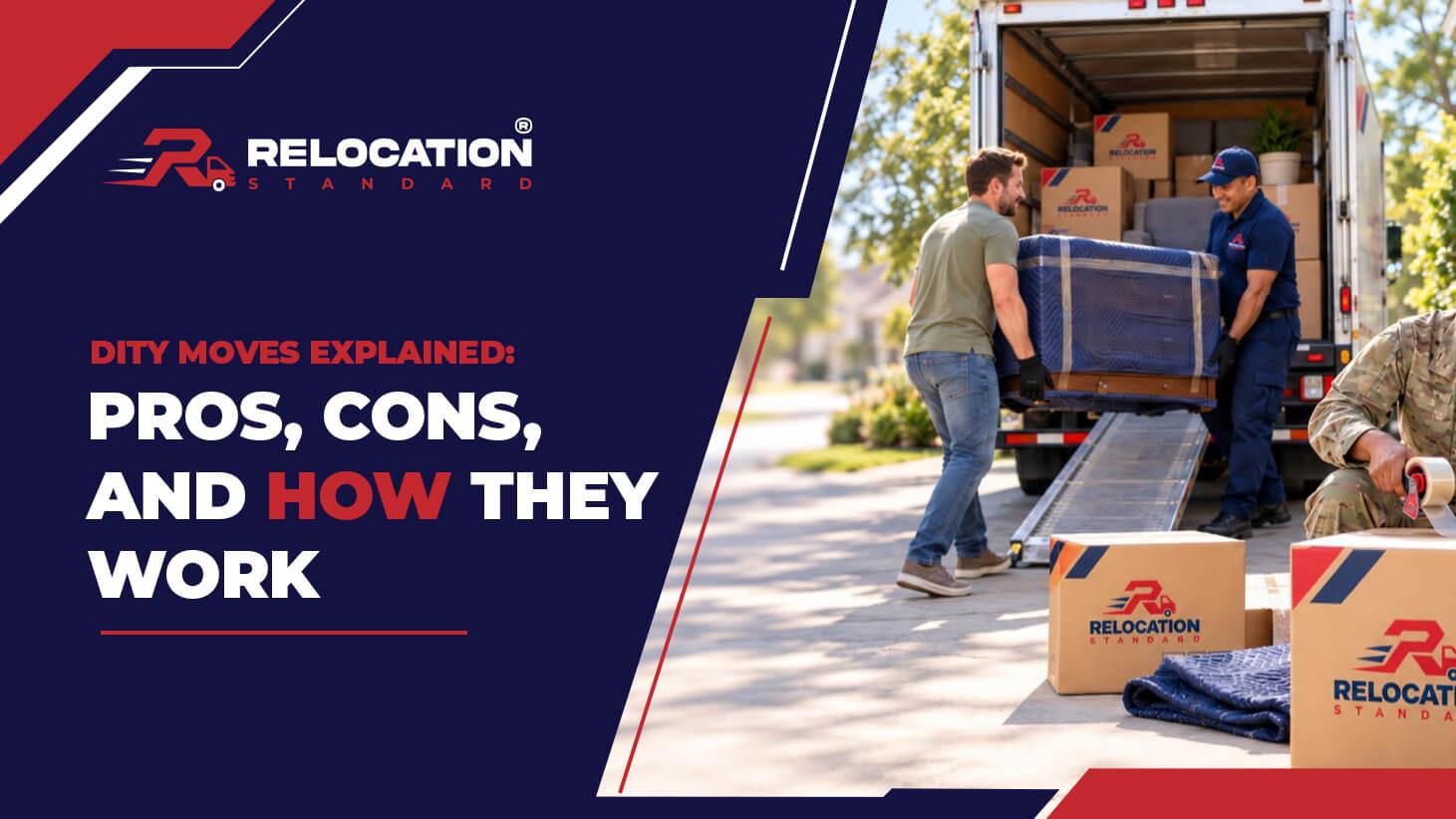
What is a DITY move, and who can use one?
The phrase “do-it-yourself,” or DITY, persists in everyday military conversation. Official guidance usually uses PPM. A PPM may involve driving a rental truck, using a portable container, or hiring a mover that you select and manage. The Military OneSource PCS guide describes eligible circumstances such as PCS orders and certain separation or retirement moves. Specific entitlements depend on individual orders and circumstances; do not assume the same rules apply to every move.
Before booking equipment, contact your installation transportation office. Ask whether a full PPM, a partial PPM, or a government-arranged household goods shipment is authorized. The transportation office can explain your allowance, required approvals, which types of movement are eligible, and how the estimated payment is calculated. Military OneSource's transportation office resource can help locate the correct office.
Full PPM versus partial PPM
A full PPM means you arrange transportation for the household goods you are authorized to move under the PPM. A partial PPM generally means you personally transport an authorized portion while another shipment moves separately under government arrangements. A family might carry items needed immediately at the next duty station while a contracted carrier moves the main furniture shipment. Do not treat your luggage, personal vehicle, or every item you drive as automatically reimbursable household goods; verify the rules with the transportation office.
5 pros
Pros of a DITY or PPM move
1. You control more of the schedule
You choose the pickup plan, packing sequence, and travel rhythm within your orders and approved dates. This is attractive when a lease ends before a new home becomes available, a spouse must continue working, or a pet makes a rigid schedule difficult. Control does not eliminate delays, but you can respond to them directly instead of coordinating every change through an assigned moving crew.
2. You can select the transportation method
A household with a small shipment might prefer a trailer; a larger family may compare a rental truck, moving container, or independently hired carrier. The Military OneSource personal-property resource identifies PPM as an arrangement you handle yourself or through a company you manage. Compare loading help, storage, delivery access, insurance, and equipment availability, not merely the advertised base rate.
3. There may be financial upside
The military's PPM incentive structure can create a financial benefit when authorized payment exceeds your eligible costs. The payment is not a guaranteed profit. Equipment rentals, fuel, tolls, hotels, packing supplies, weight-station fees, storage, and paid help can materially change the outcome. Advance payments, if authorized, also create reconciliation obligations. The DFAS PPM guidance explains operating expenses and taxable incentive considerations for Army claims; follow service-specific instructions.
4. Personal handling can reduce some handoffs
If you pack delicate equipment yourself and keep it under your control, there may be fewer transfers between parties. That can help with irreplaceable keepsakes, essential work equipment, or time-sensitive family supplies. It does not make the shipment automatically safer: a poorly packed rental truck can damage belongings as easily as rushed professional loading.
5. You can plan around immediate household needs
You can pack a clearly labeled “first 72 hours” set of clothes, medicine, school materials, bedding, and kitchen essentials so they remain accessible. For a move with children or an urgent start date, this is often more important than squeezing an additional box into the truck.
Cons and risks that are easy to underestimate
1. You are the project manager
A PPM adds tasks to an already demanding PCS: booking equipment, coordinating drivers and helpers, protecting furniture, planning fueling and overnight stops, supervising loading, finding parking, and tracking receipts. A family with two young children and a cross-country route may find that the time cost outweighs a potential financial gain. Compare your realistic workload with the convenience of government-arranged transportation.
2. Actual costs can exceed the first quote
A hypothetical $2,100 rental-truck quote is not a complete move budget. If fuel, mileage, optional coverage, supplies, loading help, lodging, and storage add another $1,800, the practical outlay becomes $3,900—not $2,100. These figures are an illustration, not current rates or a claim about PPM reimbursement. Build three estimates: expected, high-cost, and delayed-delivery scenarios.
3. Heavy lifting and long-distance driving add risk
Renting a larger truck than you usually drive changes braking distance, visibility, turning radius, and parking needs. Summer heat, mountain roads, and winter storms create further hazards. Use trained loading help where appropriate, check the equipment's requirements, distribute weight safely, and do not drive fatigued. The Army Safety Center has highlighted risks of do-it-yourself moves.
4. Paperwork mistakes can affect payment
Certified empty and loaded weight tickets, receipts, orders, and approved forms matter. A weight ticket recorded for the wrong vehicle, missing location details, or an unexplained shipment weight may create a problem that is difficult to resolve after returning a truck. DFAS's PPM documentation instructions identify weight-ticket and operating-expense documentation. Keep originals, scans, and a secure digital folder.
5. Responsibility for damage and timing is different
When you arrange your own move, claims and insurance can differ from those applicable to a government-booked household goods shipment. Ask who is legally responsible for transit loss, whether a rental truck's optional protection covers the contents, what happens if a hired carrier is late, and how storage is handled. Do not assume the government will resolve a dispute with a private contractor you hired.
How to complete a PPM step by step
Step 1: Read your orders and confirm approval
Contact the transportation office before signing a contract. Ask for an explanation of maximum authorized weight, special items, required registration, reimbursement method, whether an advance is available, and the claim-filing process. The Military OneSource moving FAQ is a useful reference, but your office is the authority for your particular move.
Step 2: Get comparable estimates
Request all-in quotes for at least two methods. Compare truck rental against a container or selected mover, using the same pickup and delivery window. Add fuel, help, supplies, overnight stops, and possible storage. A lower quote may be worse if it exposes you to an impractical pickup window or requires lifting that your household cannot safely do.
Step 3: Plan an accurate inventory
List major furniture, cartons, bulky items, and goods you will take separately. Estimate space rather than treating every bedroom as the same volume. Decide what to sell or donate before moving week.
Step 4: Document the shipment and weight
Ask the transportation office exactly how certified empty and full weight tickets must be obtained, especially for rental trucks, trailers, and containers. Keep license and vehicle information consistent with the tickets. Photograph ticket faces and save receipts immediately. A route or equipment change can complicate documentation; clarify exceptions while you still have the equipment.
Step 5: Move with a safety buffer
Reserve extra time for packing, vehicle inspections, unexpected weather, and arrival access. Secure heavy objects low, prevent shifting, and label the essentials that should not go in long-term storage. Check local parking and loading rules at both addresses. Never assume a delivery truck can access a narrow residential street or building entrance.
Step 6: Submit a complete claim
Use the submission method and timeline provided by your service and transportation office. Keep copies of forms and receipts until the claim has been processed and reconciled. If you received an advance, ask how that changes the balance payable or any repayment obligations. DFAS customer-service guidance directs PPM payment questions to the transportation office.
DITY move versus government movers: a practical decision test
Choose the option that best manages your household's total burden. A PPM may suit a small shipment, an experienced driver, available family assistance, and flexible time off. Government movers may be preferable for a heavy multi-bedroom home, uncertain dates, physical limitations, or a household without safe loading help. A partial PPM can sometimes give you control over essential boxes without requiring you to manage the main shipment.
Try a one-page comparison. For each option write down your expected cash outlay, total workdays, likely delays, insurance/claim path, temporary housing needs, and moving-day support. Give every category a realistic high-cost scenario. If one method is only attractive when nothing goes wrong, it may not be the best method.
Final checklist before you book
Verify eligibility and authorization; compare two all-in methods; plan the load and driver; confirm insurance and damage responsibility; understand weight tickets; organize receipt storage; and budget for weather or housing delays. A DITY move works best when the plan is practical even before considering the financial incentive.
This guide is general information, not service-specific travel-pay advice. Military rules, orders and service-branch processes may change. Confirm entitlements with your transportation office before making financial commitments.