Quick Takeaways
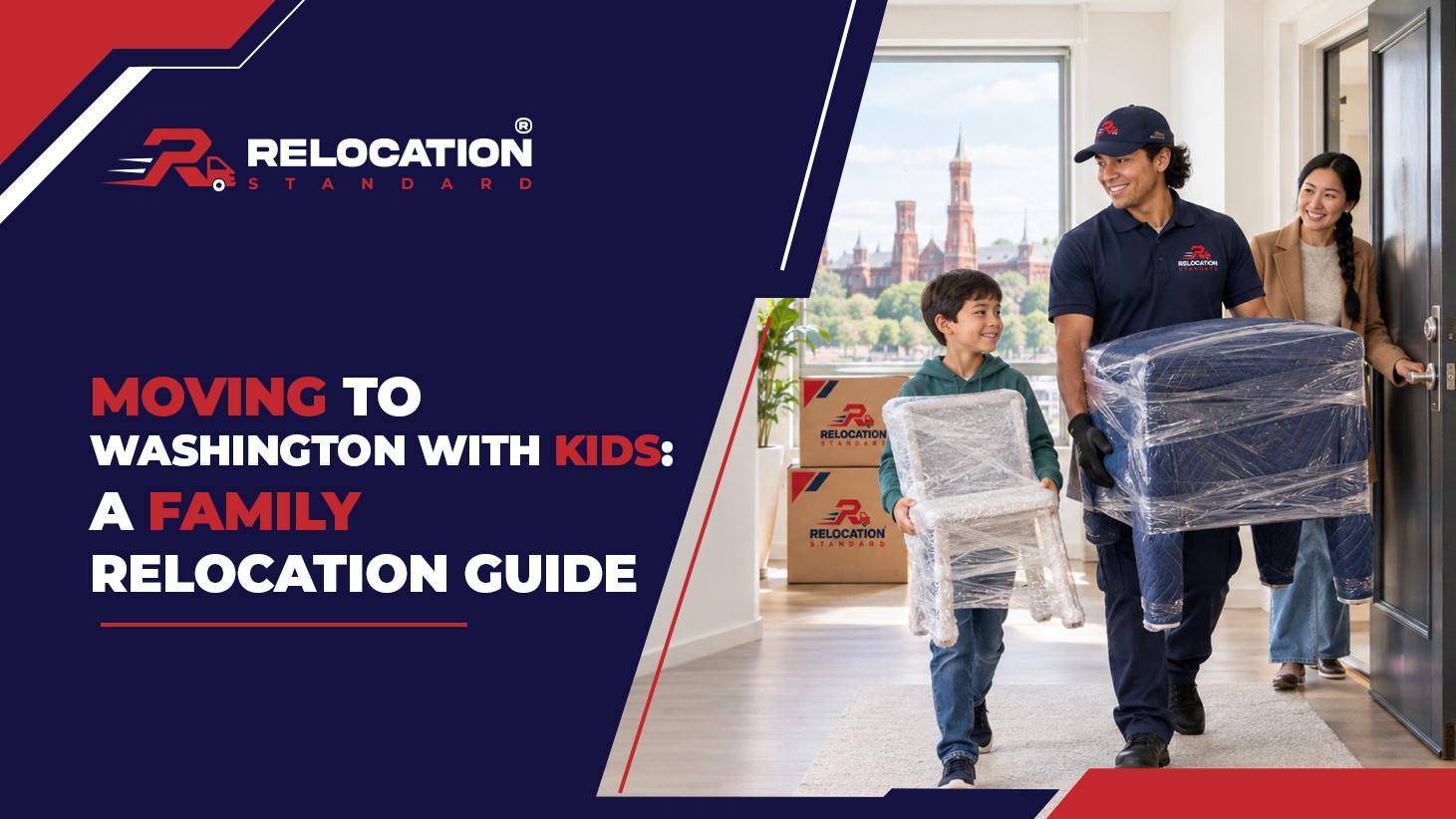
These are the decisions to make first when arranging a family move to Washington.
- Check the address and grade-level enrollment requirements with My School DC.
- Test the school, childcare and work commute at normal weekday hours.
- Compare total housing and family costs, including seasonal utilities and transport.
- Prepare for local weather and arrange a child-safe space for the moving crew’s arrival.
- Keep school records, medication, clothing and a familiar comfort item available during travel.
Which areas of Washington should families research?
Start with a shortlist of specific addresses that match your school, housing and travel needs, not a ranking of entire neighborhoods.
Capitol Hill row houses, Petworth homes and apartments, and Southwest Waterfront buildings offer very different space, stair and commute tradeoffs. Compare an in-boundary school option with any desired lottery school; do not sign a lease on the assumption that a lottery seat will be offered.
At each address, walk the route to school or the bus stop, examine street crossings and ask the property manager about maintenance, parking and security. Use the same checklist for every listing so the tradeoffs are comparable. Check local public data and visit in person; no neighborhood name guarantees safety or school quality.
How do you enroll your children in school?
Confirm the correct school system and the admission steps directly with My School DC before choosing a moving date.
DCPS in-boundary K–12 enrollment and lottery programs have different rules. My School DC covers participating public charter schools and many DCPS choice options, including public pre-K; establish DC residency requirements and seat availability. Maryland or Virginia addresses do not qualify as DC residency.
What records and school services should you arrange?
Request records early and confirm precisely which documents the receiving school accepts.
Prepare evidence of age and residence, parent or guardian identification, vaccination records and previous report cards or transcripts. If a child receives language, disability or other learning support, share relevant records and ask the receiving school how it will coordinate services. Keep originals or secure copies with you rather than placing them in transit. Confirm bus eligibility, meal arrangements and before- or after-school care separately from enrollment.
Childcare, transportation and the school run
Build your weekday timetable around care opening hours, school dismissal and at least one backup pickup plan.
WMATA Metro and buses can support family trips, but test the entire door-to-door journey and elevator accessibility with children. Include stroller transfers, bridge crossings if working in Virginia, and late pickups when a train is delayed.
For example, consider a family hoping for a charter school but not yet matched: identify a viable in-boundary school at every DC address. Treat the lottery preference as a possibility, not the foundation of the housing contract.
For younger children, contact multiple providers before you move. Ask about start dates, licensed capacity, deposits, hours, illness policies and whether a waitlist fee is refundable. ChildCare.gov can help you locate state-specific childcare resources. A place is not reserved until the provider confirms it.
What should a family budget for in Washington?
Use actual property and care quotes rather than a citywide cost-of-living average.
Estimate rent, parking or transit fares, full-day childcare, bridge commuting costs where relevant and upfront deposits. Compare a DC address with Maryland or Virginia on actual school eligibility and commute, not just state-line rent differences.
Make separate lines for one-time and recurring expenses. One-time costs include deposits, moving estimates, travel, temporary lodging and school supplies; recurring costs include housing, utilities, care, transport, insurance and groceries. Include a contingency for overlapping rent or an unexpected gap between the household shipment and your school start date.
Prepare for local weather and home safety
Inspect the property for the hazards and seasonal conditions that will affect your children’s everyday life.
Hot, humid summers and winter storms can interrupt routines. Check air conditioning, basement drainage in row houses, secure outdoor space and how the building communicates weather closures. Discuss traffic and crossing rules with children.
At the exact address, use the FEMA flood map service as one input when assessing flood exposure. Ask the landlord or insurer about coverage and check relevant city emergency guidance. Identify exits and secure medicines, cleaners, cords and heavy furniture before children explore the home.
How to plan the move with children
Arrange travel, household delivery and school access as one timeline, with a separate safe plan for the children.
Tell children which parts of the move they can control. Choose a few familiar toys together, and let each child choose one thing to open first. A school-age child can draw a map of the new routine, while a teenager may prefer time to research clubs or contact a counselor.
Before and on moving day
Agree on access requirements and keep the family’s essential supplies separate from the household shipment.
Reserve loading space where required and ask a row-house mover about narrow stairs, door clearances and long carries. High-rise buildings may require loading-dock reservations and insurance documentation.
Start with the Washington moving services and compare written scope and delivery windows. For a move across state lines, review FMCSA’s moving checklist and check a carrier’s household-goods authority, estimates and liability options. Local moves follow different rules; confirm requirements for your route. Ask who will handle inventory, access and possible storage before signing.
Reserve a sitter or designate one adult who is not supervising the crew to manage the children. Carry car seats, school records, medication, several days of clothing, chargers, snacks and comfort items with the family. Photograph the condition of important belongings and check the delivery inventory with the mover.
Family activities and the first weeks in Washington
Use a few low-pressure outings to help children become familiar with the community while essential routines are established.
Places to explore include Smithsonian museums, DC Public Library, Rock Creek Park and neighborhood recreation centers. Check current hours, admission, accessibility and any reservation requirements before visiting. Identify the nearest library and a regular outdoor or indoor play option near your actual home rather than trying to cross the city every weekend.
Keep a familiar bedtime and breakfast routine when possible. Do not fill every day with new activities; one short outing and a regular call with an old friend can be enough at first.
Register with a pediatrician and dentist, check insurance networks and confirm access to pharmacies or urgent care. Visit the school route in advance, ask about the first-day procedures and arrange a regular check-in with your child after school.
Your family relocation checklist
Prioritize school placement, everyday travel and the arrival plan, then work backward from the first day your family must be settled.
- Four to eight weeks ahead: confirm the district, compare homes, request records, contact childcare providers and compare written moving quotes.
- Two to four weeks ahead: finalize housing and care, book the crew, review parking or elevator access, and arrange pediatric records and prescriptions.
- Final week: confirm school and travel dates, pack a separate family bag, set up utilities and confirm a childcare or supervision plan.
- Arrival week: secure the home, check delivered items, confirm school transport and establish predictable routines before adding optional commitments.
Conclusion
The most practical family move to Washington is one that matches a verified school address, a realistic budget, a manageable weekday routine and a coordinated arrival.
Use a specific-address checklist rather than broad neighborhood rankings. If you are considering several cities or moving again later, compare our guides to moving to Baltimore with kids and moving to Boston with kids and moving to Charlotte with kids. For the logistics of a cross-state household move, explore interstate moving services and confirm delivery details in writing.