Quick Takeaways
These are the decisions to make first when arranging a family move to Denver.
- Check the address and grade-level enrollment requirements with Denver Public Schools SchoolChoice.
- Test the school, childcare and work commute at normal weekday hours.
- Compare total housing and family costs, including seasonal utilities and transport.
- Prepare for local weather and arrange a child-safe space for the moving crew’s arrival.
- Keep school records, medication, clothing and a familiar comfort item available during travel.
Which areas of Denver should families research?
Start with a shortlist of specific addresses that match your school, housing and travel needs, not a ranking of entire neighborhoods.
Central Park offers a different housing pattern from Washington Park's older homes, while the Highlands area has a mix of housing types and street access. Test school availability and playground access rather than assuming a pricier house buys a preferred classroom. Compare suburban districts only if the actual commute works.
At each address, walk the route to school or the bus stop, examine street crossings and ask the property manager about maintenance, parking and security. Use the same checklist for every listing so the tradeoffs are comparable. Check local public data and visit in person; no neighborhood name guarantees safety or school quality.
How do you enroll your children in school?
Confirm the correct school system and the admission steps directly with Denver Public Schools SchoolChoice before choosing a moving date.
DPS guarantees K–12 residents a place in a district school, but a specific neighborhood school or enrollment-zone seat depends on address and placement rules. Use the School Finder and ask separately about preschool and choice; a Denver metro address may be in another district.
What records and school services should you arrange?
Request records early and confirm precisely which documents the receiving school accepts.
Prepare evidence of age and residence, parent or guardian identification, vaccination records and previous report cards or transcripts. If a child receives language, disability or other learning support, share relevant records and ask the receiving school how it will coordinate services. Keep originals or secure copies with you rather than placing them in transit. Confirm bus eligibility, meal arrangements and before- or after-school care separately from enrollment.
Childcare, transportation and the school run
Build your weekday timetable around care opening hours, school dismissal and at least one backup pickup plan.
RTD rail and buses may help with downtown, airport and other trips, but a child attending activities away from the route can change the family transport budget. Test I-25 and I-70 travel during the school commute.
For example, consider a child arriving from sea level before a sports season: avoid putting the first intense activity immediately after a long moving trip. Discuss acclimatization with the child’s clinician if needed and choose low-key plans for the first few days.
For younger children, contact multiple providers before you move. Ask about start dates, licensed capacity, deposits, hours, illness policies and whether a waitlist fee is refundable. ChildCare.gov can help you locate state-specific childcare resources. A place is not reserved until the provider confirms it.
What should a family budget for in Denver?
Use actual property and care quotes rather than a citywide cost-of-living average.
Compare housing, winter heating, summer cooling, childcare and vehicle needs; budget separately for mountain recreation if it is part of your family's plans. Verify parking charges rather than assuming a downtown lease includes a space.
Make separate lines for one-time and recurring expenses. One-time costs include deposits, moving estimates, travel, temporary lodging and school supplies; recurring costs include housing, utilities, care, transport, insurance and groceries. Include a contingency for overlapping rent or an unexpected gap between the household shipment and your school start date.
Prepare for local weather and home safety
Inspect the property for the hazards and seasonal conditions that will affect your children’s everyday life.
Denver's elevation and dry air may require a gradual adjustment; keep the first days low-key and contact a clinician about concerning symptoms. Prepare for snow, bright sun, abrupt temperature changes and occasional smoke. Ask about insulation, shade and snow removal.
At the exact address, use the FEMA flood map service as one input when assessing flood exposure. Ask the landlord or insurer about coverage and check relevant city emergency guidance. Identify exits and secure medicines, cleaners, cords and heavy furniture before children explore the home.
How to plan the move with children
Arrange travel, household delivery and school access as one timeline, with a separate safe plan for the children.
Have a family conversation before changing the school or home routine. Use pictures of the new area and ask what feels exciting or uncertain. Older children may want to check course options or sports schedules with a school counselor.
Before and on moving day
Agree on access requirements and keep the family’s essential supplies separate from the household shipment.
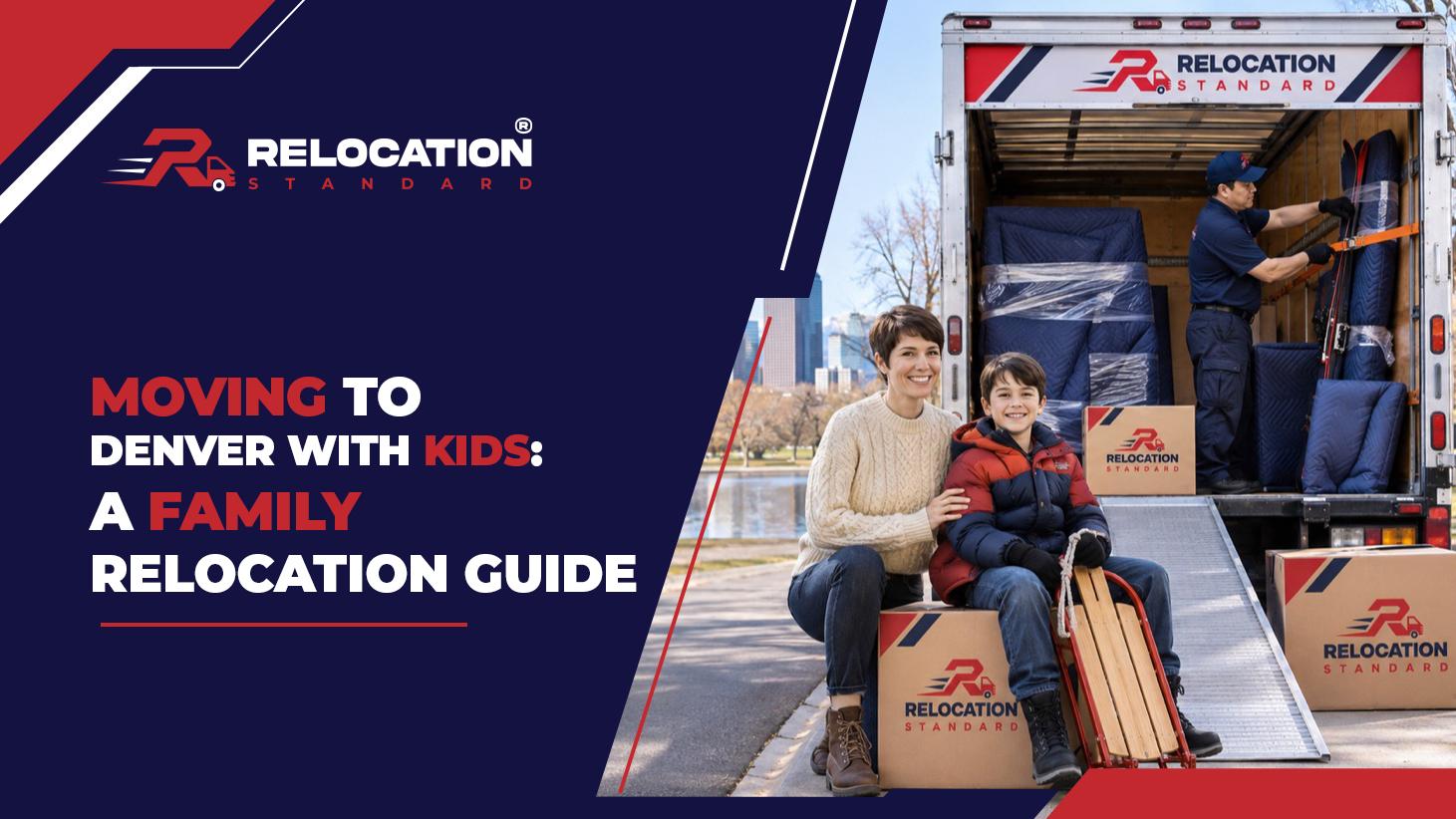
Build weather flexibility into the arrival plan. Ask for clearance checks at alleys or busy apartment loading areas and arrange a safe, warm place for children if the van is late.
Start with the Denver moving services and compare written scope and delivery windows. For a move across state lines, review FMCSA’s moving checklist and check a carrier’s household-goods authority, estimates and liability options. Local moves follow different rules; confirm requirements for your route. Ask who will handle inventory, access and possible storage before signing.
Reserve a sitter or designate one adult who is not supervising the crew to manage the children. Carry car seats, school records, medication, several days of clothing, chargers, snacks and comfort items with the family. Photograph the condition of important belongings and check the delivery inventory with the mover.
Family activities and the first weeks in Denver
Use a few low-pressure outings to help children become familiar with the community while essential routines are established.
Places to explore include Denver Museum of Nature & Science, Denver Zoo Conservation Alliance, City Park and Denver Public Library. Check current hours, admission, accessibility and any reservation requirements before visiting. Identify the nearest library and a regular outdoor or indoor play option near your actual home rather than trying to cross the city every weekend.
Give everyone a predictable arrival plan. Familiar meals, a bedtime story, contact with friends and the same morning sequence can help the first week feel less unfamiliar.
Register with a pediatrician and dentist, check insurance networks and confirm access to pharmacies or urgent care. Visit the school route in advance, ask about the first-day procedures and arrange a regular check-in with your child after school.
Your family relocation checklist
Prioritize school placement, everyday travel and the arrival plan, then work backward from the first day your family must be settled.
- Four to eight weeks ahead: confirm the district, compare homes, request records, contact childcare providers and compare written moving quotes.
- Two to four weeks ahead: finalize housing and care, book the crew, review parking or elevator access, and arrange pediatric records and prescriptions.
- Final week: confirm school and travel dates, pack a separate family bag, set up utilities and confirm a childcare or supervision plan.
- Arrival week: secure the home, check delivered items, confirm school transport and establish predictable routines before adding optional commitments.
Conclusion
The most practical family move to Denver is one that matches a verified school address, a realistic budget, a manageable weekday routine and a coordinated arrival.
Use a specific-address checklist rather than broad neighborhood rankings. If you are considering several cities or moving again later, compare our guides to moving to Albuquerque with kids and moving to Seattle with kids. For the logistics of a cross-state household move, explore interstate moving services and confirm delivery details in writing.